

The University of Abuja’s Centre of Excellence for Sickle Cell Disease Research and Training (CESRTA) has set a target of screening up to 16,000 newborns annually to identify sickle cell disease early and prevent complications, including deaths among affected children.
The centre, however, has expressed concern over the low uptake of hydroxyurea, a proven disease-modifying treatment, among patients and healthcare workers, despite evidence of its effectiveness in reducing complications and improving the quality of life of people living with the condition.
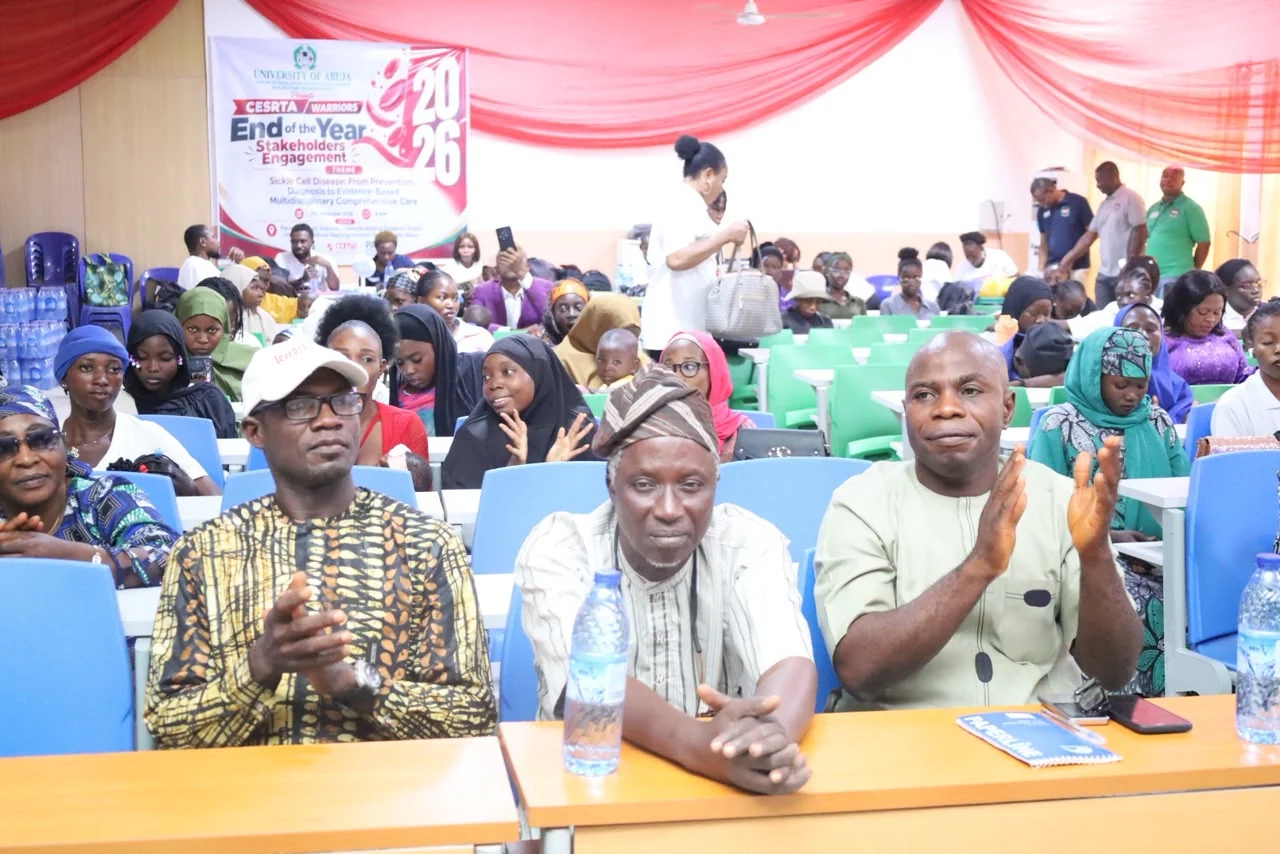
The Director of CESRTA, Prof. Obiageli Nnodu, disclosed this at the centre’s 2026 end-of-year stakeholders’ engagement on sickle cell care, held at the University of Abuja Teaching Hospital.
Nnodu, who is also a Professor of Haematology and Blood Transfusion at the University of Abuja and National Coordinator of the American Society of Hematology Newborn Screening Programme (CONSA), said the initiative was designed to demonstrate the feasibility of newborn screening in Africa and encourage governments to adopt the intervention.
She explained that the programme, which started in 2020, operates in Nigeria, Liberia, Ghana, Tanzania, Kenya and Zambia, with screening activities in Nigeria taking place in Abuja and Kaduna.
According to her, the participating countries are targeting between 10,000 and 16,000 newborn screenings annually, with identified babies subjected to genetic counselling and enrolled in comprehensive sickle cell care.
However, she lamented that denial, stigma, transportation difficulties and other social barriers had prevented some parents from bringing their babies for treatment after receiving positive screening results.
Nnodu said some parents resorted to other testing methods to challenge the initial results, only to return to hospitals when their children developed serious complications.
She regretted that some of the children arrived too late for effective intervention, while others died at home before receiving medical attention.
To address the challenge, she said CESRTA had trained Community Health Extension Workers to follow up with parents, provide information and encourage them to enrol their children in care.
The professor identified the low uptake of hydroxyurea as another major challenge in sickle cell management in Nigeria, despite evidence of its effectiveness in reducing disease complications and improving patients’ quality of life.
She said both patients and healthcare workers had been reluctant to embrace the treatment, unlike in other countries where it had contributed to improved survival among people living with sickle cell disease.
Nnodu, however, said findings from CESRTA’s 16-site implementation science project on hydroxyurea had shown encouraging results, including improvements in haemoglobin levels and reductions in sickle cell crises.
She said the stakeholders’ engagement was also prompted by claims in some communities that prayers could change the genotype of children living with sickle cell disease.
According to her, the centre considered it necessary to engage religious leaders, community representatives, parents and the media to correct misconceptions and promote scientifically proven information about the condition.
“We want them to know that sickle cell disease is not a death sentence. There are things you can do to prevent it, and there are also interventions available when a child has the disease to prevent complications,” she said.
Nnodu stressed that bridging the information gap between specialists in hospitals and communities was essential to improving access to care, noting that the media and community leaders had important roles to play in educating the public.
On government support, she commended the Basic Health Care Provision Fund in the Federal Capital Territory, saying it had helped make treatment more affordable for patients enrolled in the programme.
She explained that patients enrolled under the FCT arrangement received drugs, laboratory tests and other services without payment, although some logistical challenges remained in the enrolment process.
Assessing progress in sickle cell awareness and management, Nnodu said Nigeria had recorded significant improvements over the past decade through research, policy development and capacity building.
She listed the revision of national guidelines for sickle cell management, the establishment of a patient registry, the training of genetic counsellors, improved capacity of healthcare workers and increased research output among the major achievements.
She also noted that Nigeria had gained international recognition for its contributions to sickle cell research, adding that increased collaboration with the media and patient support organisations had strengthened public awareness.
Also speaking, Dr. Chinedu Okeke of the Consortium for Newborn Screening in Africa (CONSA) for Sickle Cell Disease, CESRTA, said the screening programme had identified several babies living with sickle cell disease in the FCT since its introduction in Abuja in 2020.
He explained that screening was only the first stage of the intervention, as babies identified with the condition were enrolled for treatment, while their parents and caregivers received education on how to manage the disease.
Okeke said early intervention was particularly important because many children with sickle cell disease who did not receive appropriate care could die before the age of five.
He disclosed that the centre used isoelectric focusing, a specialised screening method capable of detecting sickle cell disease in babies as young as one day old.
According to him, any baby below six weeks of age is eligible for screening, particularly those brought to health facilities for routine immunisation.
“There is no selection. You just bring your baby, especially those who come for immunisation. If they are under six weeks, we screen them,” he said.
In his remarks, the Chief Imam of Gwagwalada, Emir Muhammad Alhaza, pledged to use his position to educate residents on sickle cell disease and encourage individuals to undergo genotype testing.
He said awareness creation should extend beyond religious congregations, adding that community leaders had a responsibility to ensure that both Muslims and non-Muslims received accurate health information.
Alhaza said knowing one’s genotype and making test results available during hospital visits could help healthcare providers make timely decisions and commence appropriate treatment.
Two people living with sickle cell disease, Desmond Zeal and Halimat Tijani, also shared their experiences at the engagement.
Zeal said the condition had affected his ambition of becoming an athlete, forcing him to reconsider his career aspirations and explore activities that placed less physical demand on him.
He advised people living with the condition to identify their strengths and pursue activities suited to their abilities, rather than allow the disease to define their future.
He said the stakeholders’ engagement had helped patients understand how to adapt to the condition and improve their quality of life through appropriate treatment and support.
Similarly, Tijani commended the programme for educating parents and caregivers on how to support children living with sickle cell disease.
She urged people living with the condition not to give up on their aspirations, stressing that sickle cell disease should not prevent them from making meaningful contributions to society.
WATCH TOP VIDEOS FROM NIGERIAN TRIBUNE TV