


As Nigeria moves towards another general election, the growing number of attacks on political gatherings, campaign convoys and supporters of rival parties has renewed concerns about the country’s democratic future.
From threats and intimidation to assaults, destruction of property and deadly attacks, political violence appears to be taking a firmer hold on the political environment.
What should ordinarily be a contest of ideas, policies and leadership credentials is increasingly being overshadowed by fear and hostility.
The question is why political violence continues
The question is why political violence continues to fester in Nigeria despite years of democratic experience, electoral reforms and repeated assurances by political leaders and security agencies that perpetrators will be brought to justice.
For many observers, the problem goes beyond the conduct of individual politicians. It is rooted in a political culture in which public office is often treated as a prize to be won at all costs, while the institutions responsible for enforcing the law have struggled to ensure accountability.
It is also rooted in history. Nigeria’s return to democracy in 1999 did not erase the legacies of military rule, where power was seized and held by force. It did not automatically create a culture of tolerance, internal party democracy, or respect for opposition.
Instead, many of the habits of the old
Instead, many of the habits of the old order – winner-takes-all politics, control of state res – were carried into civilian politics
Today, more than 26 years after the Fourth Republic began, elections are still widely perceived not as a routine democratic exercise but as a battle for survival.
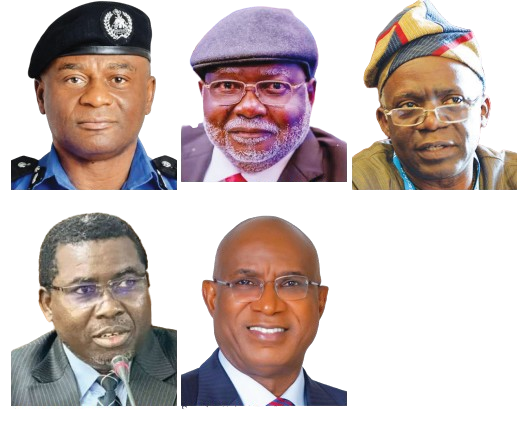
That perception is the foundation on which much of the violence rests. Human rights lawyer and Senior Advocate of Nigeria, Femi Falana, recently identified impunity as a major factor sustaining political violence.
Reacting to the deadly attack on a campaign
Reacting to the deadly attack on a campaign rally in Ughelli North Local Government Area of Delta State, Falana said the failure to prosecute electoral offenders had encouraged the continuation of such incidents.
“Impunity is already institutionalised,” he said, expressing concern that previous attacks on political figures and their supporters had not produced sufficient consequences to deter future perpetrators.
Falana argued that electoral offences were taking place without effective prosecution.
He urged the Nigerian Bar Association, human rights organisations and other stakeholders to work with the Independent National Electoral Commission (INEC) to ensure that offenders were brought before the courts.
His concern followed an attack at a rally
His concern followed an attack at a rally in Uduere community, where former Deputy Senate President, Ovie Omo-Agege said that gunmen opened fire shortly after he began addressing supporters. Omo-Agege said that four members of his campaign team were killed and 15 others injured.
The incident, which prompted a curfew and police investigation, illustrated the risks faced by political actors and ordinary supporters during campaign activities.
It also illustrated a familiar pattern: a shocking attack, condemnation from leaders, a promise of investigation, and then silence.
For victims and their families, justice rarely follows
For victims and their families, justice rarely follows. For perpetrators and their sponsors, the message is that violence works, or at least that it carries little cost. The price of political power One of the reasons violence persists is the high-stakes nature of Nigerian politics.
Political office provides access to influence, public reion is viewed as a struggle for survival rather than a democratic process, opponents can be treated as enemies to be eliminated or intimidated
In many parts of the country, winning an election determines who gets contracts, who gets jobs, who controls local markets, who controls land allocation, and who is protected when disputes arise.
Losing can mean political irrelevance, loss of income,
Losing can mean political irrelevance, loss of income, loss of protection and, for some, exposure to prosecution by a victorious rival. When the stakes are that high, some politicians calculate that intimidation is cheaper than persuasion.
Why spend months convincing voters with policies when you can scare your opponent’s supporters away from rallies, polling units and collation centres?
This environment can encourage the recruitment of street gangs, cult groups and political thugs to disrupt rallies, threaten opponents and influence participation.
Young people facing unemployment and economic hardship may
Young people facing unemployment and economic hardship may also become vulnerable to recruitment by political actors who offer money, protection or other inducements.
The recruitment process is often subtle. A young man is first invited to attend a rally, given transport money and food, and made to feel important. He is then asked to provide security for a politician, to stand at a junction, to chase away opponents.
Before long, he is part of a group that answers to a political patron rather than to the law. For many of these young people, the choice is not between violence and a good job.
It is between violence and nothing
It is between violence and nothing. With no job, no skills training, no social safety net and little hope of upward mobility, the offer of N5,000, N10,000 or N20,000 to intimidate an opponent can seem rational, even if it is destructive.
That is why political violence cannot be understood only as a security problem. It is also an economic and social problem.
The consequences extend beyond those directly involved. When supporters are attacked or threatened, ordinary citizens may become reluctant to attend political meetings, participate in campaigns or vote freely.
A trader who witnesses a rally being attacked
A trader who witnesses a rally being attacked may decide that staying at home on election day is safer than voting. A woman who sees her neighbour beaten for wearing a party T-shirt may hide her own political preference.
A first-time voter who watches videos of ballot-box snatching on social media may conclude that his vote does not count. In this way, violence does not only harm its immediate victims.
It shrinks the democratic space for everyone. A report by the Armed Conflict Location and Event Data Project (ACLED) provides an indication of the scale of the challenge.
The organisation’s Nigeria analyst, Raheem Mutiu, said
The organisation’s Nigeria analyst, Raheem Mutiu, said that it had recorded more than 30 attacks targeting campaigns, candidates, supporters, convoys and political gatherings since presidential and National Assembly campaigning began on August 19, 2026.
The incidents had resulted in more than 10 deaths and several injuries. Mutiu linked the tensions to unresolved grievances and competition between political groups.
He also identified perceived marginalisation, claims of unfair distribution of national rey as issues contributing to public discontent
These factors suggest that political violence cannot be
These factors suggest that political violence cannot be separated entirely from the wider social and economic conditions confronting Nigerians.
Economic frustration does not automatically produce violence, but it can create an environment in which political manipulation and recruitment become easier.
When food prices rise, transport fares double, school fees become unbearable and electricity remains unreliable, public anger grows.
Politicians who cannot offer solutions may instead offer
Politicians who cannot offer solutions may instead offer scapegoats: blame another ethnic group, another party, another region. The anger is real, but it is redirected away from policy failure and towards political opponents.
The danger of inflammatory rhetoric Another factor is the use of threatening language by political actors. When public figures make statements that suggest opponents should be dealt with through force, supporters may interpret such remarks as permission to engage in intimidation or attacks. Language matters in politics.
A statement like “we will crush them,” “they will not be allowed to campaign here,” or “this state is a no-go area for them” may be dismissed by the speaker as mere political bravado.
For supporters on the ground, especially young men
But for supporters on the ground, especially young men already armed and organised, it can sound like an instruction.
Nigeria has seen this pattern repeatedly. Before elections, some politicians warn opponents not to enter certain communities.
Others boast about their capacity for violence. Others use dehumanising language to describe rivals. By election day, the words have often turned into action.
Former Chief Justice of Nigeria, Justice Olukayode Ariwoola,
Former Chief Justice of Nigeria, Justice Olukayode Ariwoola, once warned against the consequences of inflammatory political statements and the growing incidents of intimidation, killings and destruction of property.
Speaking on behalf of the Savannah Centre for Diplomacy, Democracy and Development’s Council of the Wise, Ariwoola cited 109 breaches of the National Peace Accord recorded across 26 states and the Federal Capital Territory between August and October 2026.
Political violence and thuggery accounted for 33 of the reported breaches. He also recalled the violence that followed the 2011 general elections, warning that Nigeria must not allow a repeat of that experience.
The 2027 elections must be won
“The 2027 elections must be won at the ballot boxes, not on the streets through intimidation and bloodshed,” he said.
Ariwoola urged political parties and candidates to take responsibility for their supporters, condemn violence and sanction members involved in electoral offences.
His warning is particularly important because Nigeria has signed peace accords in almost every election cycle since 2015. Candidates gather, sign documents, shake hands and pose for photographs.
Yet violence continues
Yet violence continues. The problem is not the absence of commitments. It is the absence of consequences when those commitments are broken.
If a candidate signs a peace accord and his supporters attack a rival rally the next day, what happens? In most cases, nothing. No disqualification, no fine, no public sanction by the party, no prosecution.
The accord becomes a ritual rather than a deterrent. Weak enforcement and public distrust The role of law enforcement agencies is central to addressing the crisis.
Although the police have repeatedly warned politicians against
Although the police have repeatedly warned politicians against sponsoring violence, the effectiveness of such warnings depends on impartial investigation, arrest and prosecution.
Inspector-General of Police, Olatunji Disu recently warned politicians against financing, sponsoring or directing attacks on opponents and campaign activities.
He said those found responsible would face the law, irrespective of their political influence or status. Disu also reaffirmed that the police owed allegiance to the Constitution and Nigerian people, rather than any political party or individual. INEC Chairman, Professor Joash Amupitan, similarly cautioned political parties against turning campaigns into a battlefield.
He maintained that credible elections require voting, counting and declaration of results without interference.
Public confidence depends not only on official declarations
However, public confidence depends not only on official declarations but also on visible evidence that the law applies equally to political office-holders, party leaders, their supporters and ordinary citizens.
That confidence is currently low. Many Nigerians believe that police response to political violence depends on who is involved.
If the victim belongs to the ruling party, action is swift. If the victim belongs to the opposition, investigation drags. If the perpetrator is connected to power, he walks free. Whether that perception is always accurate is less important than its effect.
When people do not trust the police
When people do not trust the police to protect them, they may turn to self-help, to vigilantes, to ethnic militias, or to retaliation. The cycle deepens. There are also structural challenges. The police are overstretched, underfunded and deployed across a country facing banditry, kidnapping, insurgency and communal conflicts.
During elections, the same officers expected to secure campaign venues are also expected to secure polling units, escort materials and protect collation centres.
In many rural areas, po- lice presence is thin. INEC also faces limitations. The commission can investigate electoral offences, but prosecution often requires cooperation from the police and the judiciary.
Cases can drag for years
Cases can drag for years. Witnesses may be afraid to testify. Evidence may be lost. By the time a case is concluded, the election is long over and the offender may have already benefited from the violence.
This is why Falana’s call for lawyers to assist INEC in prosecuting electoral offences is significant. Without a dedicated, well-rel continue to be treated as minor infractions rather than serious crimes against democracy
Ethnicity, religion and misinformation Political divisions are also sometimes amplified through ethnic and religious identities.
Instead of debating policy choices, some political campaigns
Instead of debating policy choices, some political campaigns encourage supporters to see electoral contests as struggles between communities or faith groups.
Such narratives can deepen suspicion, reinforce stereotypes and make political disagreements more difficult to resolve peacefully.
Misinformation and disinformation spread through social media can further inflame tensions, particularly when false claims are circulated about candidates, parties or communities. The challenge is not that Nigerians hold different political, ethnic or religious identities.
It is the deliberate use of those identities
It is the deliberate use of those identities to portray opponents as threats and mobilise hostility against them. In a diverse country of over 200 million people, identity will always matter. People want leaders who understand their culture, speak their language and respect their faith.
That is normal. The problem begins when identity is weaponised: when a candidate tells voters that if the other group wins, your group will lose everything; when a community is told that its survival depends on defeating another community at the ballot box.


3 Comments
Pingback: Nasarawa Govt Warns Against Threat To Peace, Security - News Press NG Copy
Pingback: Ex-TETFund Boss's Mother Buried In Gwarangha Village - News Press NG Copy
Pingback: NDC Raises Alarm Over 2027 Elections, Accuses APC Of Resorting To Violence - News Press NG Copy