
Follow THISDAYLIVE on GoogleAdd us as a preferred source to see more of our stories in Google
Ejiofor Alike reports that the failure of the police to arrest and prosecute the perpetrators of political violence in Delta, Enugu, Edo, Benue, Lagos and other states has raised doubts over the promise by the Inspector General of Police, Tunji Disu, to ensure police neutrality in the 2027 polls
As the 2027 general elections approach, Nigerians are witnessing a new level of pre-election political violence not seen since the return to democracy in 1999.
Thugs sponsored by political leaders have continued to spill the blood of innocent Nigerians whose only crime is that they freely made political choices that are different from the choices of their leaders.
In their desperation to secure at least 25 per cent of the votes for their preferred candidates in the 2027 presidential election, some governors have demonstrated unprecedented political intolerance, encouraged the shrinking of the political space and allowed some local government chairmen and other senior government officials to declare war on the opposition parties in their states.
Beyond thuggery, some high-profile political actors have openly made incendiary comments against opposition members to keep them from mobilising and campaigning ahead of the elections, and even from voting.
Many feel that if the violence is not urgently addressed, it could go a long way to discourage massive turn out on election day or fuel bloodbath.
The National Peace Committee (NPC), headed by a former Military Head of State, General Abdulsalami Abubakar, recently raised the alarm that 26 states and the Federal Capital Territory (FCT) recorded 109 breaches of the National Peace Accord within 10 weeks.
The NPC had called for investigations into reported violations and urged security agencies to provide equal protection for lawful campaign activities.
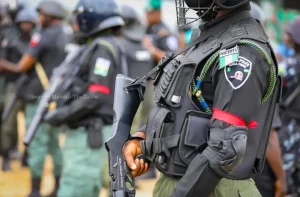
Unfortunately, the police and other security agencies have failed to bring those responsible for the current pre-election violence to justice, raising questions about their promise of neutrality during the 2027 elections.
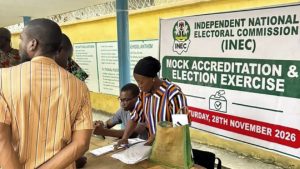
Worried by the escalating violence, which has claimed several lives, the Chairman of the Independent National Electoral Commission (INEC), Prof. Joash Amupitan (SAN), last Tuesday urged the police to accelerate the arrest and prosecution of perpetrators of political violence, warning that impunity must be checked ahead of the elections.
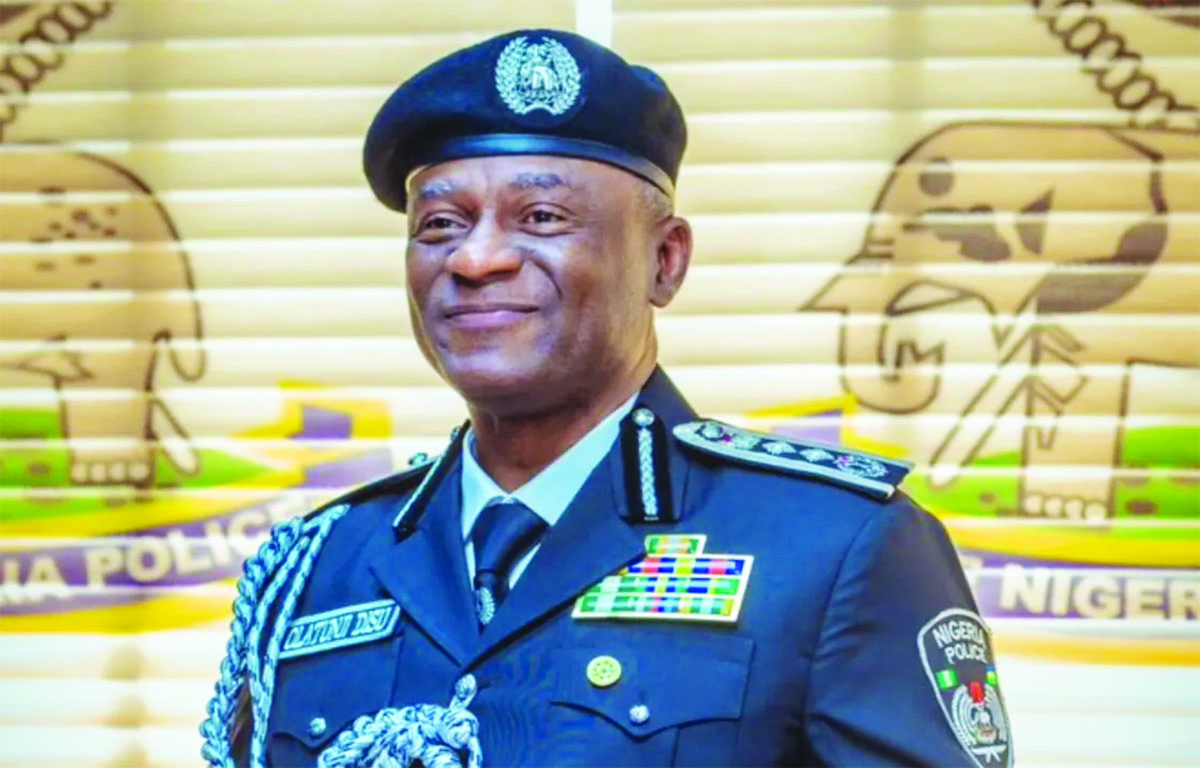
Speaking in Abuja at an interactive session organised by the Inspector-General of Police (IG), Olatunji Disu, with chairmen and secretaries of political parties, Amupitan urged the police to ensure swift arrests, thorough investigations and prompt transmission of completed case files to INEC to facilitate the prosecution of electoral offenders.
Amupitan noted that the Electoral Act 2026 had strengthened legal provisions against electoral violence, citing Sections 96 and 97, which prohibit inflammatory campaign rhetoric and the use of thugs, private armed guards or masquerades at political rallies.
The inaction of the police on the widespread attacks on opposition political parties and their leaders had prompted the Nigeria Democratic Congress (NDC) to boycott last Tuesday’s security meeting convened by the IG, citing what it described as escalating violence against its members across the country and the failure of security agencies to protect opposition supporters.
In a press statement issued on November 23, 2026, by its National Publicity Secretary, Osa Director, the NDC said it could no longer trust the police to guarantee the safety of its members.
The party consequently called on the international community to intervene.
The NDC is widely regarded as the worst victim of pre-election violence.
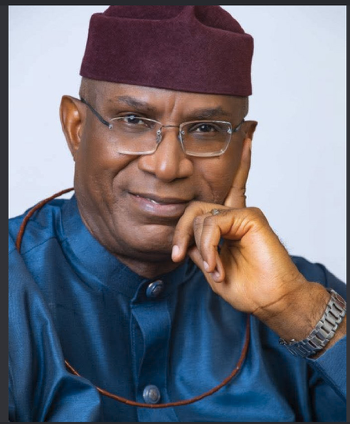
For instance, the police confirmed that six people were killed last Monday when political thugs shot at the supporters of the NDC during the campaign rally of the senatorial candidate of the party for Delta Central, Senator Ovie Omo-Agege, in Uduere community, Ughelli North Local Government Area (LGA), Delta State.
Survivors of the attack claimed that the police officers at the venue of the NDC rally failed to intervene.
As part of the investigation into the incident, the Delta State Police Command had invited several people.
However, most of the suspects identified by eyewitnesses and survivors as being responsible for the killings shunned the invitation while only a few suspects have been arrested.
The Senator representing Delta North, Ned Nwoko, last Thursday disclosed that one of his supporters injured during the senatorial primary of the All Progressives Congress (APC) on May 18 has also died.
The senator identified his dead supporter as Igelige Chukunomnazu, from Ward 9, Obiaruku, Ukwuani Local Government Area (LGA) of the state.
In a statement posted on his Facebook page while condemning the killing of six NDC supporters, Nwoko also cited attacks on political activities in Asaba, Okpai and Effurun, all in Delta State, and called on the IG and other security agencies to investigate the attacks and prosecute those responsible.
The inaction of the police and other security agencies has questioned their neutrality and raised allegations of partisanship against them ahead of next year’s polls.
When President Bola Tinubu’s motorcade was attacked on Friday, November 13, 2026, at a mosque in Garki District, Abuja, the FCT Police Command swung into action and promptly arrested 78 suspects.
However, the opposition parties have accused the police of not making similar arrests when opposition figures were attacked and supporters of opposition parties killed in Delta, Enugu, Edo, Cross River, Benue, Ekiti, Lagos and other states.
Barely two days after the killing of six NDC members at a campaign rally in Delta State, suspected political thugs attacked NDC members and supporters in Benin City, Edo State, last Wednesday, ahead of the arrival of its presidential candidate, Obi.
The Edo State Police Command confirmed that one person was injured in the attack by gunmen in a Hilux Van who opened fire on the NDC members.
Following the widespread attacks on opposition parties and their leaders, the National Leader of the NDC, Senator Seriake Dickson, had recently called on the NPC headed by General Abubakar (rtd.) to intervene.
Similarly, a former Chief Justice of Nigeria, Justice Olukayode Ariwoola (rtd.), recently warned against a repeat of the violence that followed the 2011 general election.
Speaking at a press conference in Abuja on Tuesday, Ariwoola urged security agencies to ensure adequate protection at campaign venues, and to also arrest and prosecute perpetrators of electoral violence.
Aware of the expectations of Nigerians from the police, the IG, Disu, said at last Tuesday’s security meeting that the police have zero tolerance for political violence, regardless of the political party, candidate or interests involved.
However, many believe that without identifying and prosecuting thugs responsible for attacks on the opposition parties in Enugu, Delta, Edo, FCT, Kebbi, Kaduna, Lagos and other states, the IG’s promise of police neutrality in next year’s elections remains lip service.
As the violence escalates, many Nigerians are of the view that if the Nigerian authorities are unwilling to protect the opposition leaders and their supporters, and ensure peaceful, free and fair elections next year, the international community should intervene and consider a visa ban on top political leaders, senior government officials and heads of security agencies.
Some analysts have suggested that security agencies that condone electoral violence should also be denied overseas training opportunities by the United States, United Kingdom and the European Union.