



By Sola Ogundipe
Eritrea has become the 11th country in the World Health Organisation (WHO) African Region to eliminate trachoma as a public health problem, raising hopes of ending a neglected tropical disease (NTD) that continues to threaten the sight of millions of people across the continent.
The achievement, validated by WHO, places Eritrea among 11 African countries that have successfully tackled the disease through sustained public health interventions, improved access to treatment, hygiene promotion and community mobilisation.
Eritrea joins Algeria, Benin, Burundi, Eritrea, The Gambia, Ghana, Malawi, Mali, Mauritania, Senegal and Togo as the African countries that have received WHO validation as the number of countries that have achieved elimination globally stands at 34.
Eritrea is also the 66th country globally and the 23rd in the WHO African Region to eliminate at least one neglected tropical disease.
According to WHO, Eritrea achieved the milestone, following two decades of sustained interventions targeting the disease, particularly in remote rural communities where poor access to clean water, sanitation and healthcare had fuelled its spread.
Eritrea’s success followed nationwide surveys conducted between 2006 and 2020, which helped identify affected communities and guide the rollout of interventions across the country.
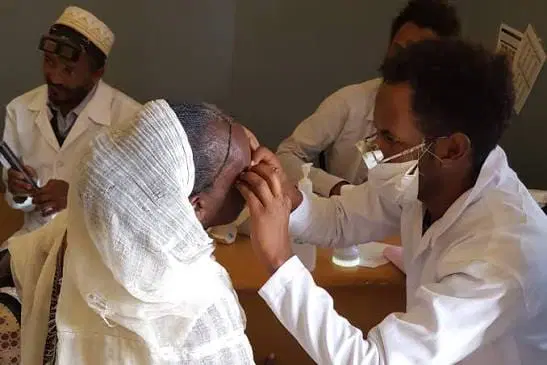
The government subsequently implemented WHO’s recommended SAFE strategy, a combination of surgery for advanced cases, antibiotics to clear infection, facial cleanliness to limit transmission and environmental improvements, particularly better access to water and sanitation.
A notable feature of the campaign was its community-led sanitation approach, which delivered significant public health gains despite limited external funding.
Health workers deployed digital tools for data collection and mapping to identify affected populations, track disease patterns and direct resources to hard-to-reach communities.
In a congratulatory message, WHO Director-General, Dr Tedros Adhanom Ghebreyesus said, “I congratulate the Government and people of Eritrea on this historic achievement. After two decades of determined effort, Eritrea has consigned trachoma as a public health problem to history. This is a victory for the communities most affected by this devastating disease, and a powerful example of what sustained national commitment can achieve.”
On his part, WHO Regional Director for Africa, Dr Mohamed Janabi, said Eritrea’s achievement demonstrated the impact of political commitment, community participation and effective partnerships in tackling neglected tropical diseases.
“I congratulate Eritrea on this historic public health milestone. It shows what is possible through sustained political commitment, community leadership and strong partnerships. Eritrea’s achievement brings us closer to a world free from the suffering caused by neglected tropical diseases and sends a strong message of hope to other African countries working towards trachoma elimination,” he stated.
WHO Representative to Eritrea, Dr Mary Stephen, said: “This success belongs first and foremost to the people of Eritrea. The elimination of trachoma as a public health problem is the result of strong national leadership and ownership, and collaboration between communities, the Ministry of Health, the Fred Hollows Foundation, development partners and health workers across the country,” she said.
While Eritrea has secured WHO validation, Nigeria is making significant progress towards eliminating trachoma, although the disease remains a public health challenge in some parts of the country.
The Federal Ministry of Health and Social Welfare disclosed that 11 local government areas (LGAs) remained to achieve elimination status out of 134 previously identified endemic LGAs.
The country has stopped mass drug administration (MDA) in 116 LGAs after they met the WHO elimination threshold, representing approximately 87 per cent progress towards eliminating the disease in affected areas.
Director and Programme Manager of the National Trachoma Programme, Nicholas Olobio, said Nigeria had also performed more than 100,000 surgeries for trachomatous trichiasis, the advanced stage of the disease that can cause irreversible blindness.
Nigeria’s progress has been hindered by the implementation of WHO’s SAFE strategy, supported by mass antibiotic distribution, eye surgeries, hygiene promotion and improved access to water and sanitation.
Trachoma is among the 21 diseases and disease groups covered by WHO’s Neglected Tropical Diseases Roadmap 2021–2030, which seeks to accelerate prevention, control, elimination and eradication efforts, particularly among populations living in poverty and underserved communities.
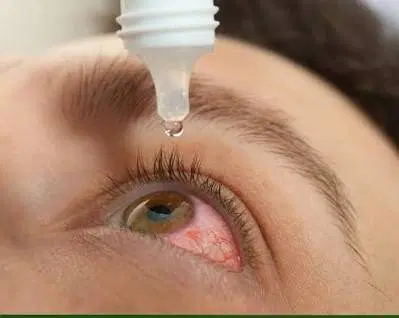
The disease is caused by the bacterium Chlamydia trachomatis and spreads through contact with eye and nasal discharge from infected people. Repeated infections can cause scarring of the inner eyelid, forcing the eyelashes to turn inward and scratch the eyeball. Without treatment, the condition can cause irreversible blindness.
It disproportionately affects poor and underserved communities, particularly those with inadequate access to clean water, sanitation, hygiene facilities and essential healthcare. Despite significant global progress, the disease remains a public health challenge in parts of the world.
Although Africa has recorded substantial progress, it remains the continent most affected by the disease. The global target for eliminating trachoma as a public health problem is part of WHO’s neglected tropical diseases road map for 2021 to 2030.