


Follow THISDAYLIVE on GoogleAdd us as a preferred source to see more of our stories in Google
With seven major contenders positioning for Adamawa’s 2027 governorship election, party strength, political experience, voter appeal and internal divisions are shaping a crowded and unpredictable contest ahead of the polls, writes Daji Sani
Adamawa State is heading towards a governorship election in 2027, with candidates from several parties seeking to succeed Governor Ahmadu Umaru Fintiri. The political landscape has shifted since Fintiri defected from the Peoples Democratic Party (PDP) to the All Progressives Congress (APC) in February 2026, changing the balance of power and alliances. The APC, PDP, African Democratic Congress (ADC), National Democratic Congress (NDC), Labour Party (LP), Social Democratic Party (SDP) and Young Progressives Party (YPP) are represented in the race. Their candidates bring strengths, records and organisational challenges to a contest whose outcome will depend on voter sentiment and campaign effectiveness.
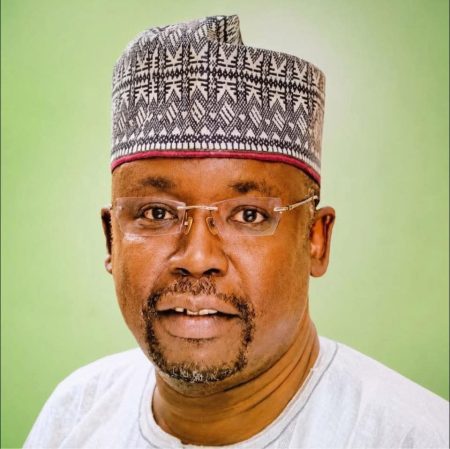
Galadima: APC’s Governorship Candidate Banking on Party Structure and Continuity
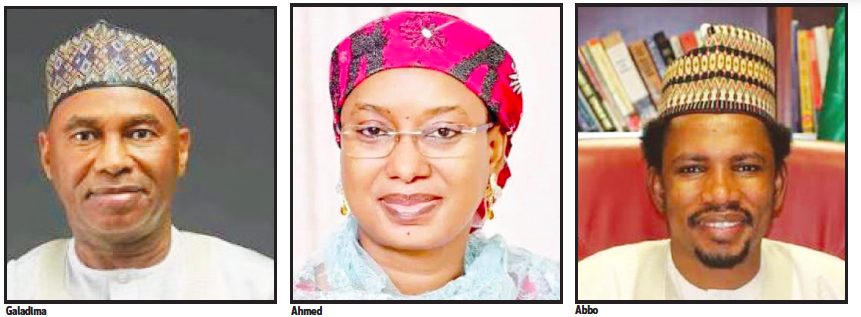
Ahmed Tijjani Galadima Aminu, 62, has emerged as the governorship candidate of the APC for the 2027 election in Adamawa State. His emergence has moved him from relative obscurity to the centre of the state’s most important political contest. He won the APC primary decisively, polling 414,444 votes to defeat Abdulrazak Namdas, who scored 86,004 votes, and Abdulrahman Haske, who scored about 65,000 votes. The result gave him an early claim to legitimacy and suggested that the party’s delegates were prepared to rally behind a relatively fresh face.
His biggest strength is the party structure behind him. The APC is the party of incumbency in Adamawa following Governor Fintiri’s defection to the party. This gives Galadima access to the governor’s political network, statewide mobilisation machinery and the support of key stakeholders who turned out in large numbers at the campaign flag-off in Yola.
His second strength is his message of continuity. At the flag-off at Mahmud Ribadu Square, Galadima promised to build on Fintiri’s development legacy, particularly in purposeful leadership, transparency, accountability and public trust. The message could appeal to voters who favour stability and continuity over a major departure from the present administration.
He is also benefiting from the backing of influential figures, including former governors Muhammadu Umaru Jibrilla Bindow and Bala James Ngilari, former lawmaker Abdurrazaq Namdas, and party leaders at the zonal and state levels. They have pledged to mobilise their structures for his victory.
Despite these advantages, Galadima faces a significant challenge: his relatively low public profile before the election season. Unlike some of his main rivals, he was not widely known in Adamawa politics and lacks the extensive political history, legislative record and personal voter base that candidates such as Aishatu Binani and Maurice Vunobolki can point to.
His second weakness is his dependence on incumbency. His electoral prospects are closely tied to Fintiri’s performance and President Bola Tinubu’s national reforms, which have brought temporary hardship, even as supporters defend their objectives. Any dissatisfaction with the present governments could be exploited by opposition parties and transferred to Galadima.
Ultimately, Galadima’s chances will depend on whether voters see him as a credible successor capable of sustaining development or as a relatively unknown candidate relying heavily on the APC’s political machinery. His advantages give him an early platform, but he must still convince Adamawa’s 2.2 million voters of his capacity to govern.
Vunobolki: PDP Candidate Faces Challenge of Rebuilding Party Support
Chief Maurice Vunobolki, 54, is the governorship candidate of the PDP. He faces the task of rebuilding a party that lost a major political advantage when Governor Fintiri defected to the APC.
His biggest strength is his technocratic profile. A chartered accountant and seasoned banker, Vunobolki presents himself as a competent manager with an understanding of public finance, accountability and administration. This profile could appeal to voters seeking prudent financial management and an orderly approach to governance.
His second strength is the PDP brand. Despite losing control of the state government, the PDP retains structures across Adamawa’s 21 local government areas and 226 wards. Its history of governing the state since 2019 also provides Vunobolki with an existing political platform to build on, provided he can unite its members.
His weaknesses, however, are considerable. He emerged as the PDP candidate through affirmation on May 24, 2026, as the sole aspirant, rather than through a competitive primary. He had earlier sought the APC ticket before moving to the PDP, a development that could raise questions among voters about his political loyalty and the depth of his support within the party.
He also faces the challenge of party division. The PDP has been grappling with disagreements at the national and state levels, with rival factions previously producing different candidates. Without the governor’s political structure, Vunobolki must work harder to mobilise the party’s traditional network and convince voters that the PDP remains capable of winning without the advantage of incumbency.
Ultimately, Vunobolki’s prospects will depend on whether voters place greater confidence in his professional competence than their concerns about the PDP’s internal challenges. If he can unite the party and present himself as a credible candidate with a clear governance agenda, he could make the contest competitive.
Ribadu: ADC Candidate Seeks to Harness Opposition Momentum
Modibbo Hammantukur Ribadu, 59, is the governorship candidate of the ADC for the 2027 election in Adamawa State. He enters the race as the candidate of a party seeking to challenge the longstanding dominance of the APC and PDP in the state. His biggest strength is the national opposition momentum behind the ADC. The party is the platform of former Vice-President Atiku Abubakar, Adamawa’s most prominent national politician. That connection gives Ribadu considerable visibility, media attention and an opportunity to appeal to voters dissatisfied with the two dominant parties.
His second strength is name recognition. The Ribadu name is familiar in Adamawa politics, while his positioning as an alternative could attract undecided voters, young people and those seeking political change without returning to the established political order.
His weaknesses, however, are evident. The ADC has a thinner grassroots organisation in Adamawa compared with the APC and PDP, with fewer elected officials, ward structures and funding channels. Its primary was also affected by internal disputes and a reported legal challenge, which could distract the campaign.
Ultimately, Ribadu’s chances will depend on whether the national political momentum associated with Atiku and the ADC can translate into votes at the grassroots. If he builds a strong local organisation quickly, he could make the contest a genuine three-way race. Otherwise, his visibility and political appeal may not be enough to overcome the APC’s incumbency advantage and the PDP’s established network.
Binani: NDC Candidate Seeks to Build on Political Experience and Support Base
Senator Aishatu Dahiru Ahmed, popularly known as Binani, 55, is the governorship candidate of the National Democratic Congress (NDC). She returns to the governorship contest as one of the most recognisable politicians in the state. Her biggest strength is her name recognition and established voter base. As a former senator and the APC governorship candidate in 2023, she demonstrated an ability to mobilise considerable support, particularly among women and young people. Her experience in national politics also gives her legislative exposure and political contacts that few of her rivals can match.
Her second strength is her political resilience. Despite losing the 2023 election, she has remained active, visible and determined to pursue her governorship ambition. This persistence could appeal to supporters who regard her as a determined politician unwilling to abandon her political aspirations.
Her weaknesses, however, are considerable. She is now contesting on the platform of the NDC, a smaller party with less funding, a weaker structure and a more limited nationwide political machinery than the APC platform she used in 2023. This means she must work to establish a new political base and build the organisational capacity required for a statewide campaign.
Ultimately, Binani’s prospects will depend on whether her personal popularity can compensate for the NDC’s organisational limitations. If voters prioritise the candidate over party structure, she could make the race competitive. However, if the election is largely determined by political machinery and incumbency, her departure from the APC and the political implications of the 2023 contest could influence her chances.
Abbo: Labour Party Candidate Relies on Political Visibility and Personal Appeal
Senator Ishaku Elisha Cliff Abbo, 46, is the governorship candidate of the Labour Party. He enters the contest as one of the most outspoken and recognisable political figures in the race.
His biggest strength is his visibility and outspoken political profile. As a former senator representing Adamawa North, Abbo is well known across the state. His reputation for speaking boldly on national issues has earned him a following, particularly among young people who regard him as a voice challenging the political establishment.
His second strength is the Labour Party brand. The LP emerged as a major political force in 2023 through its message of change and youth mobilisation. Abbo could draw on that sentiment among voters dissatisfied with the APC and PDP and seeking an alternative to the two dominant parties.
His weaknesses, however, are significant. The Labour Party has a relatively weak structure in Adamawa, with few elected officials, limited funding and inadequate grassroots organisation across the state’s 21 local government areas. This could make it difficult for him to match the APC’s incumbency machinery or the PDP’s established political network.
Ultimately, Abbo’s chances will depend on whether his personal popularity can compensate for Labour Party’s organisational limitations. If he translates his public profile into a disciplined, statewide campaign, he could challenge the established parties. Otherwise, his campaign risks generating considerable attention without securing sufficient grassroots support on election day.
Osim: SDP Candidate Positions Himself as an Alternative
Christopher Nathaniel Osim, 64, is the governorship candidate of the SDP. He enters the contest as one of the older and more experienced candidates on the ballot, seeking to offer voters an alternative to the major parties. His biggest strength is the SDP’s reputation for ideology and political discipline. The party is regarded by some as a platform for principled politics rather than godfatherism. Osim’s age and experience could also help him present himself as a steady and responsible candidate with an emphasis on governance, peace and development.
His weaknesses, however, are evident. The SDP has a relatively weak structure in Adamawa, with limited funding, few elected officials and inadequate grassroots mobilisation across the state’s 21 local government areas. Osim also lacks the level of name recognition and media visibility enjoyed by some of his rivals, including Galadima, Binani and Abbo.
Ultimately, Osim’s prospects will depend on whether voters prioritise his personal appeal and political message over the strength of party structures. If undecided voters embrace a credible third-force candidate, he could make an impact. However, if the election is largely determined by established party machinery, his campaign may struggle to move beyond a modest showing.
Wafarninyi: YPP Candidate Banks on Fresh Leadership and Reform Agenda
Theman Wafarninyi, 55, is the governorship candidate of the Young Progressives Party (YPP). He presents himself as an alternative for voters seeking a change from the established APC and PDP political order. His biggest strength is the YPP’s youth-focused and reform-oriented image. The party appeals to young voters, professionals and undecided electors who are dissatisfied with godfatherism and seeking competent and accountable leadership. Wafarninyi could use this message to position himself as an alternative in a crowded governorship race.
His weaknesses, however, include the party’s limited structure, inadequate funding and his relatively low name recognition across Adamawa’s 21 local government areas. These challenges could make it difficult for him to match the APC’s incumbency machinery or the established networks of the PDP, ADC and NDC.
His prospects will therefore depend on his ability to translate his message of fresh leadership into a strong grassroots campaign before election day.