
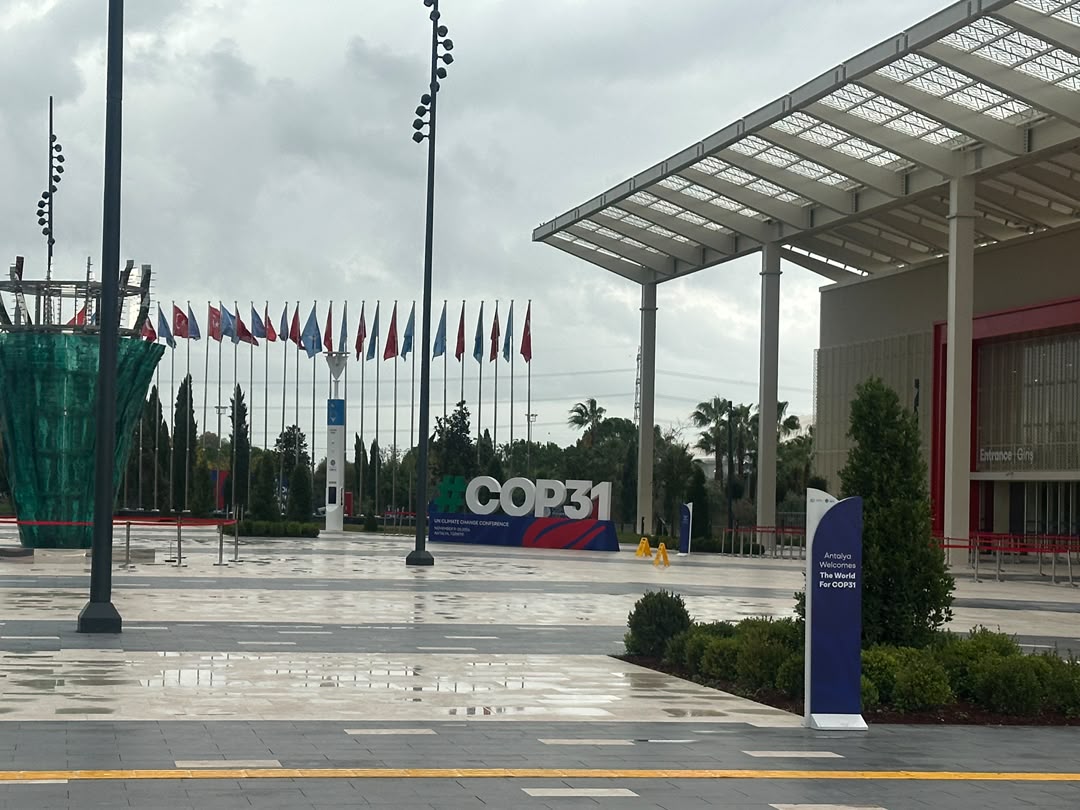
The latest draft of the overarching decisions at the ongoing United Nations Climate Change Conference (COP31) in Antalya, Türkiye, has set the stage for another round of contentious negotiations, with parties divided over climate finance, fossil fuels, adaptation and other critical issues.
The third draft, released at about 3 a.m. Turkish time on Sunday, was expected to be the final version before negotiations resumed at a plenary scheduled for 6 a.m. local time. However, the timeline has since elapsed, leaving delegates, observers and other participants uncertain about the next steps.
By nearly 1 p.m., only a handful of delegates and observers remained at the conference venue, as many participants had departed Antalya amid frustration, exhaustion and uncertainty over the outcome of the talks.
The COP presidencies have repeatedly assured parties and observers that an agreement was within reach. However, negotiations remain fraught with disagreements, with observers pointing fingers at Saudi Arabia, Russia and India over perceived setbacks.
Others have accused developed countries of deepening divisions among developing nations on critical issues, including climate finance, adaptation, just transition and technology transfer.
As parties prepare to debate the latest draft, the following issues are expected to dominate the negotiations.

1. Climate finance and adaptation funding
The latest draft contains no commitment to the $120 billion annual adaptation finance target demanded by developing countries. Instead, it proposes discussing an implementation pathway towards tripling adaptation support under the climate finance work programme.
A new provision also encourages countries to provide or continue providing climate finance voluntarily, while explicitly referencing Article 9.1 of the Paris Agreement, which requires developed countries to provide financial resources to developing countries.
However, the draft removes the earlier call for the full implementation of Article 2.1(c), which seeks to align financial flows with low-emission and climate-resilient development.
2. Fossil fuel transition
Although the draft contains no direct call for a phase-out of fossil fuels, it references the COP28 UAE consensus in its entirety, including the call for a “just, orderly and equitable” transition away from fossil fuels.
The reference, however, does not explicitly advance the Brazil-led proposal for a global roadmap to transition away from fossil fuels, leaving the issue of how countries should accelerate the shift from fossil fuel dependence unresolved.
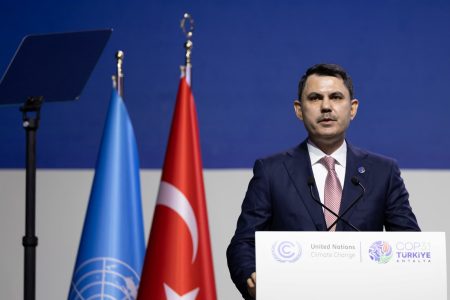
PREMIUM TIMES reported that at COP28 in Dubai (December 2023), the then COP President, Sultan Al Jaber, broke a major negotiation deadlock by transitioning deadlocked formal talks into an open, circle-style Emirati “Majlis”, which ultimately paved the way for the historic UAE Consensus. Murat Kurum of Turkey and Chris Bowen of Australia, who are leading the talks in Antalya, are being pressured to make this year’s summit a success, as many observers are already describing the COP as a “failed COP”.
3. Loss and damage funding
The draft encourages continued efforts to scale up resources for the Loss and Damage Fund, which supports vulnerable countries affected by climate change.
However, references to existing pledges to the fund, including the disclosure that only about half of the $822 million pledged had been converted into contributions, have been removed.
It also drops references to the underfunding of the Warsaw International Mechanism (WIM) and the Santiago Network, raising concerns over whether the text adequately addresses the financial and institutional gaps confronting vulnerable countries.
4. The 1.5°C goal and overshoot
The draft reaffirms the agreement reached last year to limit both the magnitude and duration of temperature overshoot beyond the 1.5°C threshold.
It also proposes establishing a high-level dialogue at COP32 on the science of the 1.5°C goal and temperature overshoot. This replaces an earlier proposal for a more permanent work programme on the issue.
The issue remains significant as countries grapple with the growing risk of temporarily or persistently exceeding the temperature limit set under the Paris Agreement.
5. Just transition and electrification
The latest draft retains provisions on just transition, emphasising that pathways grounded in equity and science can accelerate climate action and contribute to more equitable mitigation and adaptation outcomes.
It also retains the presidencies’ proposed “35 by 35” electrification goal, alongside calls for greater international cooperation to expand clean energy and low-emission technologies.
However, the electrification target remains embedded in a broader, relatively weak paragraph that presents it as one among several possible approaches, rather than a firm commitment.
Other notable provisions
Beyond the five key areas, the third draft introduces or retains several other provisions that could shape COP31’s outcome.
On trade, it acknowledges that trade measures could have cross-border impacts, particularly on developing countries, and encourages engagement from institutions such as the World Trade Organisation (WTO).
On energy transition, it recognises that the global transition towards low-greenhouse-gas emissions and climate-resilient development is irreversible.
The text also proposes a two-year work programme on mountains and climate change, retains provisions on carbon dioxide removal technologies while stressing that they must not delay or substitute for deep emissions cuts, and removes numerical targets for carbon capture, utilisation and storage (CCUS), including the proposed target of reaching one billion tonnes globally by 2035.
On COP reform, it maintains proposals for dialogues alongside COP32 and COP33, with a report on the discussions to be considered at COP34 in 2029.
READ ALSO: Amid divisions, COP31 president says climate talks near deal
The third draft is framed as a decision of the Conference of the Parties serving as the meeting of the Parties to the Paris Agreement (CMA 8).
While it retains references to fossil fuel transition, just transition, adaptation finance and electrification, the removal of several specific financial targets and stronger commitments leaves key demands from developing countries unresolved.
PREMIUM TIMES observed that the latest draft is a 94-paragraph, 10-page document, which is expected to form the basis of the final agreement. It is basically a revision of the previous drafts, which were criticised for lacking ambition, particularly over fossil fuel transition and climate finance
Discover more from Premium Times Nigeria
Subscribe to get the latest posts sent to your email.