

- Nigeria moves closer to new policing structure
- As states back constitutional amendment
ANAYO EZUGWU examines the State Police Bill before President Bola Tinubu and the complicated issues of how such forces will be established, funded and supervised to prevent political control
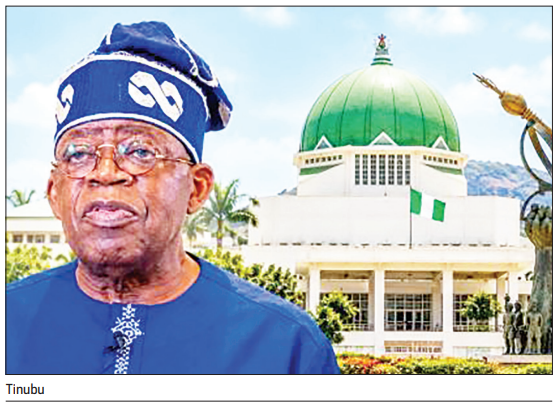
President Bola Tinubu’s receipt of the constitutional amendment bill seeking to establish state police has brought Nigeria closer to one of the most consequential changes to its security architecture since the return to democratic governance in 1999.
The development, which followed the approval of the proposed amendment by all 36 state Houses of Assembly, marks a significant breakthrough in a reform that has remained contentious for more than two decades. It also represents a major political commitment by the Federal Government, state governments and the National Assembly to reconsider the country’s centralised policing structure amid persistent insecurity across different parts of the country.
With the legislative process now completed
With the legislative process now completed and the bill before the President, attention is shifting from the question of whether states should have their own police formations to the more complicated issues of how such forces will be established, funded, supervised and prevented from becoming instruments of political control.
The Chief of Staff to the President, Femi Gbajabiamila, announced on Wednesday that Tinubu had received the Constitution (Sixth Alteration) Bill, 2026, and would consider it in consultation with the Attorney-General of the Federation before signing it at a formal ceremony. Gbajabiamila disclosed that the bill was transmitted to the President by his Special Advisers on Senate and House of Representatives Matters, Senator Basheer Lado and Dr Wasiu Olanrewaju-Smart.
According to him, all 36 state legislatures had approved the proposed amendment, exceeding the constitutional requirement of at least 24 states, representing two-thirds of the 36 states, under Section 9(2) of the 1999 Constitution. “President Tinubu will review the Constitution Alteration Bill in consultation with the Attorney-General of the Federation. He will assent to the Bill at a formal signing ceremony,” he said. The President’s receipt of the bill followed a resolution by the Senate declaring that the constitutional requirements for the amendment had been fulfilled. The upper chamber subsequently directed the Clerk to the National Assembly to transmit the legislation to Tinubu for assent.
The development is particularly significant because the proposed
The development is particularly significant because the proposed amendment has moved beyond the level of political discussions, executive recommendations and legislative promises that characterised previous attempts to introduce state policing. It has now secured the unanimous endorsement of the state legislatures, giving the proposal a level of political and constitutional backing that previous initiatives failed to achieve. However, the completion of the constitutional amendment process does not, by itself, mean that state police formations will immediately begin operations.
The proposed system still requires a comprehensive legal and administrative framework to determine the relationship between federal and state police authorities and establish the safeguards necessary for its effective operation. That distinction is important. Nigeria is not merely considering the creation of additional security outfits under the control of state governments. It is proposing a fundamental restructuring of the constitutional arrangement through which policing responsibilities are exercised across the federation.
The Senate acknowledged this challenge in its resolution, urging the President to forward a National Policing Bill to the National Assembly for legislative scrutiny and expeditious passage. The proposed legislation is expected to provide the operational framework for the new policing structure. Thus, while Tinubu’s assent would represent a landmark constitutional development, the success of the reform will ultimately depend on the quality of the legislation and institutions that follow it.
A long journey from centralised policing
The agitation for state police is rooted
The agitation for state police is rooted in the structure of Nigeria’s security system, which has concentrated policing authority at the federal level since the country adopted the 1999 Constitution.
Section 214 of the Constitution provides for a single Nigeria Police Force, with no other police force permitted to be established for the federation or any part of it, except as authorised by the Constitution itself. The arrangement places the administration and command of the conventional police under a central authority, even though the responsibility for maintaining law and order is shared by different levels of government.
This structure has increasingly come under pressure as the country’s population has expanded, criminal networks have become more sophisticated and security threats have spread beyond the capacity of conventional policing arrangements. Nigeria’s security challenges are no longer confined to conventional crimes such as armed robbery, burglary and communal disputes.
Tinubu will review the Constitution Alteration Bill in consultation with the AttorneyGeneral of the Federation. He will assent to the Bill at a formal signing ceremony
Banditry, kidnapping, terrorism, farmer-herder conflicts, organised criminal networks,
Banditry, kidnapping, terrorism, farmer-herder conflicts, organised criminal networks, illegal mining and attacks on rural communities have created a security environment requiring intelligence gathering, rapid response and sustained presence in locations that are often difficult to reach. In many communities, particularly in remote parts of the North-West and North-Central regions, residents have repeatedly complained about the absence of security personnel when criminal attacks occur.
The distance between police formations and vulnerable settlements, poor road networks and inadequate manpower have also complicated responses to emergencies. The challenge is not simply the number of officers available but also the deployment of personnel, operational resources, intelligence coordination and the ability of the police to establish relationships with communities. An assessment by the European Union Agency for Asylum, published in November 2025, estimated the strength of the Nigeria Police Force at approximately 371,800 officers, serving a population estimated at 236.7 million in 2024.
The report also raised concerns about the deployment of more than 100,000 police officers to protect politicians and other very important persons, rather than performing duties directly connected with public safety. The figures, which have been subject to differing assessments of police deployment, nevertheless illustrate the pressure on the existing force and the continuing debate over how available personnel are utilised.
The scale of Nigeria’s population and the geographical
The scale of Nigeria’s population and the geographical spread of its communities have therefore strengthened arguments that policing cannot be effectively managed through a single central command that must respond to security incidents across 36 states and the Federal Capital Territory. State governors have often argued that they are held politically responsible when insecurity escalates within their jurisdictions but lack direct constitutional control over the police officers expected to protect their residents.
Under the existing arrangement, governors are designated as chief security officers of their states, but they do not exercise the same operational command over the police as they do over state-owned institutions. Although governors can make security requests and work with police commissioners and other federal security agencies, the ultimate command structure remains federal.
This has created what proponents of state police describe as a gap between political responsibility and operational authority. For them, a governor who understands the security situation in a particular community should have the constitutional and institutional capacity to establish a police formation capable of responding to local threats, gathering intelligence and working closely with residents.
The argument has gained traction as insecurity has
The argument has gained traction as insecurity has assumed different forms across the country. In the North-East, the prolonged insurgency has required a combination of military operations, intelligence gathering and community-based security initiatives. In the North-West, banditry and mass kidnappings have affected rural communities, schools and highways. Parts of the North-Central region have continued to experience violent communal conflicts and attacks on farming settlements.
The South-East has also faced security problems involving armed groups, attacks on public infrastructure and the disruption of economic activities, while parts of the South-West have experienced kidnapping, robbery and other crimes. These challenges have reinforced the argument that a uniform policing arrangement may not adequately address the different security realities confronting individual states.
State police advocates believe decentralisation would allow security strategies to reflect local conditions, including language, terrain, community relationships and the peculiar nature of criminal activities. The proposal is not necessarily intended to replace the Nigeria Police Force. Rather, it seeks to establish an additional constitutional layer of policing in which federal and state police services operate within defined jurisdictions and cooperate on matters of national security. That distinction will be central to the success of the proposed reform.
From previous attempts to the Sixth Alteration
The current breakthrough is the product of several
The current breakthrough is the product of several years of debate and repeated attempts to amend the Constitution. The demand for state police did not originate with the Tinubu administration. It has featured prominently in discussions about Nigeria’s federal structure since the return to civilian rule in 1999. Successive administrations have faced calls to decentralise policing, particularly as the limitations of the existing arrangement became more apparent. However, the proposal has encountered resistance from those who fear that state-controlled police formations could be manipulated by governors, particularly in states where political competition is intense and institutions of accountability are weak.
The concern has been that governors could use their influence over state police to intimidate political opponents, suppress protests, harass journalists or interfere in electoral activities. There have also been concerns about the possibility of different state governments developing policing structures that operate without adequate coordination, thereby creating overlapping jurisdictions and weakening national security cooperation.
These arguments have repeatedly complicated attempts to amend the Constitution. In February 2024, the House of Representatives began another legislative effort towards establishing state police when a bill sponsored by Deputy Speaker Benjamin Kalu and other lawmakers passed its second reading. The proposal sought to move policing from the Exclusive Legislative List to the Concurrent Legislative List, thereby creating room for both the Federal Government and state governments to legislate on the establishment and administration of police services.
The initiative reflected growing pressure from lawmakers who
The initiative reflected growing pressure from lawmakers who believed that the existing constitutional arrangement had become inadequate for the country’s security needs. The National Assembly subsequently pursued the constitutional amendment process, but the proposal did not immediately translate into an operational state police system. In May 2024, the National Assembly passed a Constitution (Fifth Alteration) Bill relating to state police. However, the process stalled at the level of the state assemblies, necessitating another round of transmission and consideration.
The difficulty demonstrated that support among federal lawmakers and political leaders was not sufficient to complete a constitutional amendment. Under Section 9(2), the approval of at least two-thirds of the state Houses of Assembly was also required. The proposal therefore returned to the legislative process under the Sixth Alteration, which has now secured approval from all 36 state legislatures. The present amendment followed growing pressure on the Tinubu administration to reconsider the country’s security architecture as attacks on communities, kidnapping and other violent crimes continued to dominate public concerns.
The President’s engagement with state governors and leaders of the National Assembly, particularly during the Ramadan Iftar meetings in early 2026, provided additional political momentum for the initiative. The consultations helped move the debate towards a more coordinated legislative process involving the executive, federal lawmakers and state governments. Unlike previous attempts that struggled to secure sufficient political agreement, the current proposal has received overwhelming backing across the federation.
The Senate passed the bill on June 24,
The Senate passed the bill on June 24, 2026, while the House of Representatives approved it on July 23, 2026. Both chambers secured more than the constitutionally required two-thirds majority. The bill was subsequently transmitted to the 36 state Houses of Assembly on September 16, 2026, for consideration in accordance with Section 9(2) of the Constitution. By November 3, the National Assembly had received approval from 28 states, already exceeding the constitutional threshold of 24.
The Clerk to the National Assembly, Kamoru Ogunlana, disclosed at the time that the office had verified the resolutions and accompanying Votes and Proceedings submitted by the state legislatures. He explained that although the 30-day period given to the state assemblies had elapsed on October 15, the National Assembly would continue receiving their resolutions until the bill was formally transmitted for presidential assent. The remaining approvals followed, bringing the number of supporting state legislatures to 36.
On November 16, Ogunlana announced that all state assemblies had endorsed the proposal, describing the development as 100 per cent approval. He said the unanimous endorsement represented an unprecedented demonstration of cooperation between the National Assembly and state legislatures, as well as between the executive arms of government at the federal and state levels. The development removed the most important legislative obstacle to the proposed amendment and set the stage for its transmission to the President.
Senate declares constitutional requirements fulfilled
The Senate formally acknowledged the completion
The Senate formally acknowledged the completion of the legislative process on Wednesday, November 18, following a motion sponsored by its Leader, Opeyemi Bamidele. Presenting the motion, Bamidele recalled that the two chambers of the National Assembly had passed the amendment with the required majority before transmitting it to the state legislatures for approval.
He told lawmakers that all 36 state Houses of Assembly had communicated their resolutions endorsing the bill to the National Assembly. The senator representing Ekiti Central argued that the amendment had satisfied the constitutional conditions stipulated under Sections 9(1) and 9(2) of the 1999 Constitution. In his presentation, he stated: “The Bill has fulfilled the conditions set out in Sections 9(1) and (2) of the Constitution for a Constitutional amendment of this nature to be passed.”
The Bill has fulfilled the conditions set out in Sections 9(1) and (2) of the Constitution for a Constitutional amendment of this nature to be passed
He consequently urged the Senate to authorise the Clerk to the National Assembly to transmit the legislation to Tinubu for assent in accordance with the Acts Authentication Act, 2004. The Senate adopted the recommendation, effectively completing its part of the process and clearing the way for the President to consider the amendment. The motion also acknowledged Tinubu’s role in advancing the proposal, commending him for taking ownership of the initiative and supporting it throughout the legislative process. “We thank Mr President for taking ownership and boldly supporting the Bill throughout the process,” the motion stated.
The Senate’s position reflects a broader political understanding
The Senate’s position reflects a broader political understanding that the country’s security problems require more than the traditional approach of deploying federal police officers from a central command. However, lawmakers were careful to distinguish the constitutional amendment from the legislation required to establish the proposed policing system in practical terms. The upper chamber therefore urged the President to forward a National Policing Bill to the National Assembly for legislative scrutiny and expeditious passage.
The proposed legislation is expected to address the operational arrangements for state police, including the relationship between federal and state formations and the institutional procedures required to make the system functional. The Senate’s position is significant because the constitutional amendment will provide the foundation for state policing, while the accompanying legislation must translate that constitutional authority into an enforceable system. Without clear provisions on recruitment, training, funding, command, discipline and accountability, the reform could encounter serious difficulties even after presidential assent.
Tinubu’s working group develops implementation framework
The Presidency has indicated that preparations for the operational phase of the reform are already underway. Gbajabiamila, who chairs the Presidential Working Group on State Police, disclosed that the committee had concluded extensive nationwide consultations and engagements with stakeholders towards developing a draft National Policing Bill. According to him, the draft legislation has been submitted to the Federal Ministry of Justice for legislative drafting validation.
He explained that the working group would review
He explained that the working group would review the validated document before presenting it, alongside its report, to the President for consideration. “Upon receipt of the validated version, the Working Group will review it and present it, alongside its report, to Mr President for consideration,” he said. The consultations are expected to have addressed some of the major concerns surrounding the establishment of state police, including the relationship between federal and state police formations, the management of security operations and the need to prevent political interference.
The working group’s assignment is particularly important because the proposed system will introduce another layer of policing into an already complex security environment. Nigeria currently operates a federal police structure with commands across the states, supported by other security agencies, including the Department of State Services, the Nigeria Security and Civil Defence Corps and various specialised security formations.
The introduction of state police will require clear boundaries of responsibility to prevent duplication of duties and conflicts between officers operating under different authorities. For instance, the National Policing Bill will need to address how federal and state police officers will cooperate when criminals cross state boundaries, how intelligence will be shared and which authority will coordinate operations involving threats that extend beyond a particular state. There will also be the question of how state police formations will relate to the Inspector-General of Police and the existing federal command structure.
Criminal activities do not always respect state boundaries
Criminal activities do not always respect state boundaries. Kidnappers, armed robbery gangs and bandits can operate across several states, making cooperation between different police authorities essential. A state police system that operates in isolation could create new security gaps rather than close existing ones. The operational framework must therefore establish mechanisms for joint operations, intelligence exchange, interstate investigations and coordinated responses to emergencies. The President’s consultation with the Attorney-General of the Federation before assent also suggests that the executive is considering the constitutional and legal implications of the proposed reform.
Tinubu expressed appreciation to the President of the Senate, the Speaker of the House of Representatives, members of the National Assembly, the Clerk to the National Assembly, the 36 state governors, state lawmakers and Nigerians for their contributions. The Presidency’s position is that the reform represents a collective response to the country’s security challenges rather than an initiative belonging to any single arm or level of government.
Amotekun and the experience of subnational security arrangements
One of the developments that helped strengthen the argument for decentralised policing was the emergence of regional and state-backed security organisations, particularly in the South-West.
The Western Nigeria Security Network, popularly known
The Western Nigeria Security Network, popularly known as Amotekun, provides an important example of how state governments have attempted to respond to security concerns within the limitations of the existing constitutional framework. The security outfit was launched on January 9, 2020, by the six South-West governors in Ibadan, Oyo State, following growing concerns about kidnapping, armed robbery, attacks on communities and other criminal activities in the region. The initiative was associated with the administration of the late Ondo State Governor, Rotimi Akeredolu, who was among the strongest advocates of regional security cooperation.
The governors argued that the security challenges confronting their states required a coordinated response that could complement the work of the conventional police and other federal security agencies. Amotekun was designed to strengthen intelligence gathering, improve local surveillance and provide security support in communities where the presence of conventional security agencies was considered inadequate. However, its establishment initially generated controversy over the constitutional authority of state governments to create a security organisation with policing responsibilities.
The then Attorney-General of the Federation, Abubakar Malami, questioned its legality, arguing that the Constitution did not permit state governments to establish independent police formations. The controversy prompted a meeting between Vice-President Yemi Osinbajo and the South-West governors at the Presidential Villa on January 23, 2020. At the meeting, both sides agreed that the structure of Amotekun should align with the Federal Government’s community policing strategy and that appropriate legal instruments should be put in place by the participating states to regulate its operations.
The agreement helped resolve the immediate disagreement
The agreement helped resolve the immediate disagreement and provided a basis for the development of state laws governing the security network. The Amotekun experience demonstrated the willingness of state governments to take a more active role in addressing insecurity, particularly where local communities demanded security arrangements that reflected their immediate circumstances. It also exposed the legal limitations of the existing constitutional framework.
The danger of political interference
While the approval of all 36 state assemblies represents an important consensus, it does not mean that every concern surrounding state police has been resolved. One of the strongest arguments against decentralising policing has always been the possibility of abuse by state governors and other political office holders.
Unlike the conventional police, whose command structure is centralised, state police will operate within political jurisdictions headed by elected governors. This raises questions about whether state governments can maintain the independence of police institutions, particularly during elections, political protests and disputes involving powerful individuals. There are fears that governors could deploy state police officers against opposition parties, critics of government policies, journalists and civil society organisations.
In states where political competition is intense,
In states where political competition is intense, the possibility of a police formation being used to settle political scores could undermine democratic freedoms. There are also concerns about the protection of minority communities and residents who may find themselves in conflict with the political leadership of their states. These issues cannot be dismissed simply because all 36 state assemblies have approved the constitutional amendment.
The fact that the National Assembly has called for a National Policing Bill provides an opportunity to address them before the new system becomes operational. One of the critical requirements will be the establishment of independent oversight institutions capable of investigating allegations of misconduct and holding state police officers accountable. The appointment and removal of senior police officers will also require carefully defined procedures that prevent arbitrary political interference.
The operational framework must establish whether governors will exercise direct command over state police commissioners, the role of state police service commissions and the extent to which independent institutions will participate in recruitment, promotion, discipline and dismissal. These are not merely administrative questions. They will determine whether state police becomes a professional security institution or another extension of the political machinery of state governments. The issue of human rights protection is equally important.
Police officers, regardless of whether they serve under
Police officers, regardless of whether they serve under federal or state authorities, must operate within the provisions of the Constitution and applicable laws. There must be clear procedures for arrest, detention, investigation and the use of force, alongside accessible channels through which citizens can report abuses. The National Policing Bill should also establish effective mechanisms for judicial oversight and independent investigations where allegations of unlawful conduct arise.
The Senate’s call for operational guidelines and safeguards against possible abuse by governors indicates that lawmakers recognise the sensitivity of these issues. The challenge will be ensuring that such safeguards are not merely written into legislation but are enforceable in practice. Nigeria’s democratic institutions must be strong enough to prevent any governor from treating a state police formation as a personal security organisation. The proposed reform should strengthen public security, not create another instrument for political intimidation.
Funding and manpower remain major questions
Beyond political interference, the financial implications of establishing state police could determine how quickly the system becomes operational and how effective it will be. State governments already face competing demands involving education, healthcare, infrastructure, salaries, pensions and social welfare.
Establishing a functional police service will require substantial
Establishing a functional police service will require substantial financial commitments, including recruitment, training, salaries, uniforms, vehicles, communication equipment, weapons, forensic facilities, intelligence systems and operational bases. Unlike the existing arrangement, in which the Federal Government bears the principal responsibility for funding the Nigeria Police Force, state governments will have to make provisions for their own policing institutions under the proposed system.
This raises questions about the financial capacity of states to sustain police formations without compromising other essential responsibilities. The disparity in revenue among states is particularly important. While some states have relatively strong internally generated revenue and access to substantial federal allocations, others depend heavily on monthly Federation Account distributions to meet their obligations. A wealthy state may be able to recruit thousands of officers, establish modern command centres and acquire sophisticated surveillance equipment.
A state with limited revenue may struggle to pay salaries and maintain basic operational facilities. Such differences could create an uneven security environment in which the quality of policing available to citizens depends largely on the financial strength of their state governments. The Federal Government and National Assembly will therefore need to consider whether a national funding support mechanism should complement state resources, particularly for states facing significant financial constraints.
There will also be the need to establish
There will also be the need to establish minimum standards for recruitment, training, equipment and operational capacity across the federation. A uniform national training framework could help ensure that officers recruited by different states are guided by common professional standards. The issue of manpower is equally significant. With an estimated 371,800 officers in the conventional police force, Nigeria already faces substantial demands for additional personnel.
The introduction of state police could provide an opportunity to expand the country’s overall policing capacity, but recruitment must be based on genuine security needs rather than political considerations. State governments will have to determine the appropriate number of officers required for their populations, geographical areas and security conditions. The process should also take account of the need for specialised personnel in intelligence gathering, criminal investigation, cybercrime, forensic analysis, traffic management and community policing.
Recruitment should be transparent and based on merit, with appropriate background checks to prevent the entry of individuals with criminal records or questionable affiliations. Training must go beyond the handling of weapons and physical security operations. Officers will require instruction in constitutional law, human rights, conflict resolution, evidence gathering and professional conduct. Without these safeguards, decentralisation could simply reproduce the weaknesses of the existing system at state level.
Nigerians welcome reform, demand safeguards against abuse
Some Nigerians believe that the success
Some Nigerians believe that the success of the reform will depend less on the establishment of state police itself than on the safeguards governing recruitment, deployment, funding, discipline and accountability. They argue that without clearly defined rules, state police formations could become extensions of governors’ political machinery rather than independent institutions committed to protecting citizens.
The fear is that a governor who controls the police could use the force to intimidate political opponents, disrupt opposition activities, suppress protests or influence electoral processes. Such concerns are particularly significant ahead of the 2027 general elections, when political competition is expected to intensify across the country.
Analysts warned that establishing and maintaining state police formations would require substantial financial re, vehicles, communication systems, operational facilities and welfare. Lawyer and public commentator, Charles Omole, speaking on Channels Television’s Politics Today, identified funding, professional competence and recruitment standards as major challenges that must be addressed for the proposed system to succeed
He argued that competent professionals and sustainable funding
He argued that competent professionals and sustainable funding arrangements would be critical to managing the transition. The concerns have reinforced calls for the Federal Government and the National Assembly to ensure that the constitutional amendment is accompanied by a comprehensive legal and institutional framework capable of preventing abuse. Senate Minority Leader, Senator Abba Moro, said the establishment of State Police had become necessary given the country’s worsening security situation.
He maintained that the proposed arrangement would complement the existing security architecture and strengthen the capacity of governments to respond to threats within their jurisdictions. In his contribution, Deputy Senate President and Chairman of Senate Committee on Constitution Review, Senator Barau Jibrin, described the development as a historic achievement for the Tinubu administration and the 10th National Assembly. He said successive administrations had considered introducing State Police but failed to translate the proposal into reality.
He attributed the progress to Tinubu’s commitment, describing the proposed arrangement as a collaborative policing structure designed to strengthen the Nigeria Police rather than undermine it. Jibrin stated, “This is a wonderful achievement for the present administration and the current National Assembly. As we know, this matter has been under discussion for a long time. Successive governments have considered how to introduce State Police into the country’s policing system. “However, no administration was able to achieve this until the present government came into office.
He projected that the establishment of State Police
He projected that the establishment of State Police could address as much as 70 per cent of the country’s security challenges. “This is a legislation that will not be forgotten. It is a major achievement of the 10th National Assembly,” Akpabio said. The most pointed intervention came from former Edo State Governor, Senator Adams Oshiomhole, who warned that the proposed State Police system must not become an instrument of political oppression in the hands of state governors.
While congratulating the senate leadership and the president, Oshiomhole said concerns about possible abuse should not prevent Nigeria from adopting a policing structure capable of responding more effectively to local security threats. He recalled that, as governor, he had expressed reservations about the possibility of future administrations using State Police against political opponents. Oshiomhole called for comprehensive operational guidelines with the force of law to regulate the activities of the proposed security institutions. He said, “We can foresee the possibility of some people misusing the police, but that should not be enough reason to abandon the idea.
While we pass the bill and transmit it for presidential assent, we should also encourage the executive to send a bill addressing the operational guidelines and how State Police will function alongside the federal police.” The former governor warned that disagreements could arise between federal and state authorities over security responsibilities, insisting that clear legal provisions are necessary to prevent institutional conflicts. He said the guidelines should establish limits on the use of State Police, particularly in political matters, and ensure that the initiative achieved its primary objective of making Nigeria safer.
What happens after presidential assent?
With the bill now before Tinubu, the immediate
With the bill now before Tinubu, the immediate expectation is that the President will complete his review in consultation with the Attorney-General of the Federation and proceed with the formal signing. However, the signing ceremony should be viewed as the beginning of another phase rather than the end of the process. The National Policing Bill will still have to pass through the National Assembly before the proposed system can be implemented under a comprehensive operational framework.
The legislation will need to establish the institutional structure of state police, define the powers of relevant authorities and provide procedures for the recruitment, training and discipline of officers. State governments will also have to develop the necessary administrative arrangements, including budgetary provisions, recruitment institutions, police training facilities and command structures.
The process may not unfold at the same pace across all 36 states. States with established security institutions and stronger financial capacity may be able to make the transition more quickly, while others may require additional time to develop the necessary infrastructure and personnel. It will therefore be important to establish a national implementation timetable that takes account of the different capacities of state governments. The National Assembly and the Presidency must also ensure that the implementation process is transparent and open to public scrutiny.
Citizens should understand how state police will operate,
Citizens should understand how state police will operate, who will supervise them, how complaints will be handled and what legal remedies will be available when officers violate their rights. Civil society organisations, professional security bodies, the Nigerian Bar Association and human rights institutions should have opportunities to contribute to the development of the operational framework. The National Human Rights Commission could also play an important role in monitoring compliance with constitutional protections and investigating systemic violations.
The proposed system must not be implemented simply to satisfy political expectations. It must be designed to deliver measurable improvements in public safety. Among the indicators that should guide its performance are response times, crime prevention, the quality of investigations, the protection of vulnerable communities and public confidence in law enforcement.
The reform should also be assessed by whether it improves security in rural communities and other areas that have historically received inadequate police attention. There is little value in establishing additional police formations if they become concentrated around government offices, political leaders and urban centres while vulnerable communities remain exposed to attacks. The objective must be to make policing more accessible, professional and responsive.