
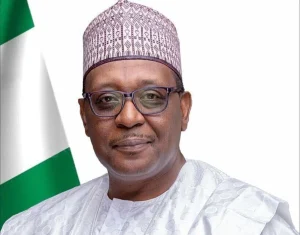


The Special Adviser to President Bola Tinubu on Economic Affairs, Tope Fasua, has warned that distributing money to Nigerians without addressing underlying economic challenges will not provide a sustainable solution to poverty.
Fasua said the Federal Government must prioritise economic stability, productivity, investment and job creation rather than depend excessively on cash handouts to address the country’s economic difficulties.
He spoke on Thursday in Abuja at the 2026 National Growth and Development Forum, themed “The Nigeria We Want: The Economy, Your Money, Our Future,” organised by Moneyline with Nancy on African Independent Television.
“If we only focus on sharing money, we’ll probably be digging a deeper hole from where we came from,” he said.
The presidential adviser acknowledged the hardship confronting Nigerians but maintained that sustainable improvements in living standards required a stable macroeconomic environment.
“If you don’t build a strong macro, you can’t go anywhere with the micro,” Fasua said.
He added, “People cannot hear anything if they are hungry.”
Fasua recalled the previous administration’s reliance on Ways and Means financing, which he estimated at between N30tn and N35tn, arguing that excessive monetary financing was not a sustainable economic strategy.
However, he acknowledged that the COVID-19 pandemic had complicated economic management under the previous administration.
Defending the Tinubu administration’s reforms, Fasua alleged that petrol subsidies previously cost Nigeria approximately $15bn annually, with substantial benefits accruing to powerful interests in the petroleum industry.
He also argued that exchange-rate reforms had reduced opportunities for arbitrage and improved access to foreign exchange for manufacturers and individuals.
According to him, the most difficult period of the reforms occurred between late 2023 and 2024, while subsequent developments indicated improving economic conditions.
“I think that the worst is over,” he declared.
Fasua cited Nigeria’s 4.43 per cent economic growth in the second quarter of 2026, moderating inflation and improvements in external reserves as evidence of progress.
Nevertheless, he acknowledged that poverty remained a major challenge requiring sustained attention.
He urged Nigerians to embrace entrepreneurship, arguing that the country’s infrastructure, agricultural, manufacturing, healthcare and technology challenges also presented opportunities for business development.
“Nigeria is not short of opportunity. We are sometimes short of the confidence, information, imagination, and determination to develop Nigeria,” he said.
The presidential adviser also stressed financial literacy, savings, investment and responsible borrowing, warning against spending beyond one’s income.
“A stronger Naira must be earned through a stronger economy. It cannot be legislated into existence,” he added.
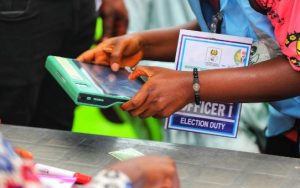
His remark comes amid the Federal Government’s expansion of cash assistance programmes, with the World Bank reporting that N658.9bn had been disbursed to 10.46 million poor and vulnerable households as of September 2026.
Recently, the government also announced a N50,000 relief payment for selected vulnerable households under the National Emergency Relief and Stabilisation Intervention, generating widespread interest in payment alerts and eligibility.
Also speaking, the President of the Nigerian Economic Society, Dr Baba Musa, warned that improvements in macroeconomic indicators had yet to translate into adequate welfare gains for millions of Nigerians.
“Macroeconomic stability is necessary, but it is not yet shared prosperity. A stable exchange rate is not yet a full dinner table. Stability is the foundation; it is not the building,” Musa said.
He cited World Bank estimates indicating that about 63 per cent of Nigerians lived below the poverty line in 2025, while calling for agricultural productivity, affordable credit, job creation and stronger social protection.
Musa also urged political leaders to maintain fiscal discipline and policy continuity ahead of the 2027 elections.
Similarly, the President of Capital Market Academics of Nigeria, Prof. Uche Uwaleke, said economic reforms should be judged by their impact on employment, purchasing power and poverty reduction rather than macroeconomic indicators alone.
“The success of any economic reform must be measured not merely by improvements in GDP growth, foreign exchange stability, government revenue or external reserves, but by its capacity to create jobs, improve purchasing power, reduce poverty, expand opportunities and enhance the overall quality of life of citizens,” he said.
Uwaleke noted that the Nigerian capital market had recorded year-to-date returns exceeding 60 per cent, but stressed the need to make investment opportunities accessible to ordinary Nigerians through financial education, affordable products and stronger investor protection.
The Managing Director of the Bank of Agriculture, Ayodeji Sotinrin, also advocated productive financing rather than repeated distribution of free agricultural inputs.
He disclosed that the bank was implementing financing programmes covering smallholder farmers, mechanisation, improved seeds, irrigation and agricultural value chains.
“It’s not by giving them handouts because they’re on social media. It’s not by sharing free fertiliser. Give them tools to fish, and you teach them how to fish rather than you hand out fish to them,” he said.
Sotinrin explained that the bank was pursuing partnerships with cooperatives, financial institutions and state governments to provide sustainable agricultural financing.
Earlier, the Executive Producer of Moneyline with Nancy and the convener of the event, Nancy Iloh-Nnaji, said the forum was designed to bridge the gap between economic policymaking and public understanding.
“A policy is announced, a reform is introduced, but the people expected to benefit from it do not always understand what it means for them or how to take advantage of it,” she said.
She called for greater public awareness of development finance opportunities, financial literacy and investment risks, while warning Nigerians against fraudulent investment schemes and online impersonation.