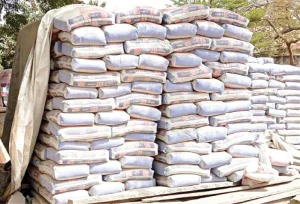



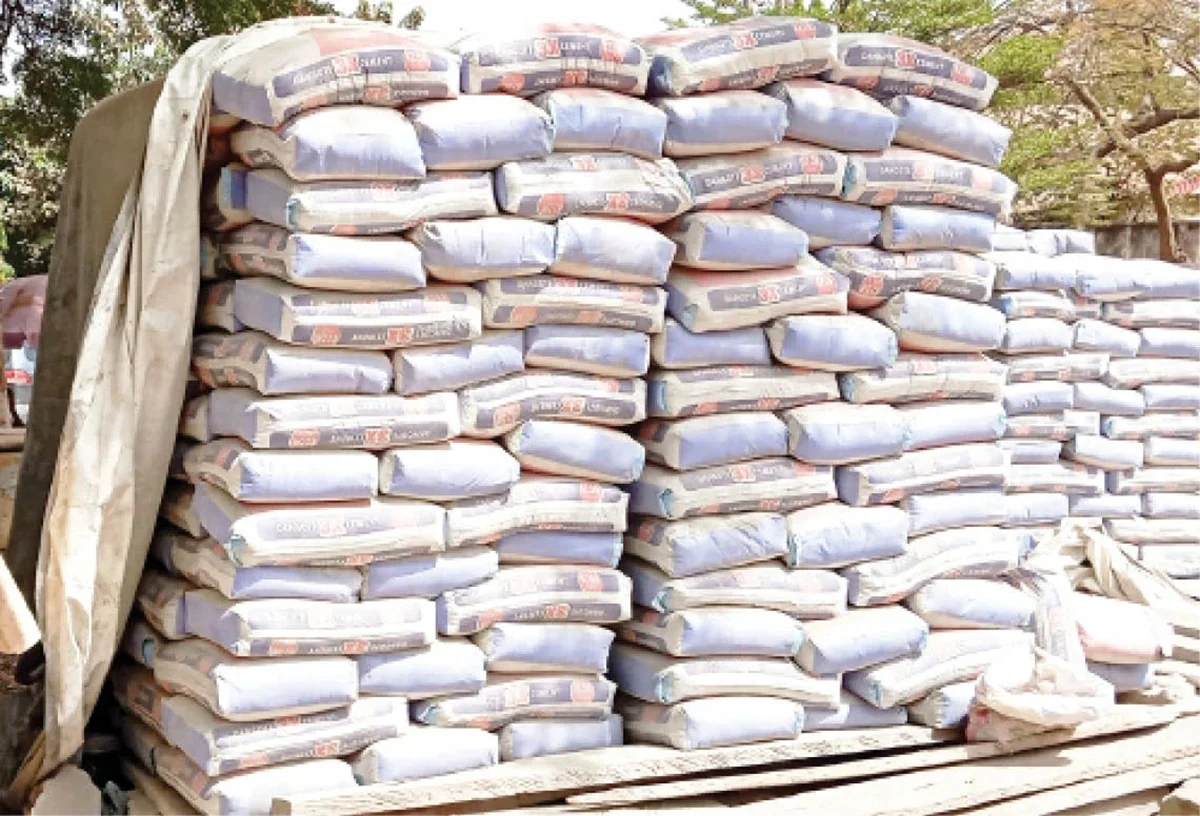
THE price of cement in Nigeria has surged by approximately 438.5 per cent in six years, rising from about N2,600 per 50kg bag in 2020 to N14,000 in November 2026, the latest report by the Research and Economic Development Unit of Housing Development Advocacy Network (HDAN), has revealed.
The increase, according to the report, represented more than five times the 2020 price, highlights the mounting pressure on building-material costs and the growing difficulty faced by households, developers and construction firms in delivering affordable homes.
The situation, the report noted has further worsening the country’s housing affordability crisis and putting homeownership beyond the reach of many Nigerians.
It attributed the persistent escalation in housing production costs to a combination of exchange-rate depreciation, inflation, high interest rates, energy expenses, transportation and logistics challenges, as well as structural weaknesses in the building-materials market.
The report, titled Nigeria’s Building Materials Price Crisis, 2020–2026: An Institutional Assessment of Construction Costs, Materials Prices, Housing Affordability and the Future of Homeownership, noted that the price of cement rose from approximately N2,600 in 2020 to N4,800 in 2023 and N7,750 in 2024.
By 2026, it said that the published market observations showed prices ranging from about N12,000 in an Abuja November rate card to as high as N15,000 in selected markets in September.
Although the figures were drawn from different locations and market observations rather than a uniform national price series, HDAN said they demonstrated the substantial increase in the nominal prices of essential construction materials over the period.
To address the situation, HDAN urged the government to work with credible building-material producers and the Bank of Industry to improve access to industrial financing, reliable electricity, modern technology and more efficient production systems
It also made a case for the establishment of a National Building Materials Price and Construction Cost Index in collaboration with the National Bureau of Statistics, quantity surveyors, academic institutions and relevant industry bodies.
“The proposed index would provide regular state-level information on building-material prices, including product specifications, locations, delivery costs, dates and sample sizes, to improve transparency and support evidence-based policy making,” it read
The report identified exchange-rate depreciation as a major contributor, explaining that the weakening of the naira had increased the cost of imported equipment, components and finishing materials used in housing construction.
The HDAN’s report also identified rising energy and transportation costs as major sources of pressure on manufacturers and suppliers.
According to the report, the cost of power generation, diesel, quarry transportation, haulage delays and poor road infrastructure have increased the prices of building materials delivered to construction sites.
The report further noted that high interest rates and inflation had raised the cost of working capital and inventory financing, making it more expensive for manufacturers, suppliers and developers to maintain operations.
On market competition, HDAN observed that concentrated supply in certain essential building materials required transparent monitoring and evidence-based intervention by relevant competition authorities.
HDAN, in the report, also identified overdependence on imported building materials, including steel products, equipment, electrical fittings and finishing materials, as exposing construction projects to exchange-rate volatility, international freight costs and global supply disruptions.
Beyond the cost of materials, the report explained that developers were increasingly burdened by the expenses of acquiring land, securing approvals and providing basic infrastructure such as roads, drainage, water and electricity.
It added that inefficient designs, poor site planning, inadequate supervision, construction waste, costly rework and frequent changes in specifications also contributed to higher building costs.
The research warned that escalating construction costs were worsening the country’s housing affordability challenge, particularly for low-income earners, young Nigerians and households relying on personal savings to build homes incrementally.
According to the report, rising material prices erode household savings, making it increasingly difficult for individuals constructing their homes in phases to complete projects.
“Households that begin construction with available funds may find themselves unable to afford roofing, electrical installations, plumbing and finishing materials when prices rise before the projects are completed,” the report read, warned that higher construction costs increase the amount required for home deposits and the principal borrowers must secure through mortgage financing.
The report argued that rising house prices could undermine the effectiveness of mortgage interventions because even attractive interest rates might not make expensive homes affordable to households with limited incomes.
HDAN illustrated this challenge through mortgage repayment simulations based on an 80 per cent loan-to-value ratio and a 20-year repayment period.
It concluded that reducing the underlying cost of producing houses was as important as expanding access to housing finance.
According to the research, rising input prices expose developers operating fixed-price contracts and pre-sold housing schemes to shrinking profit margins, contract disputes and project delays.
“Contractors may demand price variations, while developers may require additional equity to complete projects as construction budgets become inadequate,” it read.
The report added that prolonged construction delays could affect employment and economic activities across the building-materials manufacturing, transportation, professional services and construction sectors.
However, HDAN is calling for a coordinated National Housing Production Cost-Reduction Programme aimed at lowering the cost of producing safe and affordable homes.
It also advocated the publication of standardised and costed housing designs, including one-bedroom units of between 40 and 45 square metres, alongside two- and three-bedroom prototypes.
These designs, it said, should include detailed bills of quantities, labour requirements, material costs and allowances for construction waste to provide credible benchmarks for developers, government agencies and prospective homeowners.
It also called for investments in transportation infrastructure to reduce the cost of moving cement, steel and other essential materials from manufacturing plants, quarries and distribution centres to major housing markets.
ALSO READ: CBN retains interest rate at 23%
The report recommended the development of serviced and accessible land through the provision of trunk roads, drainage, water and electricity before large-scale allocation to housing developers.
It further advocated targeted homebuyer financing, improved developer funding and stronger project cost management to ensure that housing schemes are financially sustainable.
HDAN maintained that housing affordability could not be achieved through mortgage expansion alone without addressing the underlying cost of construction.
It urged federal and state governments, legislators, professional bodies, industry institutions and development financiers to make verifiable reductions in housing production costs a national economic priority.
WATCH TOP VIDEOS FROM NIGERIAN TRIBUNE TV