

Trained as an aeronautical engineer and offered a path into scientific research, Winnie Byanyima chose activism over academia as Uganda’s politics shifted.“My country was falling apart”, she recalled. “Young people were all flocking towards a mass movement to end dictatorship, so I also joined a struggle to end dictatorship,”
Growing up amid cycles of violence and military coups, alongside parents who were both teachers and activists, helped shape the convictions that would guide her work.
As the Executive Director of UNAIDS and United Nations Under-Secretary-General, Ms Byanyima has become one of the most prominent voices challenging the inequalities that continue to fuel the global HIV epidemic. Drawing on a career spanning gender equality, economic justice and global health, she has continuously argued that ending AIDS requires confronting not just the biology of the virus, but the social and structural inequalities that allow it to spread.
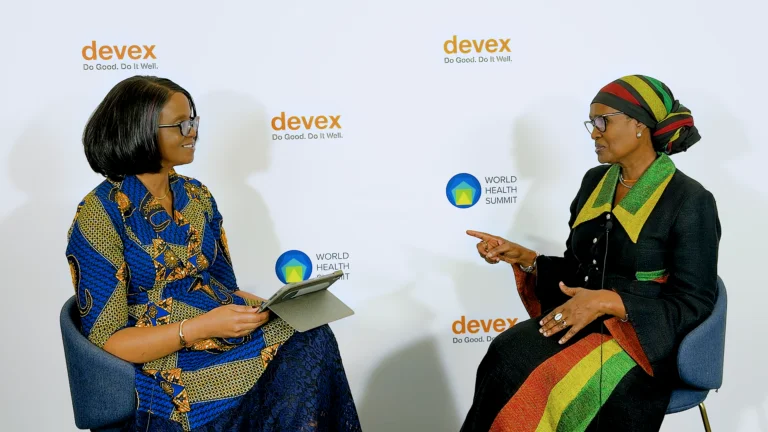
In a recent edition of Nigeria Health Watch’s Curated Conversations, Ms Byanyima discusses the collapse in international HIV funding, the debt burden squeezing African health budgets, and whether local manufacturing can secure Nigeria’s HIV response. “African countries have woken up to the need to do their own manufacturing of medicines, and we are supporting those efforts,” she said.
A disease of inequality
Working on HIV brought Ms Byanyima close to some of the most marginalised and criminalised people in the world. “This disease, HIV and AIDS, is a disease of inequality,” she said.
The tools to end it already exist, she said, explaining that “everyone can have what they need to avoid getting HIV, or to be on treatment and live a healthy life. But still, people die.”
The scale of that failure remains substantial. In 2025, an estimated 1.2 million people acquired HIV globally, while 570,000 people died from AIDS-related illnesses. For Ms Byanyima, the issue is who is being left outside the clinic door, not simply what is missing from the medicine cabinet.
An 18% funding shock meets a debt trap
International funding for the HIV response fell by 18% in 2025, reaching its lowest level in nearly two decades. Ms Byanyima put that figure at about US$1.5 billion withdrawn from countries, often with little notice.
Affected countries, she noted, already fund up to 60% of their own responses, and the shortfall landed on budgets that had no room to absorb it. “No country can fill that gap overnight. So we are asking developing countries to do the impossible,” she said.
The constraint she returned to most often was debt. “28 countries in Africa are today paying more towards repayment of the interest on debt than on their health budgets, than on the health of their people.”
She traced this to an international financial system that prices African borrowing at three to five times the rates available to wealthy countries, with no orderly mechanism for restructuring once debt accumulates. “We do need to have a reform of the international financial architecture,” she said.
Nigeria illustrates the squeeze. According to the Debt Management Office, public debt stood at ₦166.79 trillion as of June 2026. In the first quarter of 2026, the Federal Government spent ₦4.63 trillion on debt servicing against revenue of ₦5.08 trillion, meaning roughly 91% of revenue went towards debt obligations. The 2026 budget allocated ₦15.8 trillion to debt servicing, compared with a proposed ₦2.48 trillion for health.
Allocation is only half the problem, budget releases remain an issue. In February 2026, the Coordinating Minister of Health and Social Welfare, Professor Muhammad Ali Pate, disclosed that only ₦36 million of the ₦218 billion appropriated for the Ministry’s 2025 capital projects had been released, citing cash-flow constraints and budget execution bottlenecks.
These pressures land directly on the HIV response. International partners have historically financed more than 80% of Nigeria’s national HIV programme, according to UNAIDS’ 2025 World AIDS Day report. After funding disruptions in 2025, the Federal Government allocated an additional US$200 million to safeguard treatment services, a stopgap rather than a settlement.
From aid dependence to health sovereignty
Ms Byanyima framed the current moment as painful, but clarifying. “All this has come because aid has ended suddenly. But developing countries are in the lead. They are fighting to achieve health sovereignty, to develop the market, the regulations, to produce the medicines for themselves, and to fund their health systems.”
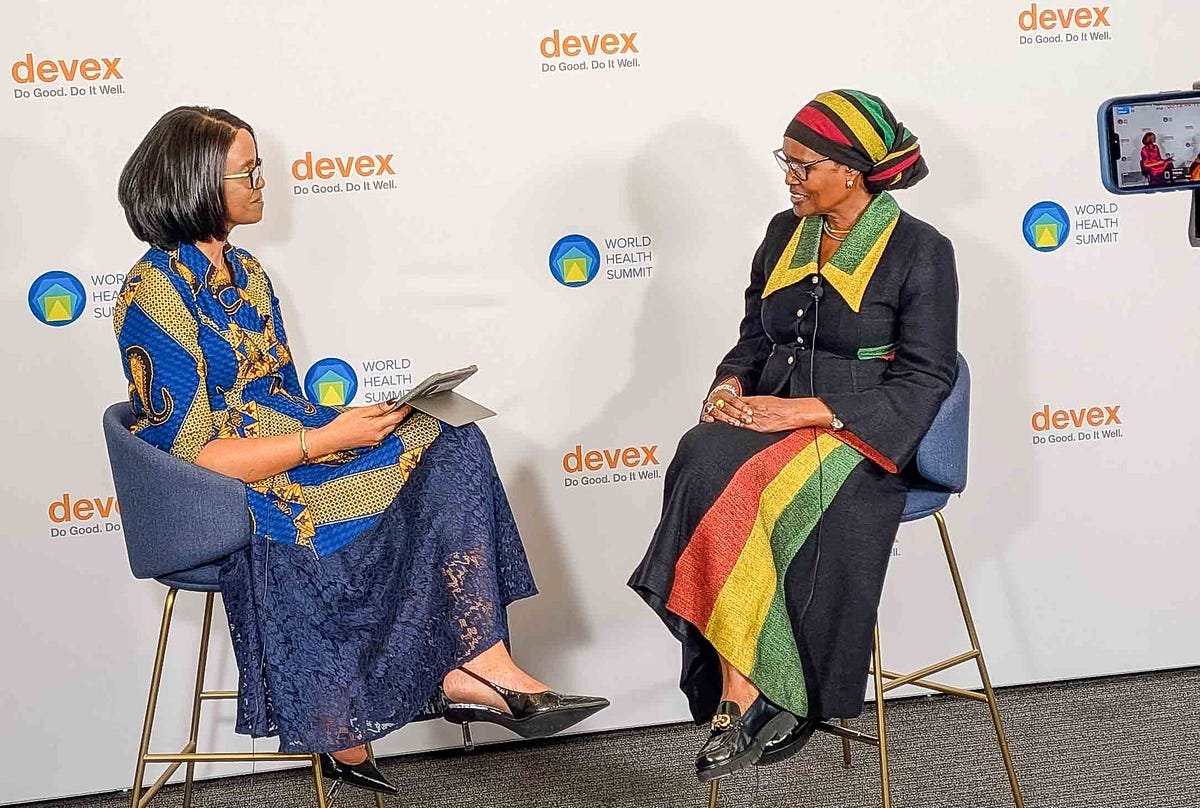
She was clear that factories alone will not deliver that sovereignty. Intellectual property rules determine whether African manufacturers can make the products their populations actually need, which is why the Pathogen Access and Benefit-Sharing (PABS) provisions of the Pandemic Treaty remain unresolved. Developing countries, she said, are asking companies to “share the technology which you develop with us,” while companies reply “we want to have monopolies and to price as we want.” Without a shift in those rules, local production risks being confined to the least complex, least protected products.
Nigeria is building towards that capacity. Established in October 2023 under President Bola Ahmed Tinubu’s Renewed Hope Agenda, the Presidential Initiative for Unlocking the Healthcare Value Chain (PVAC) aims to strengthen local manufacturing, research and development, and supply chains. It sits under Pillar 3 of the administration’s Four-Point Agenda for Health Sector Reform.
With local manufacturers meeting only about 25% of Nigeria’s pharmaceutical needs, PVAC’s roadmap, as outlined in the State of Health of the Nation Report 2024, targets raising local pharmaceutical production to 40% by 2026 and 70% by 2030, and lifting local production of active pharmaceutical ingredients from zero to 4% by 2026 and 10% by 2030.
What the roadmap does not yet contain is a specific target for antiretroviral production. Nigeria has begun exploring domestic production of HIV commodities, including test kits and antiretroviral medicines, through partnerships with private-sector manufacturers. Whether PVAC strengthens the HIV response will depend on whether those commodities are treated as a priority within it, and on whether government offers manufacturers the predictable procurement volumes that make investment worthwhile.
“You can’t treat away HIV”
The consequences of underfunding are not shared equally. Women and girls, particularly adolescent girls and young women, continue to carry a disproportionate burden of HIV in sub-Saharan Africa.
“Three out of four new infections amongst young people from the age of 15 to 24 are women and girls in sub-Saharan Africa. That tells you something,” Ms Byanyima said. “It’s not that they are biologically more susceptible to infection. No. It is inequality of opportunity, inequality in education, inequality of power in sex relations. It is gender-based violence.”
Her conclusion was blunt, “you can’t treat away HIV. You must address those inequalities in order for women and girls to be less vulnerable to infection.” Keeping girls in school, providing sex education and building economic skills were, in her account, HIV interventions rather than adjacent social policy. “If we don’t keep a girl in school, she’s out there on a farm, she’s working in a trading centre, she’s in a male and adult environment with no protection.”
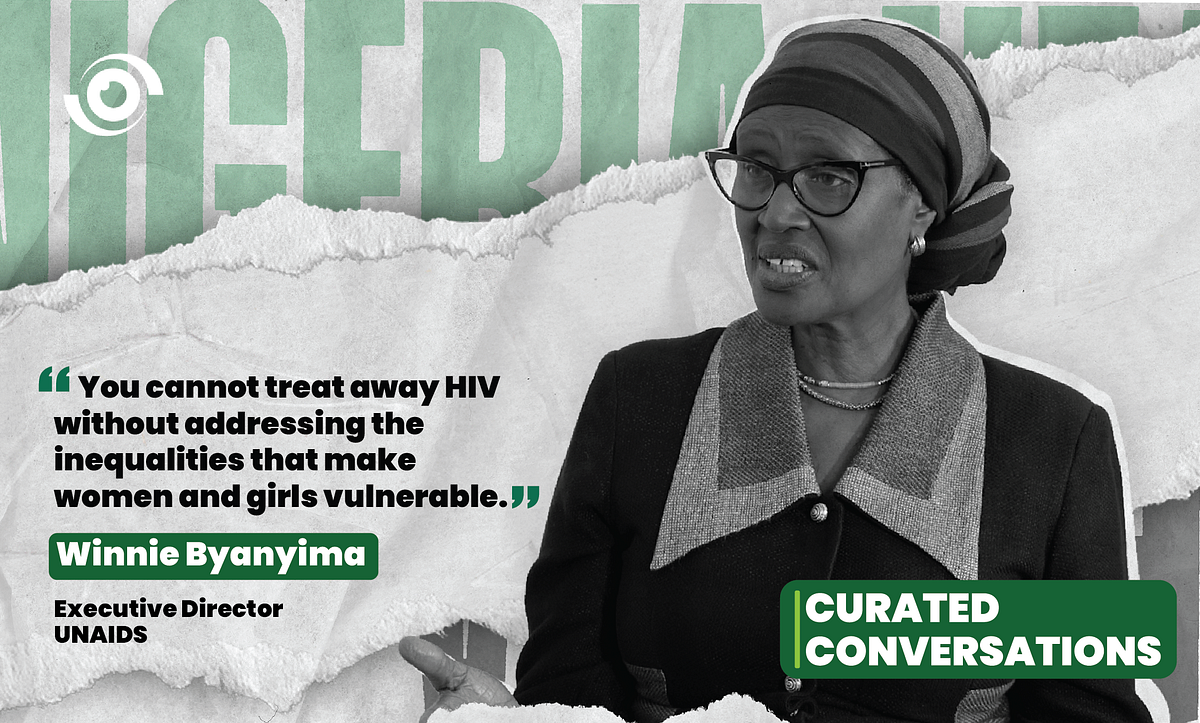
For Nigeria, this means that expanding local manufacturing must run alongside work on access and norms. Government and implementing partners will need to strengthen age-appropriate health education, expand HIV testing and pre-exposure prophylaxis (PrEP), and confront gender-based violence, stigma and discrimination, with services designed around the realities of women and girls in rural and underserved communities.
Ending AIDS starts with access
World AIDS Day 2026, themed “Ending AIDS starts with access,” offers Nigeria and other African countries an opportunity to examine how they move beyond dependence on external assistance towards health systems that are resilient and domestically financed.
Producing medicines locally is only part of that shift. Without predictable financing, effective procurement, quality assurance and equitable access, additional manufacturing capacity may not translate into better health outcomes. The success of local pharmaceutical manufacturing should therefore not be measured only by the number of factories established or medicines produced, but by whether people can consistently obtain affordable, quality-assured medicines and services.
For women and girls, people living with HIV and other underserved populations, that distinction will determine whether a sustainable HIV response becomes a reality, or remains a commitment that outlives the funding meant to deliver it.
Watch the full Curated Conversation with Ms Winnie Byanyima on inequality, debt and the future of the HIV response.