
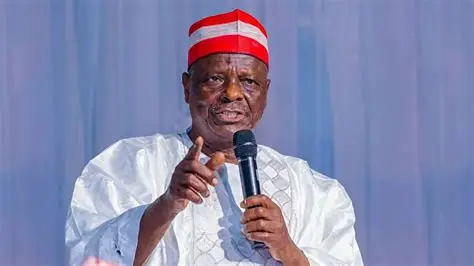
Former Kano State governor, Rabiu Kwankwaso, has accused Governor Abba Yusuf of attempting to use anti-corruption agencies to mount political attacks against him and his family—an allegation the state government has denied.
Kwankwaso, the Nigeria Democratic Congress vice-presidential candidate, made the claim on Friday in a post on his verified X account, alleging that Yusuf personally petitioned the Economic and Financial Crimes Commission to investigate him.
However, the state government dismissed the accusation, insisting that the governor had no involvement in Kwankwaso’s case with the anti-graft agency, which it noted began before the current administration took office.
Kwankwaso, a former two-term governor of Kano State, alleged that Yusuf, who had served under him in various capacities, was determined to drag him into public controversy by weaponising government agencies, particularly the EFCC.
He noted that Yusuf had served as his personal assistant, principal private secretary, and commissioner, and was also the movement’s anointed candidate in the 2019 and 2023 governorship elections.
“The longstanding relationship of 43 years with him and the trust I reposed in him afforded him access to information and insight into the value I place on personal integrity—trust that has, regrettably, been misused and abused,” he stated.
Kwankwaso claimed that the governor had submitted a formal request to the EFCC several months ago seeking an investigation into him.
He alleged that after failing to persuade the commission, Yusuf resorted to using a group, the Society for Anti-Corruption and Good Governance Initiative, to stage protests at the EFCC headquarters in Abuja.
The NDC leader stated that the organisation is neither registered with the Corporate Affairs Commission nor does it have any verifiable digital presence or formal relationship with the EFCC or the Independent Corrupt Practices and Other Related Offences Commission.
“It was used to stage physical protests at the EFCC premises in a deliberate attempt to exert pressure on the agency,” he said.
Saturday PUNCH gathered that the group staged a protest at the EFCC headquarters on Tuesday, submitting a petition calling for an investigation into properties allegedly linked to the former governor in Kano, Abuja, Lagos, and Nasarawa states.
The group asked the commission to investigate the sources of funds used to acquire the properties and examine Kwankwaso’s bank accounts, tax records, and asset declarations.
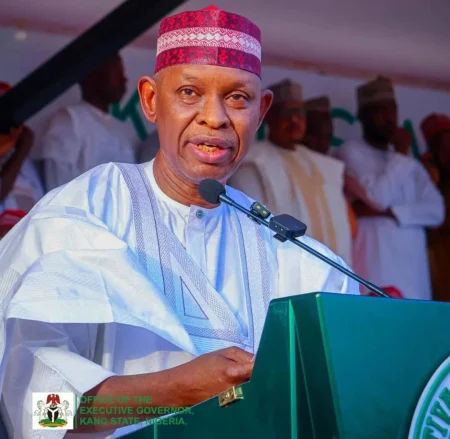
In response, the state government, in a statement issued on Friday by the Commissioner for Information and Internal Affairs, Sunusi Tofa, described the allegations as misleading and politically motivated.
It stated that Yusuf had “absolutely no involvement” in Kwankwaso’s dealings with the EFCC.
“Senator Kwankwaso has had engagements with the anti-corruption agency long before the emergence of the present administration in Kano State. It is therefore wrong, misleading, and politically motivated for him to associate Governor Yusuf with an issue that predates the current government,” the statement partly read.
Kwankwaso also accused Yusuf of attempting to influence officials of the Independent National Electoral Commission and the judiciary to prevent the publication of the name of the NDC governorship candidate, Aminu Gwarzo, and ultimately bar him from contesting the 2027 election.
He alleged that these actions were part of broader efforts to weaken his political camp ahead of the general elections.
“This constitutes a further attempt by the governor to manipulate elements within reputable institutions—INEC and the judiciary—to prevent the publication of our candidate’s name and ultimately bar him from contesting the 2027 general election, so that the governor may run unopposed,” he said.
However, the state government rejected the claim, describing the dispute over the NDC governorship ticket as an internal party matter in which it had no hand.
“The dispute over the NDC ticket is already before the Federal High Court in Kano. Three party members instituted a suit challenging Gwarzo’s emergence as the party’s governorship candidate and seeking to restrain the NDC from fielding a candidate in the state.
“On October 27, Justice Simon Amobeda granted an interim order restraining INEC from publishing the NDC governorship candidates’ names pending the hearing of the substantive application. Gwarzo was subsequently joined as a defendant in the suit on November 16, following an application by his counsel.
“The court adjourned the matter until December 7 for the hearing of pending applications. The proceedings do not, in themselves, establish Kwankwaso’s allegation that Yusuf attempted to influence the judiciary or INEC,” the statement added.
The state government further accused Kwankwaso of targeting Yusuf to garner public sympathy and maintain political relevance ahead of the 2027 general elections.
It advised the former governor to focus on resolving the internal challenges confronting his political camp rather than blaming the state administration.
The government maintained that Yusuf remains focused on governance and fulfilling his campaign promises to residents, adding that the electorate will have the opportunity to assess their leaders at the 2027 polls.
The dispute is the latest flashpoint in the political fallout between the two men, who were previously close allies in the Kwankwasiyya movement led by Kwankwaso.
Yusuf resigned from the New Nigeria Peoples Party on January 23, 2026, and formally defected to the All Progressives Congress three days later, citing internal crises, leadership disagreements, and prolonged disputes within the NNPP.
His defection was accompanied by several elected officials, including members of the Kano State House of Assembly and federal lawmakers, who also moved to the APC.
The two political figures have since offered conflicting accounts of the circumstances surrounding the governor’s defection.
In a recent BBC Hausa interview, Yusuf claimed that Kwankwaso initiated discussions about moving to the APC and encouraged him to negotiate with the Presidency.
However, the Kwankwasiyya Movement rejected the claim and challenged the governor to provide evidence.