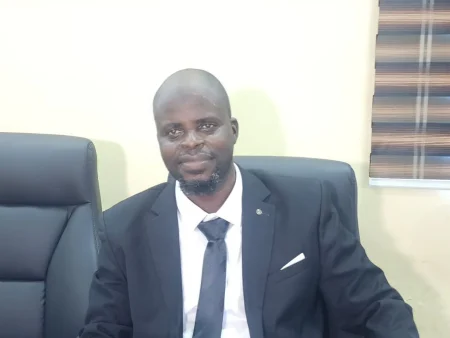




The Registrar of Ladoke Akintola University of Technology (LAUTECH), Ogbomoso, Mrs Olanike O. Balogun, has called on tertiary institutions to embrace digital transformation, continuous capacity building and intergenerational knowledge-sharing to improve administrative efficiency.
Balogun made the call while delivering the keynote address at the 2026 Registry Seminar of The Polytechnic Ibadan, held at the institution’s Assembly Hall, North Campus, on Wednesday.
Speaking on the theme, “Capacity Building, Generational Gaps and Acculturation in a Modern Registry: The Role of Technology and Artificial Intelligence,” she urged Registry personnel to adapt to emerging technologies and acquire the skills needed to meet the changing demands of modern tertiary education administration.
She said traditional approaches to Registry administration should give way to more efficient, technology-driven systems that could improve service delivery, institutional accountability and operational effectiveness.
ALSO READ: Oyo guber: Adekanmbi promises to address LAUTECH students’ demands
According to her, modern Registries could no longer rely solely on manual processes, particularly as Artificial Intelligence (AI) and other digital innovations continue to reshape administrative practices.
She identified areas where AI could support administrative work, including transcript processing, student records management, compliance reporting, preparation of minutes and memoranda, as well as the use of chatbots and virtual assistants to respond to enquiries from students and staff.
Beyond technology, Balogun identified the management of generational differences as another important factor in building an effective Registry.
She noted that experienced officers possess institutional memory, professional expertise and a sound understanding of administrative procedures, while younger employees bring digital exposure, technological confidence and familiarity with emerging innovations.
She therefore called for a workplace culture that promotes mutual learning and prevents generational differences from creating divisions among staff.
Under the proposed arrangement, senior officers would pass on institutional knowledge, administrative ethics, confidentiality standards and professional values to younger colleagues, while younger employees would help their senior counterparts develop digital skills and use tools such as Google Drive and AI platforms.
To strengthen professional development, the LAUTECH Registrar recommended the 70-20-10 learning model, which provides for 70 per cent practical, on-the-job learning, 20 per cent mentoring and 10 per cent formal training.
She also proposed a structured three-month induction programme for newly recruited Registry personnel, allowing them to gain practical experience in the major divisions of the Registry before taking up their specific responsibilities.
On digital transformation, she advocated a phased approach, beginning with paperless meetings and electronic filing systems before progressing to comprehensive Registry automation.
However, she stressed that technological advancement must be supported by appropriate institutional policies, particularly on data protection, confidentiality and the ethical use of artificial intelligence.
She identified inadequate infrastructure, funding constraints, resistance to change and concerns about job security as possible challenges to digital transformation. She added that AI should complement human intelligence and professional judgement rather than replace Registry personnel.
In his remarks, the Rector of The Polytechnic, Ibadan, Associate Professor Taiwo Abideen Lasisi, described the Registry as the administrative backbone of tertiary institutions, responsible for policy implementation, records management, personnel administration and students’ affairs.
He said changes in the higher education sector, alongside technological advancement and growing expectations for transparency and accountability, had made continuous staff development necessary.
Lasisi urged Registry personnel to embrace innovation, improve their professional skills and replace obsolete administrative practices with more efficient approaches, while upholding integrity, confidentiality, accuracy and accountability.
He assured participants that the institution’s management recognised the Registry’s contribution to institutional growth and would support programmes aimed at improving staff competence, administrative efficiency and professional excellence within available resources.
Also speaking, the Registrar of The Polytechnic, Ibadan, Dr Taiwo Sherifat Olajide, described the seminar as an institutional initiative aimed at preparing Registry personnel for the demands of contemporary administration.
She said the adoption of AI and other technological innovations was not intended to displace existing employees but to equip them with the skills required to provide better and more efficient services.
Olajide disclosed that recommendations from the seminar would be compiled into a report and submitted to the Rector and management within four weeks.
She said the report would provide a framework for a structured capacity-building programme, with different levels of training designed to address the varying competencies and needs of Registry personnel.
She also announced plans to select specific Registry operations for pilot testing with appropriate AI tools and emerging technologies, establish a mentoring arrangement between experienced and younger officers, and make the seminar an annual platform for reviewing progress and sustaining professional development.
She expressed the hope that the initiative would lead to measurable improvements in staff productivity, administrative processes and institutional service delivery.
Meanwhile, nine personalities were honoured at the seminar for their contributions and service to their respective institutions and society.
The recipients included the Oyo State Head of Service, Dr (Mrs) Adenike A. Fasina; the Commissioner for Energy and Mineral Resources, Prof. Daud Kehinde Sangodoyin; Chairman, Governing Council of The Polytechnic, Ibadan, Prof. Moshood Lanrewaju Nassar; and Chairman, Governing Council of LAUTECH, Prof. Ayodele O. Omole, who is also the Deputy Vice-Chancellor of the University of Ibadan.
Others were the Rector of The Polytechnic, Ibadan, Associate Professor Taiwo A. Lasisi; former Registrar of Adeseun Ogundoyin Polytechnic, Eruwa, Ms Tomi Olatunji; former Acting Registrar of The Polytechnic, Ibadan, Mr Joseph A. Ogunjimi; Mogaji Adanla and Chief Executive Officer of AFIA Group, Mogaji Abduljeyl Kareem; and Balogun Adanla, Balogun Ismail Ademola.
The seminar attracted participants from tertiary institutions across the country, including academic and non-academic staff, management officials, community chiefs and other invited guests from within and outside the institution.
WATCH TOP VIDEOS FROM NIGERIAN TRIBUNE TV