

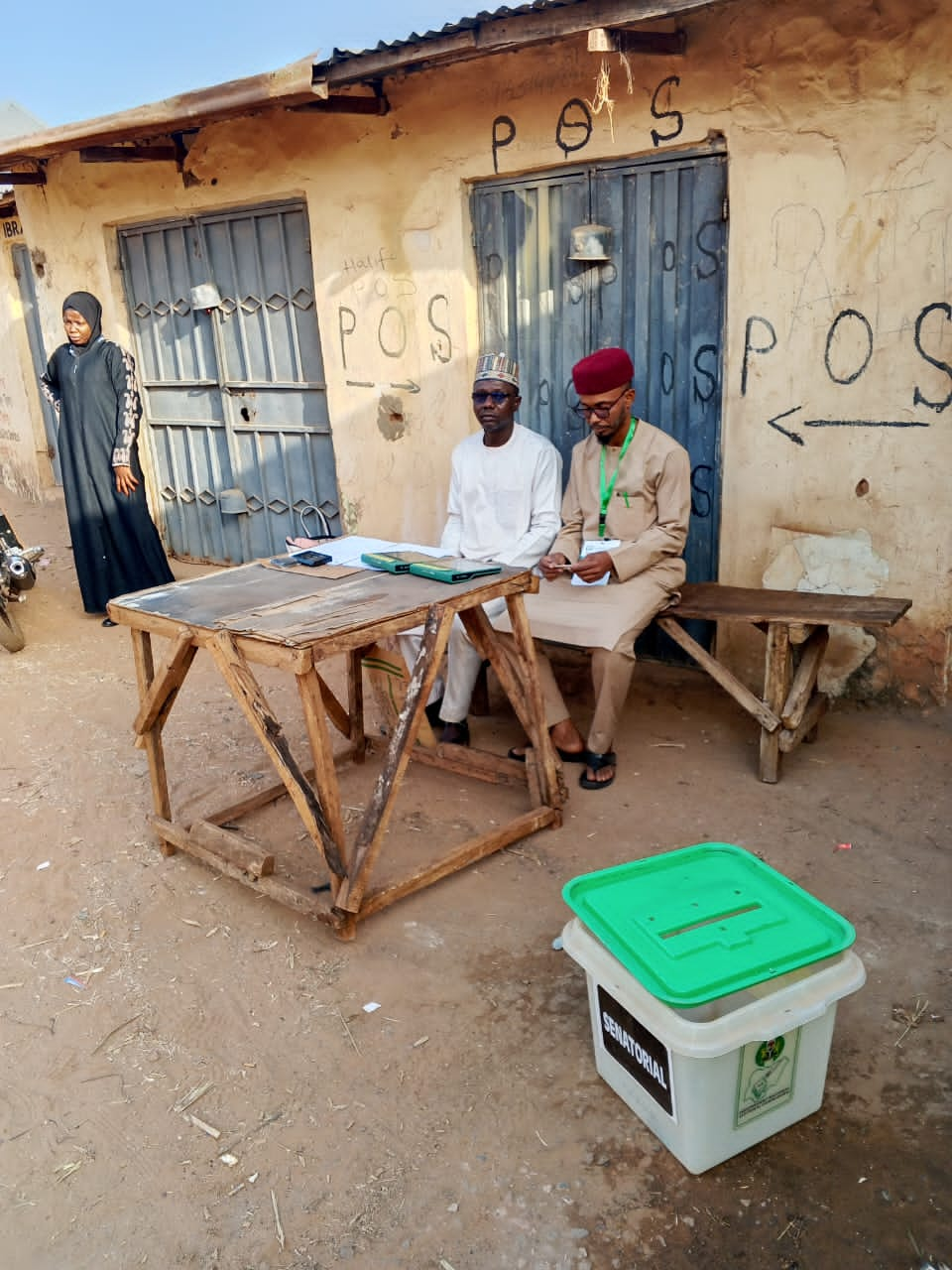
The mock election organised by the Independent National Electoral Commission (INEC) ahead of the 2027 general elections recorded a disappointing voter turnout in several polling units monitored in Sokoto metropolis, Sokoto State.
Satruday Telegraph reports that the development has raised concerns over public awareness and citizens’ preparedness to participate in the electoral processes.
Findings during the exercise revealed that only a handful of eligible voters turned out at some of the designated polling units, despite the presence of electoral officials and the deployment of voting materials and other necessary equipment.
The polling units visited included Gagi Tafida Aminu
The polling units visited included Gagi Tafida Aminu Model Primary School, Gagi (PU 001); Gidan Jariri Model Primary School (PU 033); and Sarkin Zamfara Nizzamiya Primary School (PU 005), where participation varied considerably from one location to another.
The low turnout, particularly at some of the polling centres, raised questions about the effectiveness of INEC’s public sensitisation campaign and the level of understanding among residents regarding the importance of mock elections in strengthening the credibility and efficiency of the electoral process.
Speaking with our correspondent, an election observer, Comrade Mokhtar Mohammed Mabera, attributed the poor participation largely to inadequate public enlightenment and the apparent misconception among residents that the mock election was less significant than the actual exercise.
He observed that although INEC officials arrived early
He observed that although INEC officials arrived early and were fully prepared for the exercise, the expected number of eligible voters failed to turn up, leaving several polling units largely deserted.
“The staff really came early, but the eligible voters are yet to show up, and the turnout, as I can see now, is very, very low,” Mabera said.
He expressed concern that a considerable number of residents were unaware that the commission was conducting the mock election, suggesting that the level of information dissemination ahead of the exercise was insufficient to generate the desired public participation.
A lot of persons, when you ask them,
“A lot of persons, when you ask them, they don’t even know. A lot of people tell us that they are not aware of the election,” he stated.
Mabera further explained that the absence of political parties and familiar candidates, who usually generate enthusiasm during regular elections, might have contributed to the lukewarm response, as many residents did not appreciate the operational significance of the mock exercise.
However, the situation appeared relatively encouraging at Polling Unit 005, Sarkin Zamfara Nizzamiya Primary School, where another participant, Sanusi Muhammad, expressed satisfaction with the level of participation and described the exercise as a positive development in the nation’s electoral preparations.
Muhammad attributed the comparatively better turnout
Muhammad attributed the comparatively better turnout at the polling unit to early sensitisation and mobilisation efforts, noting that residents had been informed ahead of time about the exercise and its importance.
“We have been told earlier, and we mobilised our people,” he said, explaining that adequate information and community mobilisation were instrumental in encouraging residents to participate.
He commended INEC for its organisation, preparedness and treatment of participants, expressing confidence in the commission’s ability to deliver a credible and efficient election if the same level of commitment was sustained during the actual polls.
They are doing a good job because
“They are doing a good job because their setup is okay, and they welcome everybody. I don’t think they need to improve anything if they can perform like this, even on election day,” Muhammad said.
The mock election is designed to test INEC’s operational readiness, assess the functionality of its electoral equipment, evaluate the preparedness of personnel and identify possible challenges that could undermine the smooth conduct of the forthcoming elections.
The contrasting experiences recorded across the polling units underscore the importance of sustained voter education, grassroots mobilisation and effective public communication in ensuring that electoral innovations are understood and embraced by citizens ahead of the actual elections.