


The Founder and Chief Executive Officer of Mai Shayi Coffee Roasters Limited, Ibrahim Samande, has urged investors and financial institutions to increase support for Nigeria’s coffee industry, identifying inadequate funding, limited access to quality planting materials and weak agricultural investment as major obstacles to the sector’s growth.
Samande said Nigeria had the potential to become a major coffee-producing nation but stressed that unlocking the opportunity would require deliberate investment in farming, research, processing facilities and the development of a sustainable domestic supply chain.
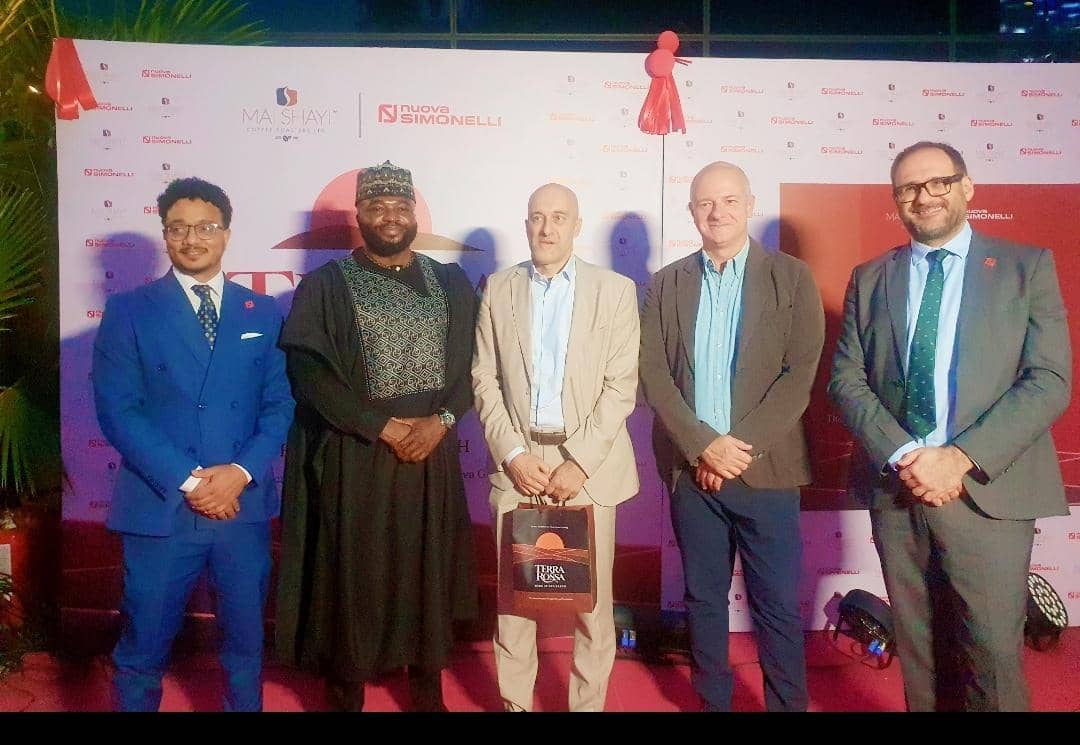
He made the appeal at the unveiling of the Simonelli Group Appia Viva coffee machine in Nigeria, where he highlighted the country’s favourable climatic and geographical conditions for coffee production.
According to him, the Jos Plateau, Mambila Plateau and Obudu areas offer promising conditions for Arabica coffee cultivation, while Kogi State remains a significant location for Robusta production.
Samande recalled that Nigeria had been exporting coffee since 1890 but said the discovery and subsequent dominance of crude oil gradually diverted national attention and investment from agricultural commodities.
He explained that Mai Shayi had embraced a backward integration model to develop the entire coffee value chain, covering seed production, cultivation, processing, roasting and the delivery of finished products to consumers.
He said the company’s decision to venture into coffee farming was informed by the need to establish a dependable local supply chain and reduce reliance on imported coffee.
“Our investments include farmland on the Jos Plateau, a tissue culture laboratory for seed production, trained Arabica coffee agronomists and a processing facility with a capacity of up to 100 tonnes of coffee per week,” he said.
Samande noted that the investments were aimed at improving product quality, ensuring traceability and retaining a greater proportion of the economic benefits of coffee production within the country.
He, however, emphasised that coffee farming requires sustained financial commitment, explaining that farmers must have access to affordable financing, genuine planting materials and technical expertise to establish commercially viable farms.
Also speaking at the event, the Head of Sales for Africa at Simonelli Group, Dawouda Ahmed, described Nigeria as one of Africa’s emerging coffee markets, attributing the development to changing consumption patterns and growing interest in specialty coffee.
Ahmed observed that an increasing number of young Nigerians, particularly in urban centres, were moving away from conventional instant coffee towards espresso-based beverages offered by coffee shops.
He said the growing number of coffee shops across the country reflected increasing consumer demand for quality coffee and more sophisticated coffee experiences.
According to him, Simonelli Group’s interest in Nigeria extends beyond the distribution of coffee equipment to building local partnerships, promoting professional education and supporting the development of the wider coffee ecosystem.
Ahmed identified innovation, education and sustainability as the company’s guiding principles, adding that its broader ambition was to improve the coffee experience available to Nigerian consumers.
He also acknowledged the contributions of Mai Shayi Coffee Roasters, the company’s local partner, particularly its investment in specialty coffee production and the establishment of an Arabica coffee farm on the Jos Plateau.
In his remarks, coffee consultant, trainer and sensory educator, Dario Ciarlantini, expressed confidence in the prospects of Nigeria’s specialty coffee industry, following his visit to Mai Shayi’s farm in Jos.
Ciarlantini, whose expertise covers espresso preparation, coffee tasting and sensory education, described the company’s investment in agriculture as an important professional foundation for the development of a competitive specialty coffee sector in Nigeria.
He identified the Jos Plateau as a promising location for coffee cultivation, citing its relatively dry climatic conditions and mineral-rich soil as factors that could contribute to the production of distinctive coffee varieties.
However, he cautioned that favourable environmental conditions alone would not guarantee success, stressing the importance of sound farm management, technical expertise, quality control and investment in human capacity.
Ciarlantini further identified opportunities for job creation and entrepreneurship across the coffee value chain, including farming, agronomy, processing, roasting, café operations and professional barista training.
He stressed the need to train more Nigerians as coffee professionals and instructors, noting that developing local expertise would help equip young people with the skills required to participate in the expanding industry.
He maintained that building indigenous technical capacity across the coffee value chain would be critical to sustaining the sector’s growth and strengthening Nigeria’s competitiveness in the international specialty coffee market.