


The Minister of Health, Professor Muhammad Ali Pate,has pledged support to the Federal Government for Centres of Vaccine Research and Development at its Federal University Teaching Hospitals to strengthen local vaccine discovery, pharmaceutical research and human capacity development.
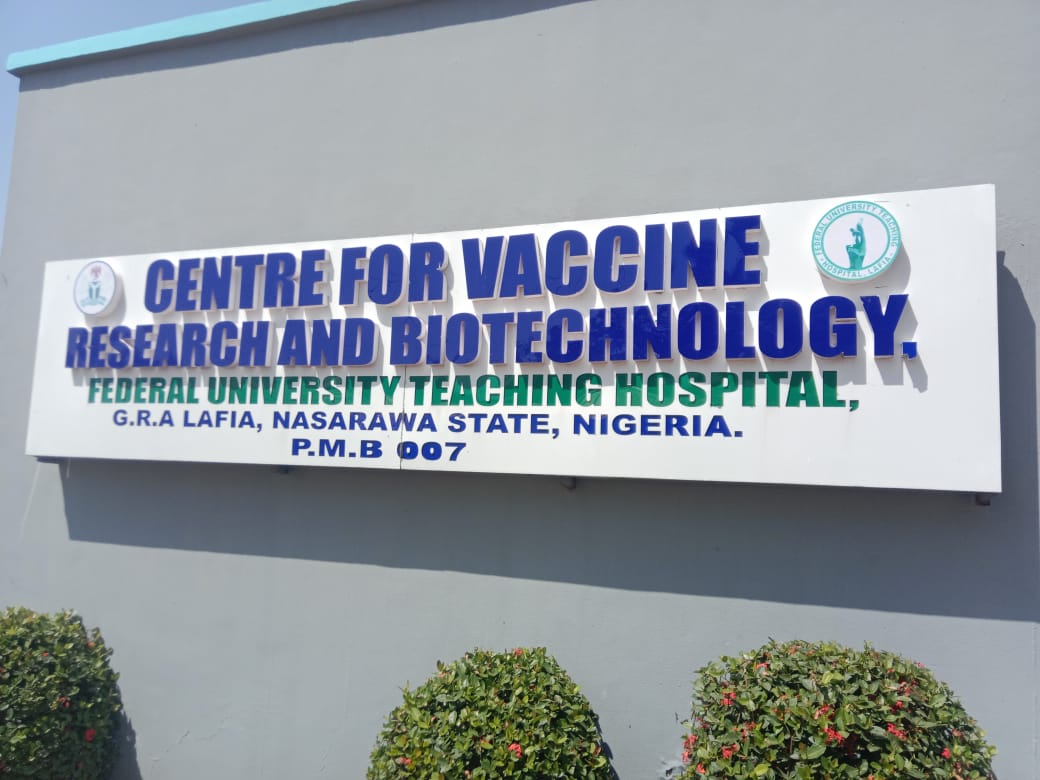
He made the pledge on Friday during a visit to the Centre of Vaccine Research and Development at the Federal University Teaching Hospital, Lafia.
This is as he expressed satisfaction with the facilities, ongoing research activities and the calibre of young scientists working towards developing vaccines and other medical products.
Prof Pate, who described the centre
Prof Pate, who described the centre as an important platform for discovering molecules, vaccines and pharmaceuticals that could improve healthcare delivery in Nigeria and African countries, said the centre would also create economic opportunities.
“I’m very impressed with this facility here, the Federal University Teaching Hospital in Lafia. It’s really a platform for discovery of molecules, vaccines, pharmaceuticals, for research that ultimately will fit into a value chain that Nigeria will benefit from,” the minister said.
He said that the centre had already developed vaccine candidates at their early stages, describing the prospects as promising and assuring that the Federal Government would support efforts to advance the research.
According to him, the government would explore partnerships
According to him, the government would explore partnerships with globally experienced institutions to strengthen the centre’s human capital and expose its researchers to international best practices.
“We’ll bring in partners, globally experienced partners, that can help build the human capital that this institution has,” he said.
The health minister pledged that the government would also explore support for infrastructure and equipment required to improve the centre’s research capacity and quality.
Prof Pate emphasised that scientific research must be
Prof Pate emphasised that scientific research must be directed towards addressing local health challenges, adding that the young researchers at the centre had the potential to develop solutions to problems affecting Nigeria.
The minister lauded the Nasarawa State Government, the Federal Government and the management of the teaching hospital for collaborating to establish the facility, describing the partnership as a model for strengthening research and healthcare development.
The Chief Medical Director of the Federal University Teaching Hospital, Lafia, Dr Ikrama Hassan, appreciated the minister for the visit, describing it as a significant boost to the hospital’s research and development initiatives.
Hassan said the hospital management remained committed
Hassan said the hospital management remained committed to providing the necessary institutional support and conducive environment for the research centre to achieve its mandate of advancing medical research, innovation and the development of solutions to pressing public health challenges.
He said that strategic partnerships with relevant national and international institutions would be essential in strengthening the centre’s research capacity, facilitating knowledge exchange and ensuring that its activities align with global best practices.
The CMD assured the minister that the hospital would work closely with the centre’s leadership to translate research findings into practical healthcare interventions that would improve disease prevention, diagnosis and treatment, particularly in addressing infectious diseases.
He expressed optimism that the minister’s engagement would
He expressed optimism that the minister’s engagement would open new vistas of opportunities for collaboration, capacity building, infrastructure development and greater visibility for the research centre.
Earlier, the Director of the Centre, Professor Mustafa Umar Imam, said the minister’s visit was significant to the growth of the institution, which he described as a young establishment requiring support in training, human capacity development and infrastructure.
Imam disclosed that the centre was established to address a critical gap in Nigeria’s pharmaceutical and vaccine research ecosystem, where much of the country’s activities had traditionally concentrated on the later stages of drug and vaccine development.
He said the centre was working towards building
He said the centre was working towards building local capacity to discover and develop vaccines and drugs in Nigeria rather than depending largely on products developed in other countries.
“We don’t want that trap. We want to discover them and develop them in Nigeria. That is the gap we’re filling,” he said.
The director disclosed that although the centre was barely one year old, it had commenced computer-aided drug and vaccine design, with more than 30 staff members involved in research targeting diseases affecting Nigeria and other African countries.
He listed Lassa fever and dengue fever
He listed Lassa fever and dengue fever as two of the diseases currently receiving attention from the researchers, with efforts underway to explore the possibility of developing vaccine candidates against them.
“Right now, we have a couple of staff, over 30, that are working on those computer-aided drug and vaccine designs. We have a lot of them working on diseases that affect us,” Imam said.
He explained that computer-aided research allows scientists to design potential drug and vaccine candidates before proceeding to laboratory testing to establish their effectiveness.
Imam expressed optimism that the minister’s visit and the support pledged would provide the centre with the necessary encouragement to expand its research activities and contribute to solving Nigeria’s healthcare challenges.