




Stakeholders in the reproductive health sector have called for increased domestic funding for family planning programmes to enable Nigeria to achieve its target of 27 per cent modern contraceptive prevalence by 2030.
They made the call at a pre-conference media roundtable ahead of the 9th Nigerian Family Planning Conference scheduled to hold in Abuja from November 30 to December 4, 2026.
The stakeholders identified declining donor support, inadequate government investment and weak accountability as major threats to the sustainability of family planning services.
They urged the Federal Government and state governments to establish dedicated budget lines, explore innovative financing mechanisms and strengthen public-private partnerships to reduce dependence on external funding.
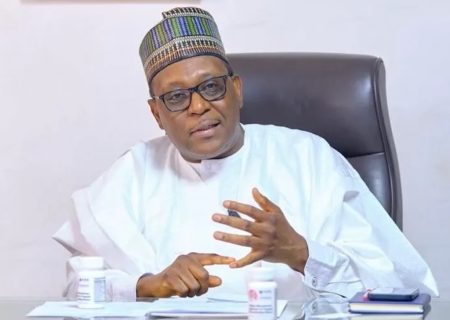
Speaking at the event, Chairman of the Nigeria Family Planning Conference and Chairman of the Association for the Advancement of Family Planning (AAFP), Dr Ejike Oji, said Nigeria’s family planning agenda required stronger domestic financing, effective partnerships, reliable access to contraceptive commodities and accountability for government commitments.
He said the conference, organised by AAFP in collaboration with the Federal Ministry of Health and Social Welfare, development partners and civil society organisations, would focus on moving the country’s family planning commitments from policy statements to implementation.
According to him, Nigeria’s Family Planning 2030 commitments include increasing access and choice, strengthening the supply chain, improving financing and reinforcing accountability mechanisms.
Oji said the conference would explore four major areas of partnership involving the federal, state and local governments, public and private sector actors, development partners and collaboration among donors.
He disclosed that 546 abstracts had been reviewed within a submission window of about three weeks, with 109 oral presentations and 200 poster presentations selected for the conference.
He urged journalists to go beyond reporting conference speeches and announcements by explaining available evidence, monitoring government commitments and highlighting the experiences of women, young people and underserved communities.
“Distinguish between announcements, pledges, confirmed commitments, funds released and results achieved. These are not interchangeable, and public confidence depends on that distinction,” he said.
Oji added that the conference was expected to produce a communiqué, a domestic financing roadmap and a mechanism for tracking commitments and progress.
Also speaking, Managing Director of FP2030’s North, West and Central Africa Regional Hub, Dr Alain Damiba, said Nigeria must move away from overdependence on donor-supported programmes by increasing government investment and diversifying its funding sources.
He said sustainable family planning financing should involve not only the Federal Ministry of Health but also other government ministries, health insurance institutions, state governments, private sector organisations and domestic institutions.
Damiba identified dedicated family planning budget lines, increased funding for contraceptive procurement, investment in last-mile distribution and support for primary healthcare service delivery as essential components of sustainable financing.
He said government funding alone would not be sufficient, urging Nigeria to explore innovative financing options, including integrating family planning services into health insurance and universal health coverage schemes, greater state government co-financing and public-private partnerships.
The FP2030 official also proposed regional procurement arrangements with neighbouring West African countries to reduce the cost of contraceptive commodities through economies of scale.
He said Nigeria could explore joint procurement with countries such as Niger, Burkina Faso, Benin Republic and Sierra Leone.
On accountability, Damiba urged journalists to monitor family planning budget allocations, releases and execution rates at federal and state levels, as well as the proportion of funding coming from domestic sources.
“The most important question is not whether Nigeria has made commitments. Those commitments have already been made. The real question is whether women and girls can see the results of those commitments in their communities,” he said.
He explained that accountability should cover the entire financing process, from budget allocation and release to expenditure, commodity availability and access to services.
Damiba cited Burkina Faso, Senegal and Togo as examples of countries in the region that had institutionalised dedicated family planning budget lines.
He also cited Ghana’s integration of family planning services into its national health insurance scheme, describing it as an approach Nigeria could learn from.
In his remarks, President of the Association for Reproductive and Family Health (ARFH) and immediate past Chairman of AAFP, Prof. Oladipo Oladapo, challenged media organisations to take greater responsibility for ensuring that Nigeria achieved its 2030 family planning target.
He warned that failure to moderate population growth would worsen poverty and undermine the country’s development prospects.
“If this country fails to meet the FP2030 target of 27 per cent modern contraceptive use, you will be responsible. You will be the ones responsible because you have the instrument and the pathways to change people’s behaviour,” he told journalists.
Oladapo said Nigeria needed to moderate its population growth to improve living standards, reduce mortality and benefit from demographic transition.
He urged media proprietors to commit their organisations to sustained coverage of family planning and reproductive health issues, adding that domestic resource mobilisation would be difficult without strong media advocacy.
The ARFH president also proposed innovative funding mechanisms, including partnerships with foreign governments issuing visas to Nigerians and airlines to introduce an additional $50 charge on visa applications and international flight tickets.
He said the proceeds could be managed by a public-private body and dedicated exclusively to sexual and reproductive health, particularly family planning.
Oladapo further expressed concern over Nigeria’s maternal mortality burden, arguing that available resources must be released to support programmes aimed at saving the lives of mothers and children.
He maintained that media organisations should go beyond reporting government allocations to investigate how much was actually released and spent.
Similarly, Regional Portfolio Director for West and Central Africa at Pathfinder International, Dr Amina Dorayi, said family planning was not merely a health intervention but also an important driver of women’s economic empowerment, education, household resilience and national development.
She said women’s ability to decide whether and when to have children had benefits extending beyond their health to their families, communities and the wider economy.
Dorayi noted that declining traditional development assistance presented an opportunity for African countries to rethink how their health systems were financed.
“We cannot continue to build essential programmes around the assumption that external funding would always continue to be available. Domestic resource mobilisation is central to this approach,” she said.
She called for stronger public-private partnerships, innovative financing mechanisms and improved accountability in the management of family planning resources.
Dorayi said stakeholders should move beyond celebrating budget announcements and allocations to determining whether funds were released, how they were spent and whether contraceptive commodities eventually reached women and girls.
She also urged journalists to expand family planning coverage beyond health pages and make it part of national conversations on economic growth, development, public financing and accountability.
According to her, media coverage should highlight the experiences of women and girls, particularly those in underserved communities, as well as successful government investments, partnerships and existing challenges.
“We have spent years building the promise of family planning. Now we must demonstrate the political will, the financial commitment and accountability to sustain it,” she said.
Dorayi added that the success of the conference should be measured by the extent to which its commitments translated into funded programmes, effective implementation and improved access to reproductive health services for Nigerian women and girls.
WATCH TOP VIDEOS FROM NIGERIAN TRIBUNE TV