

Opening 40 oil and gas blocks to competitive bidding is an important investment milestone. But the true measure of success will be disciplined exploration, commercially viable gas development, responsible operations and productive value retained in Nigeria.
In my investment conversations in Brussels, national potential is rarely the difficult part of the Nigerian proposition. Investors already understand the country’s scale, energy resources and industrial demand. The difficult questions come afterwards: What data can be examined? Which fiscal terms apply? Is the timetable credible? Can a foreign company participate? How will disputes be resolved? What financial and environmental liabilities accompany the asset? Can investors repatriate returns? What happens after an award is announced?
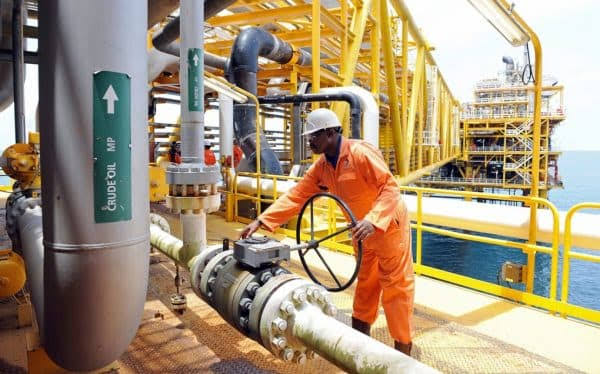
Nigeria’s 2026 oil and gas licensing round must be evaluated against these questions. On 20 November, the Nigerian Upstream Petroleum Regulatory Commission (NUPRC) opened registration for 40 blocks across onshore, shallow-water and deepwater terrain. Registration closes on 15 January 2027. Prequalified companies may then license seismic and well data and prepare technical and commercial submissions. If the published timetable holds, the commercial bid conference and announcement of winning and reserve bidders will take place on 7 May.
This is more consequential than another statement that Nigeria is open for business. A functioning portal, published rules, identified assets and a defined calendar create an actual transaction process. Yet opening a bid round is not the same as creating productive capacity.
Transparency is an economic asset
The licensing framework contains several useful elements. Applicants must satisfy legal, financial, technical, health, safety and environmental requirements. Beneficial owners with significant control, including anyone who directly or indirectly holds at least 5 per cent, must be disclosed. Each applicant may participate in bids for no more than two blocks, whether alone or through a consortium. Work programmes and development concepts form part of the process, and seismic and well data must be licensed before technical bids are submitted.
These requirements matter because petroleum investment is unusually vulnerable to information asymmetry. Governments know the political importance of an asset. Technical investors know more about subsurface risk and development costs. Financial institutions price the uncertainty between them. A transparent process reduces that uncertainty and makes it harder for discretionary access to replace technical competence.
Nigeria should therefore resist any pressure to weaken published criteria for favoured bidders. Clarifications, timetable changes and evaluation outcomes should remain visible. The credibility created by this round will influence the cost and availability of capital in subsequent rounds.
Awards do not produce petroleum
Nigeria has often treated licence awards as economic outcomes. They are not. A signature bonus produces immediate government revenue, but it does not prove that an operator possesses the capital, technical capacity or organisational discipline to explore a block. An award ceremony does not acquire seismic data, drill a well, build a gathering system or connect gas to an industrial user. The proper policy objective is to select companies capable of executing realistic work programmes.
The regulator should therefore give substantial weight to financing evidence, technical teams, prior operating performance, environmental competence and credible development timelines. A bidder offering the most attractive upfront payment may not be the bidder most capable of converting an asset into production. Government revenue matters, but the larger national value lies in sustained production, taxes, employment, industrial demand and technical capability.
Gas must not remain an afterthought
The official objectives of the licensing round include expanding gas utilisation in the context of the energy transition. That commitment must influence how bids are assessed. Nigeria needs gas for power generation, fertiliser, petrochemicals, industrial heat and cleaner household energy. A discovery that produces associated gas without a credible commercialisation plan risks adding to infrastructure bottlenecks and environmental liabilities. Bidders should therefore explain where the gas will go, who will purchase it, what infrastructure will carry it and how the development will avoid routine flaring.
This is also where international partnership can add value. Belgium possesses relevant capabilities in offshore engineering, marine logistics, gas infrastructure, industrial safety and emissions monitoring. European firms can contribute technology and finance, while Nigerian companies provide local operating knowledge, services and market access. But partnership should build capability in Nigeria. Supplier development, engineering training, fabrication, maintenance and technology transfer must form part of the commercial relationship rather than remain ceremonial local-content language.
Financing must follow the asset
During the same week, NNPC Limited and the Central Bank of Nigeria signed a memorandum intended to improve foreign-exchange inflows, contractor settlements and energy-project financing. The coordination is understandable. Energy exports remain central to foreign-exchange supply, and uncertainty over payments can discourage contractors and lenders. But central bank coordination cannot make an uncommercial project bankable. Nor should investors depend on exceptional administrative arrangements to obtain foreign exchange or receive payment.
Upstream projects need transparent economics, predictable fiscal treatment, credible counterparties and financing structures capable of surviving changes in oil prices and political leadership. The NNPC-CBN arrangement will become meaningful when it produces observable improvements: more predictable contractor payments, clearer export-proceeds management, credible asset-backed financing and greater confidence among lenders. The same test applies to the licensing round. Institutional announcements should lead to investable transactions.
Environmental responsibility is part of bankability
Environmental obligations cannot be treated as costs to be postponed until production begins. Onshore and shallow-water developments interact directly with communities, fisheries, farmland and fragile ecosystems. Deepwater projects carry substantial decommissioning and accident-response obligations. Methane emissions and gas flaring increasingly affect access to international finance and markets. Serious investors already incorporate these risks into project evaluation. Nigeria should do the same when assessing bidders.
A company without credible environmental management, host-community engagement and decommissioning plans is not offering a cheaper project. It is transferring future costs to the state and affected communities. The country’s petroleum history provides sufficient evidence of what happens when environmental liabilities are separated from investment decisions.
Measure conversion, not ceremony
If the published timetable holds, attention in May 2027 will focus on the names of winning bidders and the amounts offered. Those facts will matter, but they should not become the final scorecard. NUPRC should publish a continuing implementation dashboard covering:
data licensed and evaluated;
capital committed and deployed;
exploration and appraisal wells drilled;
discoveries and commercial development decisions;
gas-utilisation infrastructure;
Nigerian procurement and technical employment;
environmental compliance;
licences progressing according to schedule; and
licences relinquished or revoked for non-performance.
Such reporting would allow government, investors and citizens to distinguish asset allocation from productive conversion. Nigeria does not need more dormant licences held for speculation or political access. It needs capable operators that can mobilise finance, manage risk, work responsibly with communities and convert geological opportunity into national value.
Opening the portal was an early test, and publishing the rules was a welcome step. The more important test begins after the winners are announced. This licensing round will not be judged by how many hands receive certificates. It will be judged by how many credible work programmes leave the page, how many wells are drilled, how much gas reaches productive users and how much lasting capability Nigeria builds.
Nweke is an International Trade Consultant and author of Economic Diplomacy of the Diaspora. A former Belgian politician of Nigerian origin, born in Igbuzo, Delta State Nigeria, he was a 2014 candidate Member European Parliament. A third-term Municipal Legislator at Ostend City Council, Belgium, since 2006 his portfolio included the Economy, Social Policy, Equality Affairs and International Development. Collins features regularly on TV Continental Lagos as Global Affairs Analyst, on Channels TV as Foreign Policy Commentator, on TRT World Istanbul as African Affairs Analyst among other Afrocentric media houses, including BusinessDay Nigeria