
By Jide Ajani
From the First Republic to the Fourth, politicians have been murdered, opposition figures silenced and political supporters killed. Yet, beyond the initial outrage, Nigeria has perfected the art of forgetting its dead. What, then, is the value of dying for a political cause in a country that cannot even preserve the memory of its political martyrs? The alleged assassination attempt on the former Deputy Senate President, Ovie Omo-Agege, two days ago, in Uduere community of Ughelli North LGA of Delta State, brings this odd reality into focus once again. Worse, many innocent, ordinary Nigerians have lost their lives while supporting or opposing politicians, only becoming part of an unidentified statistical figure.
There is something inescapably tragic about dying while politicking in Nigeria. You could spend a lifetime building a political movement, challenging an unjust system, defending an electoral mandate, or fighting for an idea about your country’s future – or just being loud for nothing like a former, two-time state governor from the South West, or a former Rep and Senator from the North Central. You could become a household name, command enormous political influence and acquire a place in the nation’s history. Then, one morning, gunmen arrive, bullets are fired, and your life is terminated.
There will be outrage. Condemnations will pour in. Politicians will issue statements, newspapers will publish editorials (like this), civil society organisations will demand justice, and the police will announce investigations.
And then, Nigeria happens, and the people move on.
The murder will become another entry in the country’s expanding archive of unresolved political crimes. The victim’s name will gradually disappear from public conversations, except when anniversary commemorations provide an opportunity for political speeches. Even the circumstances of the death may eventually become blurred by competing narratives, political expediency and the convenient amnesia of a nation.
Is it, therefore, worth dying for Nigeria’s politics?
The question intends to interrogate a society that celebrates political martyrs without demonstrating a corresponding commitment to preserving their legacies or establishing the truth about their deaths.
On Monday, November 23, 2026, four persons were killed during an alleged assassination attempt on the former Deputy Senate President, Ovie Omo-Agege, two days ago, in Uduere Community of Ughelli North LGA of Delta State. Over a dozen were said to have been injured. Mind you, in an outburst of emotive frustration about happenings inthe political sphere, the self-same Omo-Agege had used the phrase ‘ ig and die’. He was to later clarify that he was merely drawing attention to the need for credible elections.
A bloody inheritance
Political violence has accompanied Nigeria’s political evolution almost from independence.
The January 15, 1966 military coup was a defining bloodbath. Among the prominent political victims were Prime Minister Sir Abubakar Tafawa Balewa, Northern Premier Sir Ahmadu Bello, Western Premier Chief Samuel Ladoke Akintola and Federal Finance Minister Chief Festus Okotie-Eboh.
They were not anonymous casualties. They occupied the commanding heights of the First Republic and represented competing political interests and constituencies. Their assassination, alongside the killing of senior military officers, fundamentally altered Nigeria’s political trajectory.
The July 1966 counter-coup brought another round of killings, including Head of State Major-General Johnson Aguiyi-Ironsi and Western Region Governor Colonel Adekunle Fajuyi.
Although these were killings arising from military coups and counter-coups rather than conventional electoral assassinations, they established a dangerous precedent: political disagreements and struggles for power could be settled through the elimination of human beings.
On February 13, 1976, another military coup attempt claimed the life of Head of State General Murtala Mohammed. He was assassinated in Lagos by officers involved in the unsuccessful coup led by Lieutenant-Colonel Buka Suka Dimka.
The military era also saw attacks on prominent government opponents.
In October 1995, Chief Alfred Rewane, businessman, political financier and prominent supporter of the National Democratic Coalition (NADECO), was murdered in his Ikeja residence. The killing occurred during General Sani Abacha’s military dictatorship. The circumstances generated widespread suspicions of political motivation, but no satisfactory public resolution followed.
The following year, on June 4, 1996, Kudirat Abiola was assassinated by unknown gunmen while travelling along the Lagos-Ibadan Expressway. She had become a prominent campaigner for the validation of her husband Moshood Abiola’s June 12, 1993 presidential mandate.
Her murder was widely perceived as an attempt to silence the pro-democracy movement. Subsequent proceedings produced a conviction of Major Hamza al-Mustapha and another accused person, but the Court of Appeal overturned the convictions. The circumstances and ultimate accountability for her killing have remained contested.
There were other disturbing incidents. Alex Ibru, publisher of The Guardian and a former minister, survived an assassination attempt in February 1996 after being shot in Lagos. Gani Fawehinmi, the human rights lawyer, was also the subject of a reported attack on the prison facility where he was detained, although he was not there at the time.
The Fourth Republic: democracy and its dead
The return to civilian government in 1999 raised expectations that constitutional politics would make political violence less attractive. Those expectations were soon tested.
On December 19, 2001, Osun State legislator Odunayo Olagbaju was stabbed to death in Ile-Ife. Four days later, on December 23, Chief Bola Ige, the serving Attorney-General of the Federation and Minister of Justice, was shot dead in his Bodija residence in Ibadan.
Ige was a formidable politician, former governor of Oyo State, intellectual and prominent member of the Alliance for Democracy. His murder, against the background of the political crisis involving the governor and deputy governor of Osun State, sent shockwaves through the country.
Several suspects were arrested and prosecuted, but the accused were discharged and acquitted in June 2004. The actual perpetrators have not been established through a successful prosecution.
What happened to the national outrage that followed the murder of a sitting Attorney-General?
On March 5, 2003, Harry Marshall, a senior opposition politician and national vice-chairman of the All Nigeria Peoples Party (ANPP), was murdered in his Abuja residence. Armed men reportedly forced their way into his home at about 3 a.m., tied up his security guard, and shot him in his bedroom. His killing occurred days before the commencement of the party’s presidential campaign.
The police initially investigated extensively, but the motive was never conclusively established. Some suspected political connections; the authorities also considered armed robbery.
In February 2004, Chief Aminasoari Dikibo, a prominent PDP national vice-chairman, was murdered while travelling in Delta State. His death generated allegations of political conspiracy, but no definitive public resolution emerged.
Then came July 27, 2006. Engineer Funsho Williams, a prominent Lagos politician and governorship aspirant, was found murdered in his Ikoyi residence. His hands were reportedly tied, and the post-mortem evidence presented during the subsequent proceedings indicated death by strangulation.
Several people were prosecuted. In 2014, however, a Lagos High Court discharged and acquitted the defendants after finding that the prosecution had failed to establish a sufficient connection between them and the murder.
Another aspirant, Dr Ayo Daramola, was murdered at his home in Ekiti State in August 2006.
The catalogue does not end there. Ogbonnaya Uche was killed in Owerri in 2003; Barnabas and Abigail Igwe, a lawyer and his wife, were murdered in Onitsha in September 2002; and Dipo Dina, an Ogun State governorship candidate in the 2007 election, was shot dead in January 2010.
These are unfinished investigations, abandoned questions and families left without satisfactory answers.
Other election-related attacks have included the killing of candidates, party officials and campaign workers. Human Rights Watch and Amnesty International have documented the wider pattern of electoral violence, including attacks that never attracted the national attention accorded to the deaths of prominent politicians.
The national habit of forgetting
What is perhaps more disturbing than the killings is the country’s relationship with the memory of those killed.
Nigeria has become remarkably efficient at converting tragedy into political folklore and then consigning the folklore to oblivion.
The murder of Bola Ige should have become an enduring national lesson about the vulnerability of public institutions. Instead, the country largely returned to its political routines.
Funsho Williams should have remained a reference point in conversations about the safety of political aspirants. Harry Marshall should have become a symbol of the dangers confronting opposition politics. Alfred Rewane and Kudirat Abiola should occupy permanent places in the country’s democratic memory.
Yet, their names are invoked intermittently, often by politicians seeking temporary moral authority.
The philosopher George Santayana famously warned: “Those who cannot remember the past are condemned to repeat it.”
The warning is particularly relevant to Nigeria. Forgetting is not necessarily an innocent failure of memory. When a society fails to demand answers, preserve records and sustain public attention, it creates the conditions in which impunity can flourish.
Cicero’s observation that “the life of the dead is placed in the memory of the living” offers another uncomfortable reflection. What kind of afterlife does a nation confer on those whose sacrifices it cannot remember?
Others have learned to remember
Nigeria is not the only country with unresolved political assassinations.
Sweden has never conclusively established who murdered Prime Minister Olof Palme, who was shot dead on a Stockholm street on February 28, 1986. Although investigators identified a likely suspect in 2020, he was dead and could not be prosecuted. Swedish prosecutors subsequently maintained that there was insufficient evidence to reopen the investigation.
Pakistan continues to wrestle with the circumstances surrounding the December 27, 2007 assassination of former Prime Minister Benazir Bhutto. A United Nations Commission of Inquiry examined the circumstances of her death but did not identify the individuals ultimately responsible for the assassination.
Lebanon’s former Prime Minister Rafik Hariri was killed in a massive bomb explosion in Beirut on February 14, 2005, alongside other victims. The subsequent United Nations-backed investigation and Special Tribunal produced important findings and convictions, although questions about the full chain of responsibility and political accountability have persisted.
The difference is not that these countries have solved every political murder. It is that their investigations, public inquiries, official records and continuing debates demonstrate that the death of a political leader need not become a forgotten footnote.
There are also examples of murdered leaders whose deaths did not extinguish their causes. Martin Luther King Jr. was assassinated in Memphis, Tennessee, on April 4, 1968. He was 39 years old. He had spent his life fighting racial discrimination through non-violent resistance and civil rights activism.
His death was a devastating blow, but it did not terminate the movement. His words, philosophy and political struggle became enduring reference points in American public life. His legacy was institutionalised through memorials, national commemorations and continuing civil rights advocacy.
The United States did not simply mourn King and move on. It preserved his memory as part of its national identity.
King’s legacy illustrates something important: a political assassination can destroy a human life, but it need not destroy the cause that gave the life meaning.
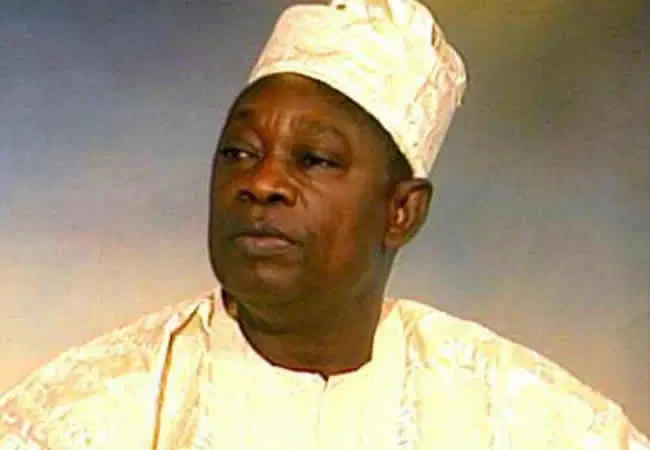
And what of MKO Abiola?
Perhaps the most troubling example of Nigeria’s complicated relationship with political memory is Chief Moshood Kashimawo Olawale Abiola.
He died in detention on July 7, 1998, while the struggle to reclaim his mandate from the annulled June 12, 1993 presidential election remained unresolved.
Abiola’s death did not end the controversy surrounding his mandate. Indeed, more than two decades after his death, the political interpretation of June 12, his democratic credentials and his place in history continue to be contested and appropriated by different political interests.
The declaration of June 12 as Democracy Day was an important official recognition. But recognition must mean more than appropriating a dead man’s political capital. His historical significance should be examined honestly, including the political compromises, convictions and sacrifices that defined his life.
There is something deeply ironic about a country that celebrates a man for the mandate he fought to reclaim but cannot protect the historical integrity of his struggle from partisan manipulation.
Is it worth dying for?
This brings us back to the original question: Is it worth allowing yourself to be killed for Nigerian politics?
There is no universal answer. People have a right to stand for their convictions, defend democracy and challenge injustice. A society without courageous people willing to confront abuse of power would be a society without meaningful political progress.
But courage must not be confused with recklessness, and martyrdom must not become an excuse for national irresponsibility.
Albert Camus, in The Myth of Sisyphus, wrote: “The struggle itself towards the heights is enough to fill a man’s heart.”
Perhaps the meaning of political life lies not in the eventual reward of public recognition but in the principles one defends and the institutions one helps to build.
Yet, a nation also has obligations to its dead. It must investigate their murders, prosecute offenders where evidence permits, preserve historical records and resist the temptation to turn their sacrifices into disposable political slogans.
A politician’s life should not be measured exclusively by the office he occupied, the money he accumulated or the number of followers who attended his funeral. It should also be measured by the ideas he advanced, the institutions he strengthened and the generations he inspired.
The tragedy of Nigeria is not simply that Bola Ige, Harry Marshall, Funsho Williams, Kudirat Abiola, Alfred Rewane and so many others died violently. It is that we have not demonstrated sufficient determination to establish the truth about their deaths and protect the historical meaning of their lives.
A country that forgets its murdered leaders diminishes the value of public service and discourages the next generation from believing that political conviction is worth defending.
Perhaps the most painful question is not whether these men and women died for nothing; it is whether Nigeria, by its persistent refusal to remember, investigate and learn, has ensured that they did.