

As Nigeria inches closer to the January 2027 presidential election, political parties and their candidates are making promises of economic recovery, improved security, job creation, affordable education and better living conditions.
But with millions of Nigerians still grappling with economic hardship, the question is whether the promises will translate into tangible results or remain familiar campaign rhetoric.
However, many of the presidential candidates appear reluctant to embark on nationwide campaigns to sell their candidacies to voters, thereby giving the ruling All Progressives Congress (APC) an opportunity to gain the upper hand.
From the bustling streets of Lagos
But from the bustling streets of Lagos to the commercial centres of Kano, the oil-producing communities of the Niger Delta and the agricultural settlements of the North Central, Nigeria’s political atmosphere is heating up as the countdown to the 2027 general election gathers momentum.
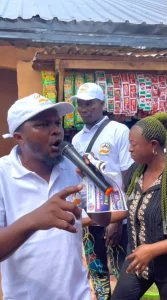
Some presidential candidates are taking their messages to the people, addressing rallies, meeting traditional rulers, engaging community leaders and courting voters with ambitious promises about what they intend to achieve if entrusted with the nation’s highest political office.
The campaign season has once again turned Nigeria into a theatre of political declarations, with politicians presenting different visions of a country struggling with insecurity, unemployment, rising living costs, inadequate electricity, poor infrastructure and declining purchasing power.
In markets, motor parks, churches, mosques and town
In markets, motor parks, churches, mosques and town halls, the conversation is the same. Nigerians want to know who can change their daily reality, not just who can win an election.
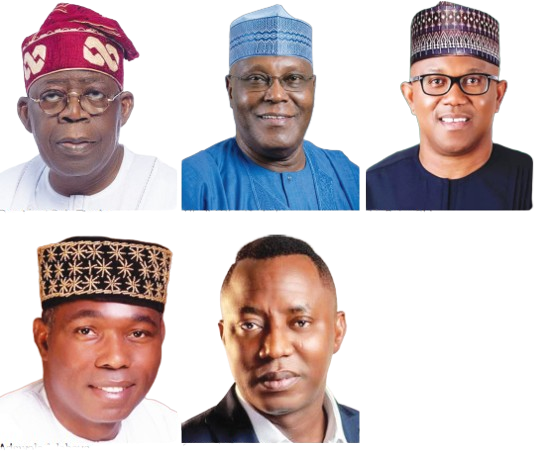
At the centre of the contest are President Bola Ahmed Tinubu of the All Progressives Congress (APC), former Vice-President Atiku Abubakar of the African Democratic Congress (ADC), former Anambra State governor Peter Obi of the Nigeria Democratic Congress (NDC), Oyo State Governor Seyi Makinde of the Allied Peoples Movement (APM), and other presidential contenders.
With 18 presidential candidates on the Independent National Electoral Commission’s final list, the race is increasingly defined by competing economic philosophies, regional interests, generational expectations and promises of a better Nigeria.
The Economy: The biggest campaign battleground Perhaps no
The Economy: The biggest campaign battleground Perhaps no issue dominates the 2027 presidential campaign more than the economy.
For ordinary Nigerians, the debate is not merely about economic statistics or government policies. It is about the price of food in the market, the cost of transportation, the affordability of rent, the availability of jobs and the ability of families to meet their daily needs.
A trader in Mile 12, Lagos, a farmer in Benue, a student in Ibadan and a civil servant in Abuja may support different parties, but they share a common experience: money does not go as far as it used to, and survival has become harder.
President Tinubu is seeking another four-year mandate
President Tinubu is seeking another four-year mandate on the strength of the economic reforms introduced by his administration since 2023.
His campaign maintains that the removal of petrol subsidies, changes to the foreign exchange system and other structural reforms were necessary to address longstanding economic distortions.
The President is promising continuity, economic expansion, industrialisation, improved infrastructure, energy security and food sufficiency.
His administration’s recently published manifesto, titled; From Reforms
His administration’s recently published manifesto, titled; “From Reforms to Prosperity,” sets out targets that include achieving annual economic growth of six per cent by 2031 and reducing youth unemployment by 50 per cent. The document also proposes the creation of one million export-linked jobs for young Nigerians by 2030.
However, the administration’s reform agenda remains a subject of intense public debate.
While the government points to improvements in public finances, foreign reserves and investor confidence, many households continue to contend with the effects of high living costs and expensive transportation.
For the opposition, this economic pressure provides an opportunity to present alternative approaches.
Atiku Abubakar has promised to restore petrol and electricity subsidies, support domestic refining, establish a stimulation fund for small and medium-sized enterprises and tackle insecurity.
His campaign argues that government intervention is necessary
His campaign argues that government intervention is necessary to reduce the financial burden on citizens and stimulate economic activities.
Atiku’s supporters say his experience as a former vice-president and businessman positions him to manage the economy with a focus on private-sector growth and job creation.
Peter Obi, meanwhile, has continued to emphasise a transition from a consumption-driven economy to a productive economy.
His campaign priorities include strengthening agriculture, supporting local
His campaign priorities include strengthening agriculture, supporting local industries, creating employment opportunities and improving national productivity.
Obi has also highlighted the need to tackle insecurity and facilitate the return of internally displaced persons to their communities.
His message continues to resonate strongly among young Nigerians and urban voters who are demanding ac- countability, prudent management of public reance
The differences among the leading candidates suggest
The differences among the leading candidates suggest that economic management will remain one of the defining issues of the election.
While Tinubu is asking Nigerians to stay the course, Atiku is promising relief through intervention, and Obi is promising discipline through production.
Makinde and other candidates are offering a third way centred on institutional reform.
Security: A promise Nigerians desperately want fulfilled Beyond the economy, insecurity remains a major concern for communities across the country.
Banditry, kidnapping, insurgency, communal violence and attacks
Banditry, kidnapping, insurgency, communal violence and attacks on farming communities have continued to feature prominently in national conversations.
For farmers, traders, commuters and residents of affected communities, security is not simply an item in a political manifesto.
It is a condition necessary for survival and economic activity. In the North-West and North-Central, farmers are afraid to go to their farms.
In the South-East, traders complain about sit-at-home disruptions
In the South-East, traders complain about sit-at-home disruptions and criminal attacks. In the South-South, communities worry about oil theft and cult violence.
In the South-West, residents are increasingly concerned about kidnapping on highways. The presidential candidates have therefore placed security at the heart of their campaign messages.
Tinubu’s manifesto proposes recruiting an additional 78,000 security personnel as part of a broader strategy to strengthen national security.
Atiku has promised a stronger response to insurgency
Atiku has promised a stronger response to insurgency and other security threats, while Obi has repeatedly stressed the need to restore security in affected communities and enable displaced Nigerians to return home.
Makinde, in presenting his Reset Nigeria agenda, has also identified security and institutional reforms as important elements of his proposed administration.
The challenge for voters will be to determine how these promises will be implemented, particularly in communities where previous security interventions have failed to produce lasting results.
Analysts say Nigerians are no longer satisfied
Analysts say Nigerians are no longer satisfied with vague promises to “tackle insecurity.” They want specifics: How will intelligence gathering improve? How will the police be funded and equipped? How will state and community policing be strengthened?
How will the root causes of banditry, including poverty, unemployment and weak governance, be addressed? Electricity, Jobs and the youth question Electricity supply is another issue likely to influence the direction of the presidential debate.
Manufacturers, small businesses, artisans and households continue to demand a more reliable power supply.
For many businesses, the cost of operating generators has become an additional burden on already strained finances.
A tailor in Aba, a welder in Kaduna,
A tailor in Aba, a welder in Kaduna, a cold-room operator in Onitsha and a tech startup founder in Yaba all face the same obstacle: without stable electricity, productivity suffers and profit disappears.
Candidates are offering different approaches to the country’s electricity challenges, including reforms in the power sector, investment in infrastructure and improved access to affordable energy.
Employment is equally important, especially for young Nigerians entering an increasingly competitive labour market. Nigeria’s youth population is one of the largest in the world.
Every year, hundreds of thousands of graduates leave
Every year, hundreds of thousands of graduates leave universities, polytechnics and colleges of education in search of jobs that are not available. Tinubu’s proposed Youth Bank and export-linked employment targets are part of his campaign’s youth-focused agenda.
Omoyele Sowore of the African Action Congress has made more expansive proposals, including a N500,000 monthly minimum wage, free education and the construction of one million public homes.
These proposals have attracted attention, especially among young voters and activists, but they also raise important questions about the financial re
For millions of young Nigerians, however, the central
For millions of young Nigerians, however, the central demand remains straightforward: access to quality edu- cation, decent employment, affordable housing and an economy that rewards hard work.
Many young voters say they are tired of being used as campaign crowds and social media foot soldiers, only to be ignored after elections. They want a seat at the table, not just a place in the rally.
Education, Health and the cost of living Beyond jobs and security, candidates are also making promises on education and healthcare, two sectors that directly affect the quality of life of ordinary Nigerians.
Parents are struggling with school fees, from primary
Parents are struggling with school fees, from primary school to university. Public schools in many states suffer from overcrowded classrooms, inadequate teachers and poor infrastructure, while private schools remain beyond the reach of low-income families.
On healthcare, many Nigerians still pay out of pocket for treatment, and public hospitals in several states lack drugs, equipment and personnel. The result is that a simple illness can push a family into debt.
Candidates have promised to expand access to affordable education, improve teacher welfare, invest in primary healthcare and strengthen health insurance.
As with other promises, the key test will
But as with other promises, the key test will be funding and implementation. The cost of living remains the most immediate concern.
Food inflation, transport fares, rent and the cost of cooking gas continue to shape how Nigerians vote, think and feel about government.
Any candidate who can convincingly explain how prices will come down, how naira value will stabilise and how small businesses will survive will have an advantage at the ballot boxes.
While campaign rallies provide an opportunity for candidates
While campaign rallies provide an opportunity for candidates to communicate directly with voters, political observers say the substance of their proposals must go beyond attractive slogans.
A recent review by a national newspaper found that, as of November 17, only three of the 18 presidential candidates had published standalone manifestos setting out comprehensive policy priorities for the 2027–2031 period.
They are Tinubu, Makinde and the Social Democratic Party’s Adewole Adebayo. Tinubu’s manifesto contains 109 pages, Makinde’s is titled Reset Nigeria, while Adebayo’s 138-page document is titled Farewell to Poverty and Insecurity.
The review also identified several candidates campaigning under
The review also identified several candidates campaigning under named policy agendas without comprehensive costings or detailed implementation frameworks. This raises an important question about the quality of electoral choices available to Nigerians.
A candidate promising millions of jobs should explain the sectors in which those jobs will be created, the investment required and the timeline for achieving the target.
Similarly, promises of cheaper fuel, improved electricity, free education and affordable healthcare require clear explanations of funding
Without such details, voters may find it difficult
Without such details, voters may find it difficult to distinguish between realistic policy proposals and campaign declarations.
Civil society organisations, media houses and youth groups are now urging voters to look beyond party loyalty, ethnicity and religion, and to interrogate manifestos, track records and capacity.
As the campaigns intensify, the choice before Nigerians is becoming clearer. It is not just a choice between parties or personalities.
It is a choice between continuity and change,
It is a choice between continuity and change, between reform and relief, between promises and performance.
Whether the 2027 election will produce a government that delivers on its promises or another cycle of unfulfilled pledges will depend not only on who wins, but on how actively Nigerians demand accountability after the votes are counted.