

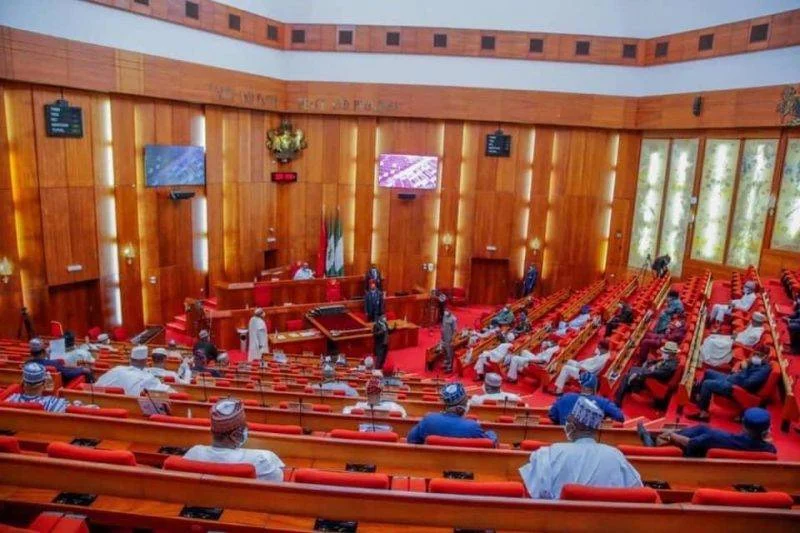
The Senate Committee on Legislative Compliance has thrown its weight behind the Federal Character Commission (FCC) over its decision to institute legal proceedings against the Nigeria Customs Service (NCS) for alleged violations of the Federal Character Principle in its 2025/2026 recruitment exercise.
The committee also urged the Commission to extend its enforcement activities to other Ministries, Departments and Agencies (MDAs) of the Federal Government to identify and address possible violations of the principle in recruitment, appointments and other personnel-related processes.
The Senate’s endorsement, contained in a letter dated November 18, 2026, and addressed to the Chairman of the FCC, was signed by the committee’s Chairman, Senator Garba Musa Maidoki.
The committee described the Commission’s decision to pursue
The committee described the Commission’s decision to pursue legal action against the Customs Service as a bold demonstration of its commitment to enforcing the provisions of the Federal Character Commission Act.
It said the action would strengthen the principles of fairness, equity, inclusiveness and equal representation in the distribution of employment opportunities within the Federal Public Service.
The committee particularly commended the FCC for taking concrete steps to enforce its statutory mandate rather than allowing alleged violations of the Federal Character Principle to go unchallenged.
It further assured the Commission of its support,
It further assured the Commission of its support, stressing that the Senate had an oversight responsibility to ensure compliance with existing legislation, resolutions and directives of the National Assembly.
The endorsement comes amid an escalating dispute between the FCC and the Nigeria Customs Service over alleged irregularities in the latter’s recruitment exercise, which has now resulted in criminal proceedings at the Federal High Court, Abuja.
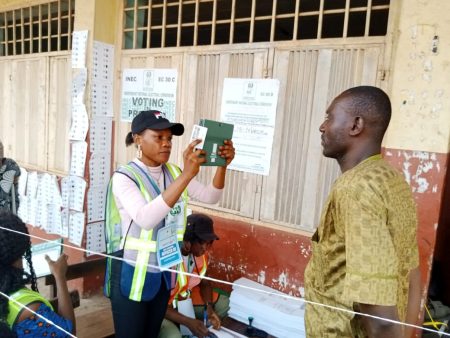
The controversy initially centred on allegations that the Customs Service excluded hundreds of applicants whose names appeared on its published list of successful candidates but subsequently invited some individuals whose names were reportedly not on the list for training.
The Customs Service had announced 3,852 successful candidates
The Customs Service had announced 3,852 successful candidates out of 573,680 applications received for recruitment into its Superintendent, Inspectorate and Customs Assistant cadres.
The final lists were published between July 28 and 30, 2026, while subsequent screening and documentation exercises were conducted ahead of the commencement of training.
However, the FCC raised concerns over reports that more than 500 candidates who had reportedly completed the required screening, documentation and medical examinations were not invited for training, while some applicants whose names were allegedly absent from the published lists received invitations.
The Customs Service, in its defence, explained
The Customs Service, in its defence, explained that 397 applicants were screened out over issues relating to age, medical fitness, substance use and documentation irregularities.
The Service also maintained that appearing on the published list did not automatically guarantee final enlistment, explaining that candidates were still required to satisfy the applicable screening requirements.
It subsequently announced a case-by-case review of complaints from affected applicants.
However, the disagreement deepened as the FCC accused the Customs Service of failing to provide relevant recruitment records, including nominal rolls, eligibility criteria and comprehensive recruitment guidelines, despite repeated requests.
The Commission also accused the Service of failing
The Commission also accused the Service of failing to submit itself to its monitoring and continuing with recruitment and training activities despite its directive to suspend the exercise pending an investigation.
Consequently, the FCC filed a four-count criminal charge against the Nigeria Customs Service and its Comptroller-General, Bashir Adewale Adeniyi, at the Federal High Court, Abuja.
The charge, marked FHC/ABJ/CR/772/2026 and dated November 12, 2026, borders on alleged failure to provide recruitment information, refusal to allow the Commission to monitor the exercise, disregard of its suspension directive and failure to provide clear recruitment guidelines.
The allegations are yet to be determined by the court.
In its latest intervention, the Senate Committee
In its latest intervention, the Senate Committee on Legislative Compliance urged the FCC not to limit its enforcement efforts to the Customs Service but to extend similar scrutiny to other federal institutions where violations of the Federal Character Principle may exist.
According to the committee, such an approach would strengthen the enforcement of the FCC Act and ensure that no government institution is exempted from compliance with established principles of fairness and equitable representation.
The committee also expressed interest in the ongoing legal proceedings, requesting periodic briefings from the Commission until the matter reaches its logical conclusion.
Reacting to the Senate’s position, the FCC, through
Reacting to the Senate’s position, the FCC, through its spokesperson, Ademola Lawrence, reiterated its determination to ensure that the Federal Character Principle was not treated merely as a policy aspiration but as a statutory obligation binding on all federal institutions.
The Commission maintained that its mandate included ensuring that fairness, transparency, accountability and equitable representation were respected in recruitment and other personnel-related activities across the Federal Public Service.
It stressed that all Ministries, Departments and Agencies of the Federal Government were expected to operate within the framework of established laws and regulations, adding that no institution was exempted from compliance.
The Senate committee’s intervention is expected to strengthen the Commission’s ongoing efforts to enforce federal character requirements and could signal wider legislative scrutiny of recruitment practices across federal government institutions.