

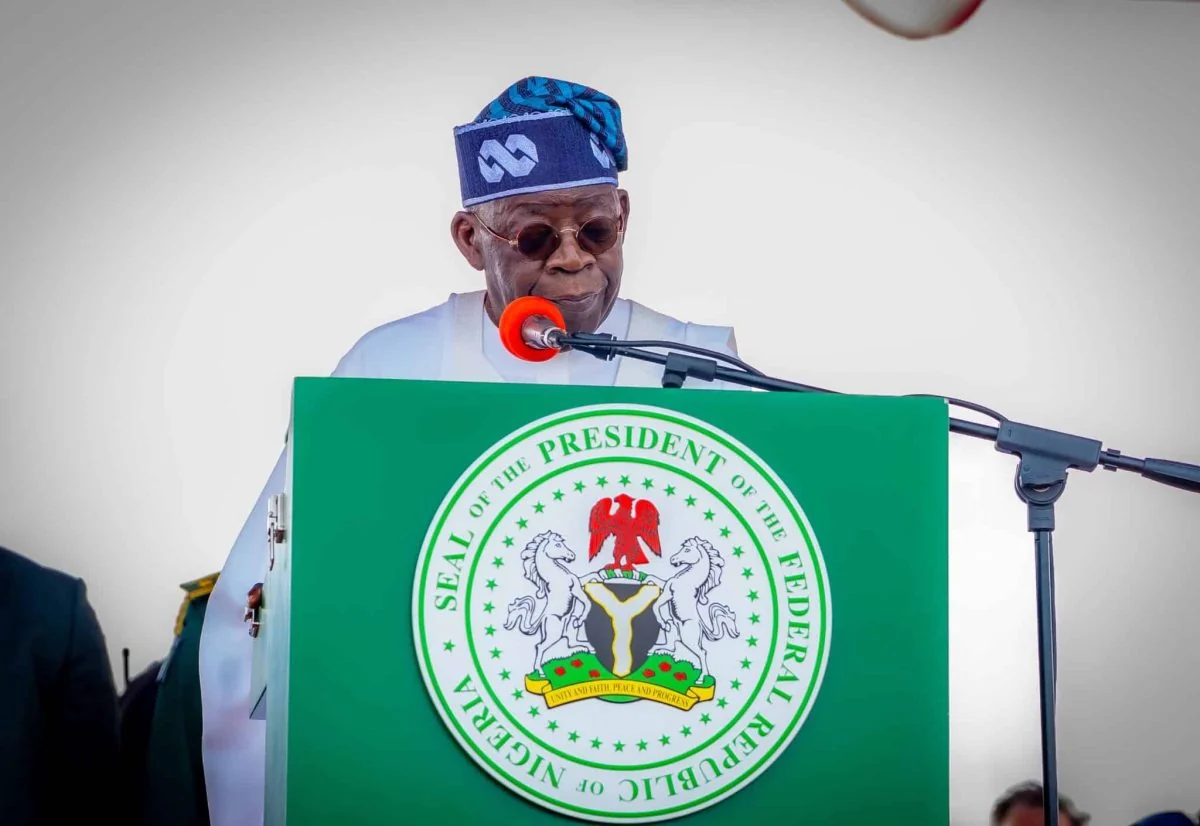
President Bola Tinubu has reaffirmed his administration’s commitment to strengthening tertiary education in Nigeria through sustainable funding, improved infrastructure and targeted investments.
Tinubu stated this at the 78th Foundation Day and grand finale of the 2026 convocation ceremonies of the University of Ibadan (UI).
Speaking on the state of higher education, the president said his government was expanding investments through university intervention frameworks, research grants and infrastructure support to ensure that Nigeria’s first-generation universities compete favourably on the global stage.
Represented by the Executive Secretary of the National Universities Commission (NUC), Professor Abdullahi Ribadu, the president noted that the administration was also promoting renewable energy and campus technology by accelerating initiatives to provide clean, reliable and sustainable power solutions across federal university campuses, alongside modern digital learning environments.
On industrial harmony, Tinubu said his administration had ensured that staff welfare remained protected through continuous and constructive engagement with staff unions.
According to him, the engagement was aimed at ensuring stable academic calendars, uninterrupted research cycles and standard welfare frameworks for both academic and non-academic staff.
He said, “These efforts reaffirm the commitment of this administration to quality education. To this end, I appreciate the various staff unions for the level of understanding demonstrated so far as we collectively seek lasting solutions to the numerous challenges confronting university education in our dear nation.
READ ALSO: Lasisi Olagunju: The Gong of the Masses
“One area that continues to present a challenge is funding. Since 2023, budgetary allocations to education have increased significantly, and we have also introduced and implemented measures, including allowances, aimed at improving the welfare of university staff.”
He, therefore, called on tertiary institutions to reciprocate the government’s commitment through prudent resource management, administrative efficiency and the commercialisation of research breakthroughs to drive national self-reliance.
The president congratulated the university on its achievements, speaking also in his capacity as Visitor to the institution.
He urged university administrators, lecturers and students to work together to build institutions that not only produce graduates but also develop solutions to Nigeria’s developmental challenges.
He also congratulated the graduands, urging them to be unapologetic in their pursuit of excellence and unwavering in their commitment to making positive impacts in the world.
The chancellor, Alhaji Sa’ad Abubakar, the Sultan of Sokoto, called on private sector partners, philanthropic foundations and distinguished alumni to invest in endowment funds and advanced research facilities, saying that maintaining global competitiveness required a shared commitment and was an investment in the nation’s future.
He described higher education as a critical engine for national development, economic diversification and social mobility. While appreciating the Federal Government’s efforts, he said strategic investment in infrastructure, research funding and sustainable campus energy had become increasingly urgent.
He, therefore, appealed to the Visitor and the Federal Government to prioritise sustained capital allocation, autonomous revenue retention and specialised funding frameworks for first-generation universities such as UI.
Congratulating the graduands, he urged them to remain proud ambassadors of the University of Ibadan, uphold excellence, integrity, discipline and service, and give back to their alma mater to ensure that generations yet unborn continued to benefit from its legacy.
The Pro-Chancellor and Chairman of the Governing Council, Chief Bisi Akande, said the strength of any society rested on the quality and stability of its tertiary education system.
He commended President Tinubu for deliberate interventions that had helped end years of industrial actions, financial barriers, disrupted academic calendars and eroded confidence. He also praised the administration for moving from prolonged negotiations to the implementation of agreements on staff welfare to restore industrial harmony.
On funding, Akande said the Council was pursuing sustainable revenue diversification through technology transfer, research commercialisation, agricultural enterprise and public-private partnerships.
He stressed that the university’s resources were held in trust for future generations, adding that ageing institutions such as UI required adequate funding for infrastructure, laboratories, research, staff retention and student services.
In his address, the Vice Chancellor, Professor Peter Olapegba, disclosed that 403 candidates from various disciplines would be awarded Doctor of Philosophy (PhD) degrees.
The Faculty of Education topped the list with 92 doctoral graduands, followed by the Faculty of Arts with 63.
He noted that despite the laudable progress and achievements recorded by the institution, it continued to grapple with several challenges requiring urgent attention.
According to him, the major challenges included inadequate power supply, poor internet connectivity and the maintenance of existing buildings and infrastructure.
He said, “A substantial proportion of the institution’s resources is devoted to providing electricity to sustain our academic and administrative activities. Our October bill was well above N200 million.”
Olapegba, therefore, called on the Federal Government to give the university special priority through dedicated funding for the reconstruction and rehabilitation of its infrastructure, alongside increased financial allocations to support its academic and research endeavours.
The VC also gave special recognition to the oldest graduating student, 89-year-old Professor Mark Nwagwu of the Institute of African Studies.
He said, “The University of Ibadan is elated to re-graduate a retired Professor of Molecular Biology, who returned to the Institute of African Studies for a PhD in Cultural Studies – Professor Mark Nwagwu with Matriculation Number 1364. He is 89 years old. We heartily congratulate him on this outstanding feat.”
Nwagwu, who was admitted by his former student, Professor Kayode Adebowale, said he decided to research ‘Nsibidi,’ a subject he found innovative and worthy of academic investigation.
“The whole essence is to be alive, do great things and to live on,” Professor Nwagwu said.
Also awarded a doctorate in Peace and Conflict Studies, the current Oyo State Chairman of the All Progressives Congress (APC) and former Deputy Governor of the state, Dr Moses Adeyemo, said his decision to pursue the degree was inspired by his interest in learning more about peace and understanding how to promote peaceful coexistence.
Similarly, Dr Mayowa Albert, son of renowned peace and conflict expert, Professor Isaac Olawale Albert, who bagged a PhD, said his strong interest in how government decisions affected ordinary people, particularly those who might not directly benefit from the political system, spurred him to study Peace, Security and Humanitarian Studies.
Meanwhile, honorary Doctor of Science degrees were conferred on two individuals in recognition of their outstanding contributions to higher education in Nigeria. They are Dr Olusola Adejoke David-Borha and Mr Kingsley U. Aigbokhaevbo.
WATCH TOP VIDEOS FROM NIGERIAN TRIBUNE TV