



Follow THISDAYLIVE on GoogleAdd us as a preferred source to see more of our stories in Google
Funmi Ogundare
Economists, business leaders and academics have called on Nigerian universities to prioritise research, innovation and the development of homegrown artificial intelligence (AI) solutions to accelerate national development and address the country’s socio-economic challenges.
They also seek over $200 billion in long-term investment over the next two decades and the full privatisation of Nigeria’s electricity value chain to address persistent power supply challenges undermining productivity, education and technological advancement.
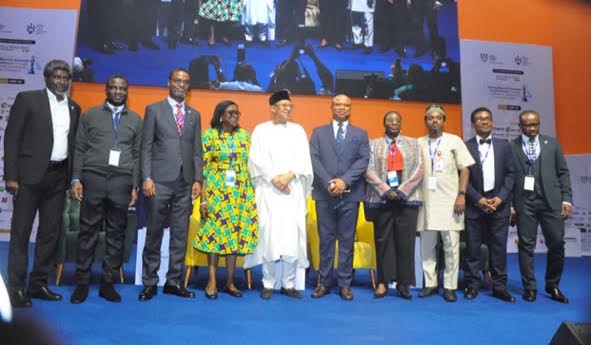
They stated this recently at the Lagos Business School (LBS) alumni conference, themed ‘Driving Nigeria’s Economic Transformation’, where speakers identified poor infrastructure, weak leadership values, and structural bottlenecks as major obstacles to national development.
Speaking at a panel discussion on capital mobilisation, Africa Economist Dr Rafiq Raji noted that Nigeria’s four per cent economic growth rate is insufficient to lift millions of citizens out of poverty. He said the country needs to achieve at least seven per cent growth. While acknowledging that the removal of fuel subsidy and foreign exchange reforms boosted capital inflows, pushing capital importation to $23 billion, Raji noted that less than five per cent of the inflows represented long-term foreign direct investment.
He said Nigeria needs over $200 billion, or approximately $12 billion annually, to address its electricity infrastructure deficit over the next 20 years, noting that “although domestic sources, including banks and pension fund administrators, had more than $50 billion in available funds, the resources remained inadequate to meet the sector’s investment requirements”.
He argued that, following the liberalisation of the telecommunications and downstream petroleum sectors, full privatisation of the power sector, supported by willing-buyer, willing-seller pricing and the removal of price controls, had become imperative.
The Managing Director of United Capital Asset Management, Dr Odiri Oginni, said domestic investors remained more inclined towards short-term money market funds because of inflation and exchange rate volatility.
She disclosed that fewer than 10 of the 238 mutual funds available in the country were dedicated to long-term projects, calling for the development of bankable projects and specialised investment vehicles to channel pension and insurance funds into critical sectors.
Oginni cited the MOFI Real Estate Investment Trust, which offers mortgages at 9.75 per cent, as an example of initiatives that could help mobilise long-term capital for infrastructure, housing and agriculture.
The Chief Executive Officer of the Mortgage Banking Association of Nigeria, Dr Adedeji Ajadi, identified cumbersome land titling processes and weak foreclosure laws as major constraints to private investment in the housing sector.
He lamented that obtaining land titles could take more than 10 years, making housing investments risky for private capital and driving up borrowing costs.
Earlier in his remarks, the conference chairman and political economist, Prof. Pat Utomi, attributed Nigeria’s slow development to declining societal values and the inability of the country’s elite to build consensus around national priorities. Citing Ethiopia’s infrastructure transformation within a decade, Utomi contrasted the commitment and self-sacrifice of Nigeria’s First Republic leaders with contemporary political leadership, arguing that strong values and institutions remained essential to national development.
In his keynote, the Group Chief Executive Officer of PanAfrican Capital Holdings, Mr Chris Oshiafi, urged business leaders to address the country’s development challenges by strengthening corporate governance, deploying capital strategically and preparing their workforce for technological disruption.
On the role of technology in national development, Professor of Economics at LBS, Bongo Adi, said AI could significantly improve productivity in critical sectors, including agriculture, education and healthcare. He, however, identified inadequate infrastructure and poor data quality as major obstacles to its effective deployment in Nigeria.
Similarly, a University of Southern California Research Scholar, Dr Pius Onobayedo, identified unreliable electricity supply as the biggest technical barrier to the country’s effective adoption of AI. He urged Nigerian universities to move beyond consuming foreign AI technologies to developing homegrown solutions through research and innovation, adding, “institutions of higher learning have a critical role to play in driving technological advancement.”
Onobayedo also advised businesses to adopt internal AI models and establish strict governance frameworks to protect sensitive information against cyber breaches.