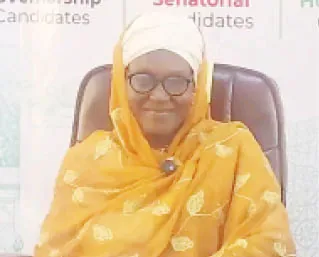

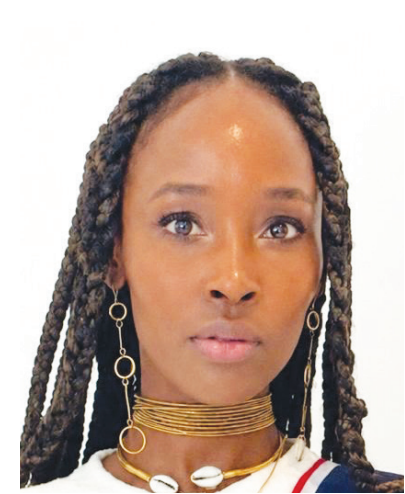
The Youth Party candidate for the Lagos State House of Assembly representing Eti-Osa Constituency II in the 2027 general elections, Princess Dolapo Osunsina, believes that being a woman should not constitute a barrier to political aspirations. Osunsina believes that Nigerians have lost confidence in the way the country is governed. In this interview with OLADIPUPO AWOJOBI, Osunsina spoke on youth participation in politics, women’s representation and other issues of national interest. Excerpts:
At what point did you decide to move from activism and community work into partisan politics?
I don’t see it as a move away from community work; I see it as an extension of it. For years, I’ve been building cultural spaces and developing community initiatives that create social and economic opportunities for young people.
I’ve been addressing needs, creating opportunities and filling
I’ve been addressing needs, creating opportunities and filling gaps where the government has yet to reach.
Through this work, I’ve learned how to bridge the gap between communities and institutions by bringing people’s experiences and needs into spaces where decisions are made.
What draws me towards partisan politics is the opportunity to take that work a step further: to move beyond responding to social problems to becoming part of the institutions that can address them through policy and legislation.
What did your family and friends say when
What did your family and friends say when you told them you wanted to run?
I think the initial reaction was a mixture of concern and genuine optimism. Nigerian politics doesn’t have the best reputation.
People have lost confidence in the way Nigeria is governed and how our elections and political processes work.
They see politics as dirty, where people go
They see politics as dirty, where people go to get rich, a do-or-die affair and not the best place for a young woman.
There were questions about whether I knew what I was getting into and why I thought I could ever win.
But those who know me understand that my interest in public service didn’t begin with this candidacy. It is an extension of the work I have been doing for years.
As a young woman, what was the biggest
As a young woman, what was the biggest culture shock you experienced in a political party?
It wasn’t necessarily a shock to me that there were few women in my political party; what was more shocking was the impact of their absence.
I realised very quickly that when you have so few women you limit the diversity of perspectives, when we don’t involve women we exclude a substantial part of the knowledge and experience needed to make good decisions.
It also becomes very clear that the political
It also becomes very clear that the political class has an ideology that is quite monolithic and deeply entrenched.
Within that code are some great values, particularly the emphasis on service, but there is also a rigidity that can make you feel as though there is no room for new ideas.
What stereotypes about young female politicians have you encountered?
I think there is sometimes an assumption that young women entering politics are there to represent a demographic.
I have never approached my work
But I have never approached my work with the assumption that being a woman makes me less capable.
I do not lead with my gender; I lead with my ideas, my work, my growing competence and my willingness to serve.
You talk about youth inclusion beyond voting. What does meaningful inclusion actually look like?
I believe youth inclusion should be a shared responsibility between political parties, local governments and electoral commissions.
Rather than creating new structures, we should first
Rather than creating new structures, we should first look at the frameworks that already exist and consider how we can build on them.
For instance, political parties already have networks across wards, imagine if the Electoral Act mandated them to run year-round civic education and political awareness programmes?
Young people woukd have the opportunity to understand the political process and become involved long before election season.
At the local government level, we could build
At the local government level, we could build on the existing National Youth Council of Nigeria, which brings together youth associations, the local governments could work with the NYCN to establish Local Government Youth Councils as a formal platforms for engagement between young people and government.
Electoral commissions also have an important role to play, in fact, Section 2(1)(a) of the Electoral Act 2022 mandates INEC to organise and promote voter and civic education! But we also need to think about how young people will hear about these opportunities.
From experience, cultural production is a powerful way to engage young people and create entry points, because participation shouldn’t be limited to those who are already “inside”.
We need to use festivals, parties, raves, open days, outreach programmes and awareness campaigns to introduce young people to these existing institutions and initiatives.