
The Nigerian Ports Authority (NPA) has said that the future of regional ports must be measured not only by infrastructure development and cargo-handling capacity but by their contributions to the economic and social welfare of host communities,BAYO AKOMOLAFE reports
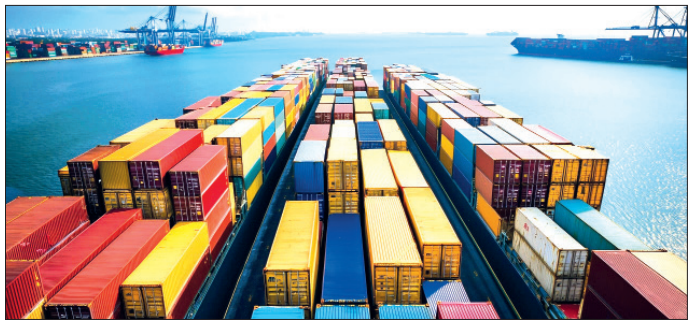
For some years, operational delays and inefficiency of vessel management at port terminals have posed major obstacles to increasing shipping trade and logistics operations in Nigeria as the ports have the challenge to keep pace with the rate of expansion of shipping trade.
These have made the demand for port services, especially, terminal operations of container to be on the increase. Worried by these challenges, the Nigerian Ports Authority (NPA) said that the prolonged cargo dwell times, high port charges, and poor customs interoperability have been inflating consumer prices.
For instance, at the Port Management Association
For instance, at the Port Management Association of West and Central Africa (PMAWCA)’s conference, the authority’s Managing Director, Abubakar Dantsoho, called for stronger cooperation among ports in the region to reduce cargo clearance delays, lower logistics costs and improve the competitiveness of West and Central African economies.
Dantsoho, who is the current President of PMAWCA, disclosed at the association’s 46th Annual Council and Joint Gulf of Guinea Commission-PMAWCA Forum in Sipopo, Malabo, Equatorial Guinea that regional ports must prioritise strategic collaboration over destructive competition to address common challenges confronting the maritime industry.
For instance, he explained that closer cooperation among ports in the region would improve operational efficiency, strengthen logistics resilience and ensure that the benefits of maritime trade extend beyond coastal countries to landlocked nations, whose economies depend on efficient ports and transport corridors.
According to him, the region’s Atlantic coastline, stretching
According to him, the region’s Atlantic coastline, stretching from Mauritania to Angola, serves about 20 coastal countries, while five landlocked countries, including Mali, Burkina Faso, Niger, Chad and the Central African Republic, depend directly on the efficiency of its ports and transport networks.
Notwithstanding, Dantsoho stressed that West and Central African ports had undergone significant transformation over the past decade through the construction of deep-water terminals, public-private concessions and the deployment of modern port infrastructure, structural challenges continued to undermine their efficiency and competitiveness.
Furthermore, he identified prolonged cargo dwell times, high port charges, expensive corridor transportation and inadequate interoperability among customs and port operations as some of the major constraints affecting regional trade, saying that cargo dwell times had remained excessively long across too many terminals, and high port and corridor transit costs continue to inflate the final price of consumer and industrial goods.
Despite the deployment of single-window platforms, he explained
Despite the deployment of single-window platforms, he explained that the customs and operational procedures still lack seamless interoperability, both between neighbouring ports and with hinterland administrations. Besides, he noted that the pressing requirements for dredging, infrastructure maintenance, and equipment renewal frequently outstrip our internal financing capacities.
Notably, Dantsoho warned that these challenges were becoming more pressing amid geopolitical disruptions along major international shipping routes, which had redirected maritime traffic and increased vessel calls along the West and Central African coastline.
According to him, the development presents strategic opportunities for regional ports but also places additional pressure on infrastructure already operating close to capacity.
For instance, Dantsoho said that climate change, rising
For instance, Dantsoho said that climate change, rising sea levels, coastal erosion, maritime decarbonisation regulations and increasing cyber threats were emerging challenges that port authorities must address to remain relevant in the global shipping industry.
He said: “The maritime decarbonisation regulations currently taking shape at the International Maritime Organisation (IMO) will soon redraw global shipping routes and ports of call: any port that fails to prepare for this energy transition risks being bypassed altogether.”
On the need for stronger regional cooperation, the PMAWCA president said port authorities must move away from destructive competition and embrace strategic complementarity to improve the resilience of the region’s maritime transport system. He explained that collaboration among neighbouring ports would enable them to provide alternative operational capacity
The port of the future will not be defined by the height or tonnage of its cranes, but by the enduring trust it commands from its users
During emergencies, reduce disruptions and improve the reliability
during emergencies, reduce disruptions and improve the reliability of cargo movement across the region. According to him, “a truly resilient port is one that invests as rigorously in preventative maintenance as it does in new construction; one that fortifies its digital infrastructure against cyber risks; one that engineers its assets for the climate realities of 2050 rather than those of yesterday; and one that collaborates closely with neighbouring ports to provide reliable fallback capacity during crises.
“On this final point, let me be clear: our ports must choose strategic complementarity over destructive competition, because when we compete against one another, only external actors outside our region win.”
Furthermore, Dantsoho called for increased investment in the blue economy, urging port authorities to diversify their operations beyond container handling and hydrocarbon-related activities.
Specifically, he said that ports should develop new
Specifically, he said that ports should develop new opportunities in sustainable fishing, seafood processing, ship repair and maintenance, cruise tourism, as well as the production and bunkering of clean marine fuels.
Also, the Executive Secretary of the Gulf of Guinea Commission, Mr. Jose Mba Abeso emphasised on the need for member states of PMAWCA to stand with maritime safety and fight against illegal fishing, drug trafficking, human trafficking and illicit acts.
Abeso said: “I would like to leave aside one aspect which is the protection of critical sea infrastructures such as subsea cables as well as the protection of gas, piping, and the future climate that will connect Cameroon with Equatorial Guinea and Nigeria with Equatorial Guinea as well.”
The Minister of Environment and Blue Economy
Also, the Minister of Environment and Blue Economy of the Equatorial Guinea, Mr. Fidel Esono Mba Eyono noted that maritime re, provide food, generate employment, provide an extraordinary biodiversity and offer opportunities for the development of new economic activities
The port of the future will not be defined by the height or tonnage of its cranes, but by the enduring trust it commands from its users, its regional neighbours through collaboration and welfare of their surrounding communities.